Giving robot companions animal-like or anime-style faces and voices could maximise their emotional appeal to users, according to new research which could help guide the growing field of social robotics.
Social robots can provide companionship and comfort to their owners by mimicking human or petlike behaviours. Although the robots are a fast-growing sector of the tech industry, surprisingly little academic research has explored how their designs can be optimised to make the robots as expressive and emotionally engaging as possible.
In a new paper set to be presented at a conference this week, researchers from the University of Glasgow show how they have been working to close that research gap.
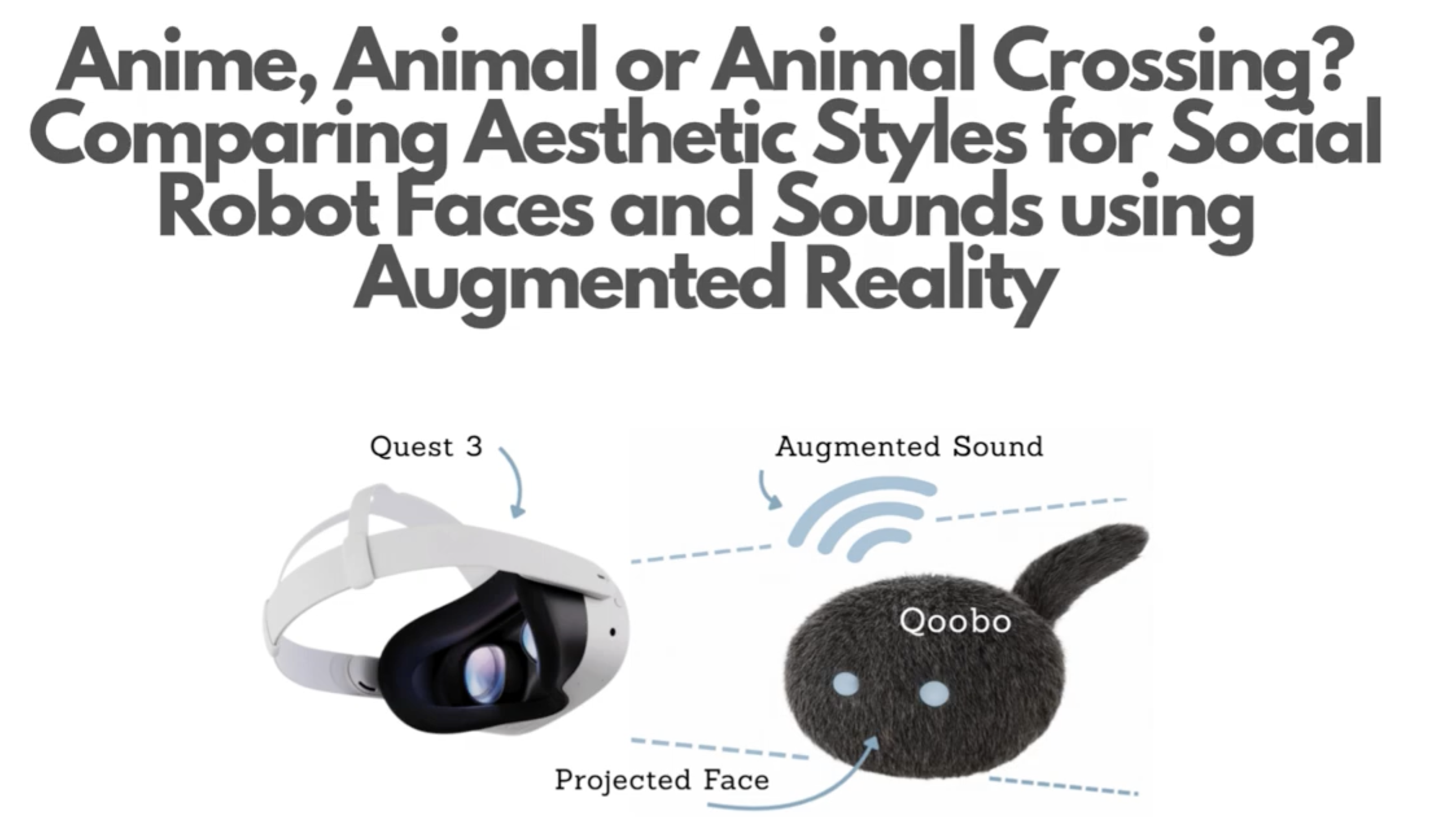
With the help of a group of volunteers, they used augmented reality technology to test dozens of different combinations of faces and voices overlaid on the body of an existing social robot called a Qoobo, which has a soft, cushion-like body and a swinging tail.
Dr Shaun Macdonald and Josh Yip of the University of Glasgow’s School of Computing Science used this rapid prototyping approach to explore how users felt about the virtual robots, and how effectively they were able to ‘read’ the robot’s emotional states to make them feel more like real creatures.
Dr Macdonald said: “Social robots can provide valuable experiences for a wide range of people. Older people have reported that they can help mitigate feelings of loneliness or social isolation, for example, and people living in spaces where they can’t keep a real pet have kindled some of that sense of companionship with what we call zoomorphic robots, which mimic animals’ appearances and behaviour.
Source link