People often take their muscles for granted. They pick up a bag, tighten a grip, climb a hill, hold a cup of coffee and the body quietly adjusts force, speed and position without the person ever thinking about it.
Muscle turns chemical energy into movement. It is able to produce force smoothly and reliably, even though it is built from huge numbers of tiny molecular components. When the load changes, muscles don’t simply wobble or fail. They adapt.
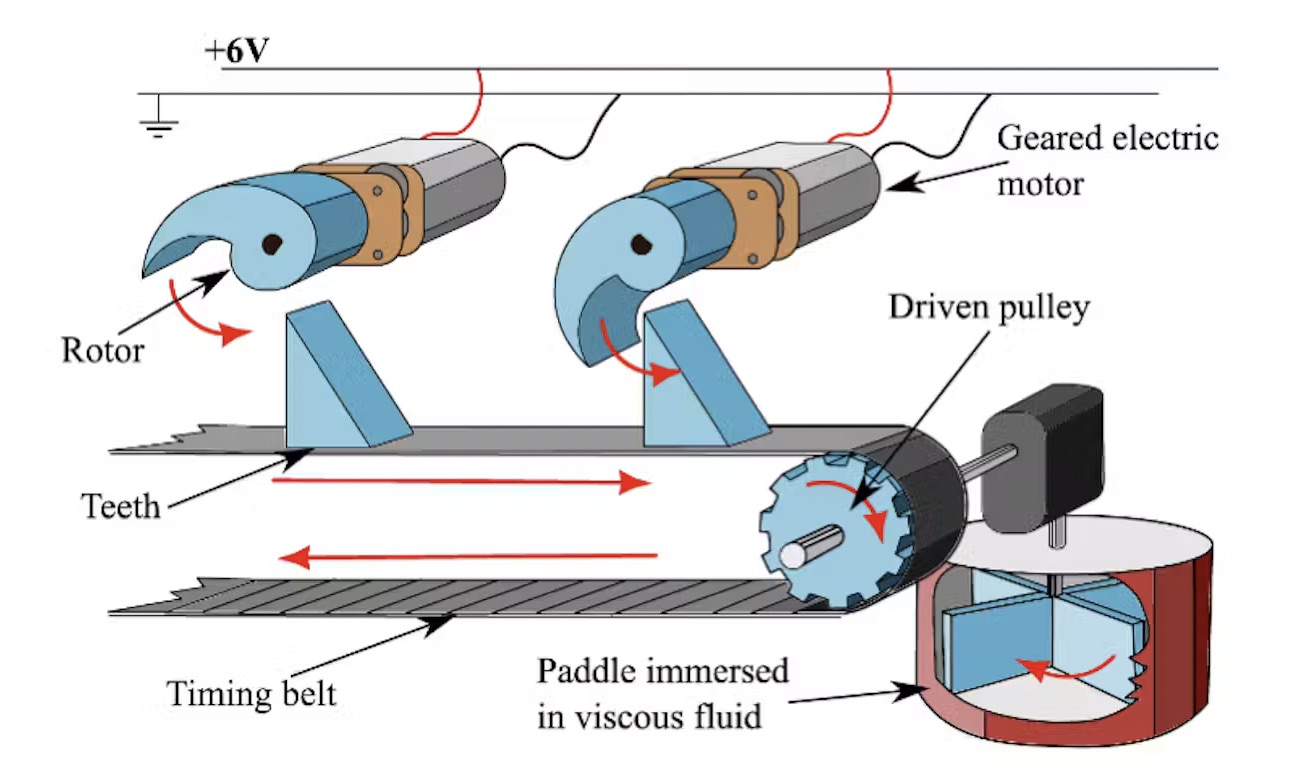
But the way that muscle works on a molecular level isn’t a settled issue. With colleagues, our team at the University of Bristol built a physical model using ordinary electric motors to try and simulate how muscles may perform its tasks.
The results, published in the Royal Society journal Interface, show that the coordination we see in real muscle may simply emerge as a property of their setup. It’s not something you have to programme and police continuously. The findings could even help improve the way that robots function.
If we were to zoom inside a muscle, we would find bundles of smaller and smaller structures. The sarcomere is the key force producing unit. It is made of protein filaments, called actin, and molecular motors called myosin. Together, they form the actomyosin system.
Tiny myosin motors repeatedly grab, pull and release actin cables, helping muscle fibres contract. When you hold a cup of tea, thousands of these motors have to work together to produce a steady force. But there are unanswered questions about this system.
Source link