This article has been reviewed according to Science X's editorial process and policies. Editors have highlighted the following attributes while ensuring the content's credibility:
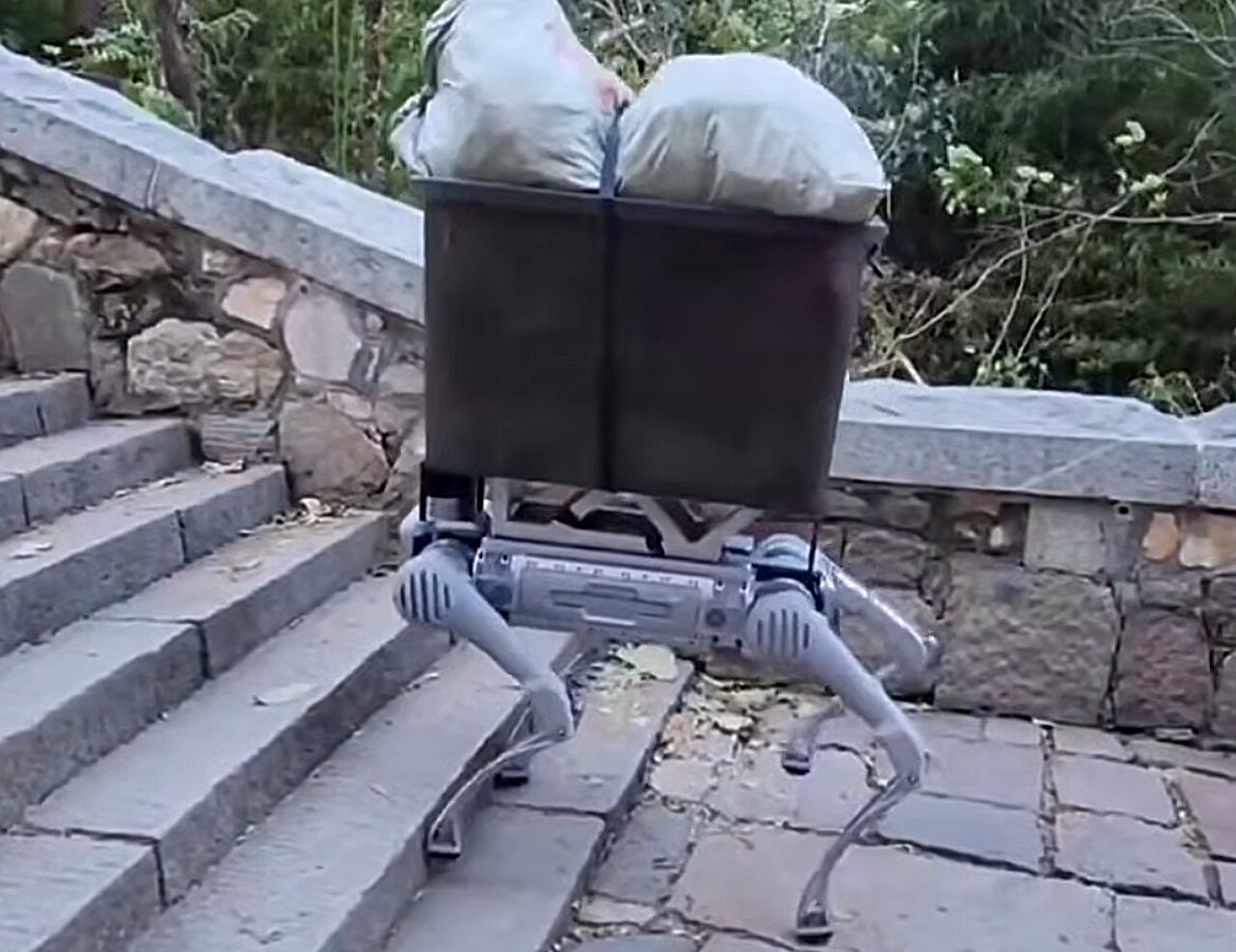
Dozens of robots took on more than 3,000 steps up one of China's most famous peaks Monday, carrying eggs and watermelons in a race organizers billed as a test of real-world machine endurance, state media showed.
For hundreds of years, Mount Tai—the tallest peak in China's eastern Shandong province—was an important pilgrimage site for Chinese emperors and features prominently in Chinese mythology.
But the rugged terrain would prove a stern test for some competitors. One humanoid robot wearing a bandana collapsed in a heap on the cobbled route before engineers rushed in to repair it, while another tumbled down a flight of stairs and came to rest beside a trash can.
The UNESCO World Heritage site hosted technologies of the future as part of a new World Mountain Robot Challenge, footage from state broadcaster CCTV showed.
Over a 3.9-kilometer (2.4-mile) course with more than 600 meters (1,970 feet) of ascent, robots and their engineers from around 90 teams were tasked with either completing the route as fast as possible or transporting fragile goods like fresh eggs and watermelons to the summit.
A canine robot made by Beijing Lingyi Technology—a subsidiary of industry giant Unitree—completed the course in 43 minutes, 41 seconds, to win the four-legged speed category.
Most tourists take at least two hours to complete the route, according to CCTV.
The fastest humanoid robot—belonging to Beijing-based team Zhishen Lingyue—completed a shorter race course in 27 minutes and 26 seconds.
Source link