This article has been reviewed according to Science X's editorial process and policies. Editors have highlighted the following attributes while ensuring the content's credibility:
When a doctor taps just below your kneecap, your lower leg kicks forward automatically. This knee-jerk reflex is one example of the reflexes that play an essential role in human motor control. Now, researchers at Tohoku University have developed a reflex module for musculoskeletal robots that works without electronic sensors or circuits. Using this module, the team reproduced the knee-jerk reflex in a robot and generated bipedal walking.
"Biological systems can generate complex movements through the interaction between their bodies and the environment. By building reflexes directly into a robot's mechanical structure, we aim to create simpler systems that can generate movement without relying on complex electronic control," says Dai Owaki, associate professor at Tohoku University's Graduate School of Engineering.
Human movement relies on reflexes that automatically respond to sensory information. The patellar tendon reflex, for example, causes the quadriceps muscle to contract when the tendon below the kneecap is tapped. Other muscle reflexes help stabilize leg movements during walking and support body weight while standing. Reproducing these mechanisms could provide a foundation for controlling robots.
However, implementing reflexes in musculoskeletal robots typically requires complex electronic sensors to monitor the state of artificial muscles. These components can increase system complexity, computational demands and power consumption.
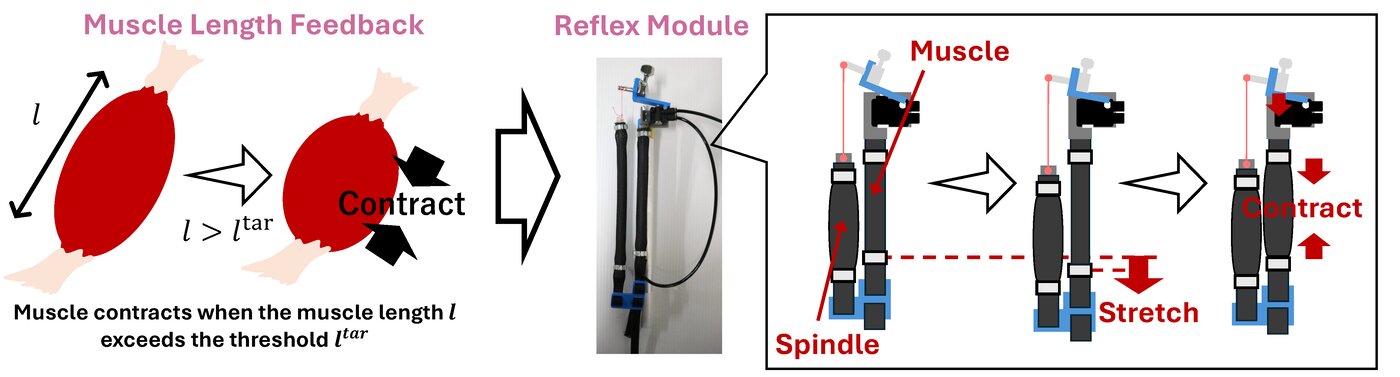
To address this challenge, the research team developed a mechanical reflex module that combines sensing, computation and actuation within its physical structure.
Source link