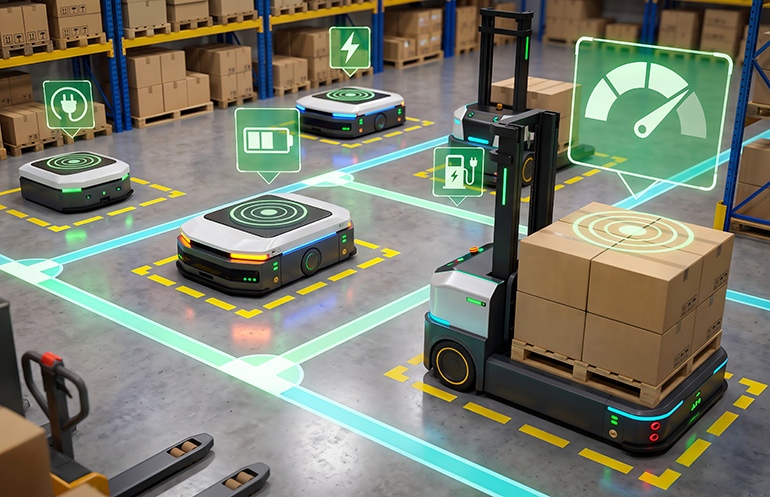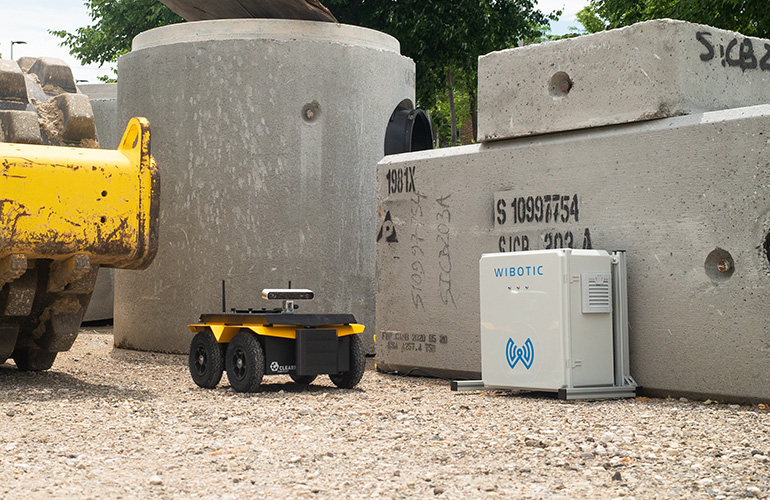
Wireless chargers are being deployed in a number of indoor and outdoor applications for charging the mobile robots. | Credit: WiBotic
As robot fleets scale, charging becomes an operational challenge. Understanding how to optimize charging for fleets of mobile robots is key to getting the best performance from the fleet throughout the day.
With growing deployments, charging is becoming more than a question of how long a battery lasts or how quickly it can recharge. Charging strategy can affect fleet uptime, facility infrastructure, maintenance requirements, and even the size of the batteries that robot manufacturers need to carry.
Ben Waters, CEO of WiBotic, recently joined The Robot Report Podcast to discuss how those considerations are changing as robot fleets scale.
He also discussed opportunity charging, the tradeoffs around fast charging, WiBotic’s move toward higher-power systems, and how charging data could help operators identify power problems.
This is an excerpt from the podcast interview. Listen to the full audio anywhere you get your podcasts or online in the show notes.
What has changed recently at WiBotic, and how is the market maturing?
Waters: Overall, WiBotic has diversified into a few different markets, but all the while, robotics has really been growing, as we all know, over the last last one to two years for sure.
That was a big motivator for us to pursue getting into some adjacent markets. Take, for example, floor care , medical carts, space , and defense applications, all of which are markets that really use the same product as our longstanding robotics customers from a wireless charging, autonomous charging perspective.
Source link