This article has been reviewed according to Science X's editorial process and policies. Editors have highlighted the following attributes while ensuring the content's credibility:
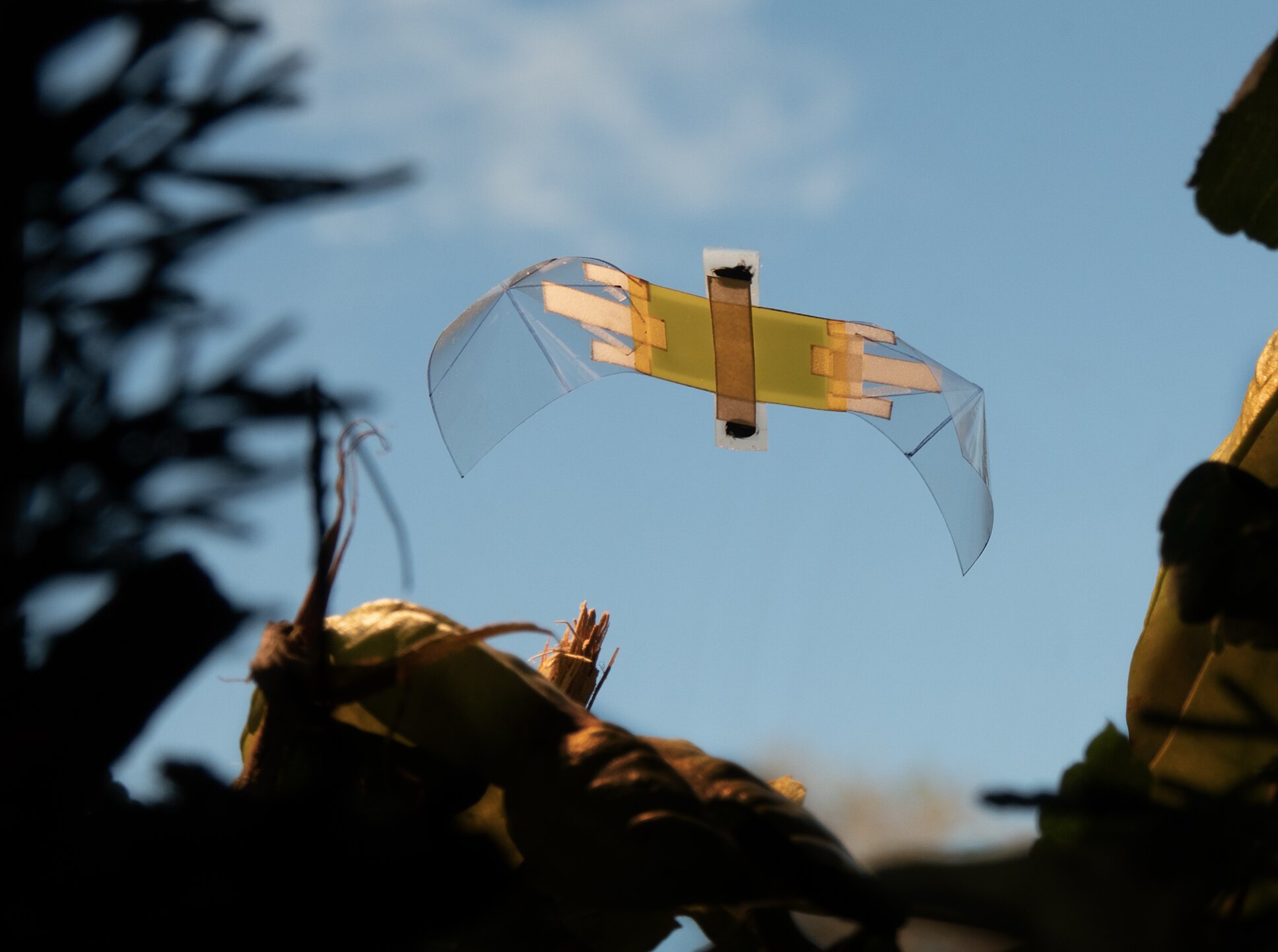
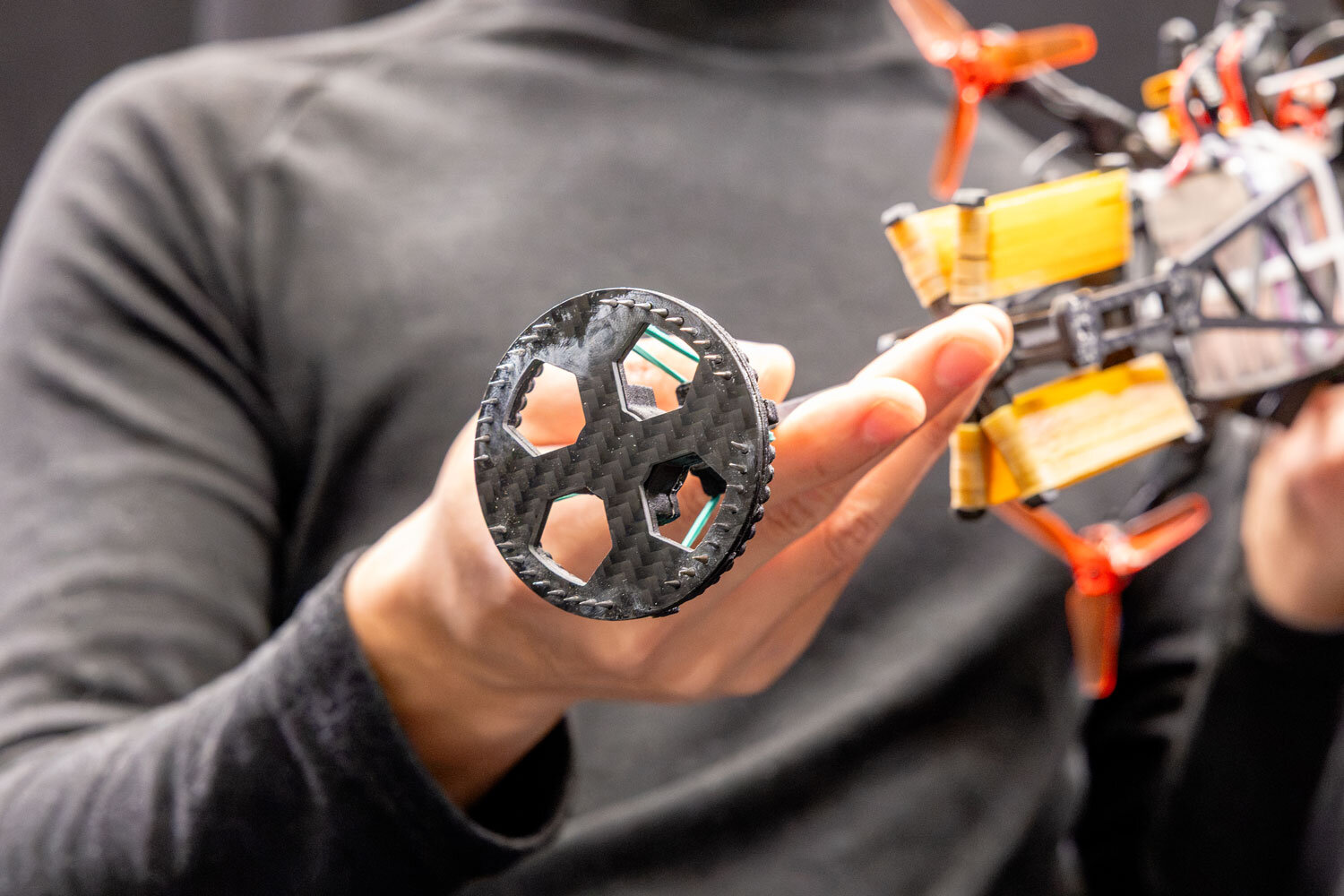
A team of University of Toronto Engineering researchers has developed a flexible foot pad for the "Hopcopter"—a one-legged, hopping robot they developed—significantly enhancing its performance on sand, ice and other difficult terrain.
The Hopcopter was designed to carry out a range of missions, such as search and rescue, remote infrastructure inspections and perhaps even interplanetary exploration. Its unusual mode of locomotion could provide important advantages over more common robotic designs, such as wheeled vehicles, flying drones or even four-legged robotic dogs.
"Drones are very familiar these days, and while they do have a lot of advantages, they also have some drawbacks," says professor Pakpong Chirarattananon, senior author on a paper published in Advanced Intelligent Systems that describes the innovation.
"On the plus side, drones are relatively cheap to produce, they can fly over any kind of terrain and they are great for photography and videography. But because they need to be light, they aren't so good at carrying lots of cargo, and their range is limited by how much fuel they can carry."
"On the other end of the spectrum, you have wheeled or legged robots. Weight isn't such a factor, so they can carry a lot more, and travel farther. But they are much more expensive, and they can't always handle rough terrain.
Source link