This article has been reviewed according to Science X's editorial process and policies. Editors have highlighted the following attributes while ensuring the content's credibility:
On a busy street in Karachi, Pakistan, a health care worker kneels down so she's eye to eye with a toddler. She squeezes two drops of liquid onto the child's tongue. Then she takes out a purple marker and colors the child's pinkie fingernail so everyone can see that this toddler is now vaccinated against polio.
During big vaccination drives, thousands of health workers like her knock on doors across Pakistan.
Most kids in the United States will never experience anything like this, because they get the polio vaccine as a shot at the doctor's office instead of drops in a door-to-door campaign.
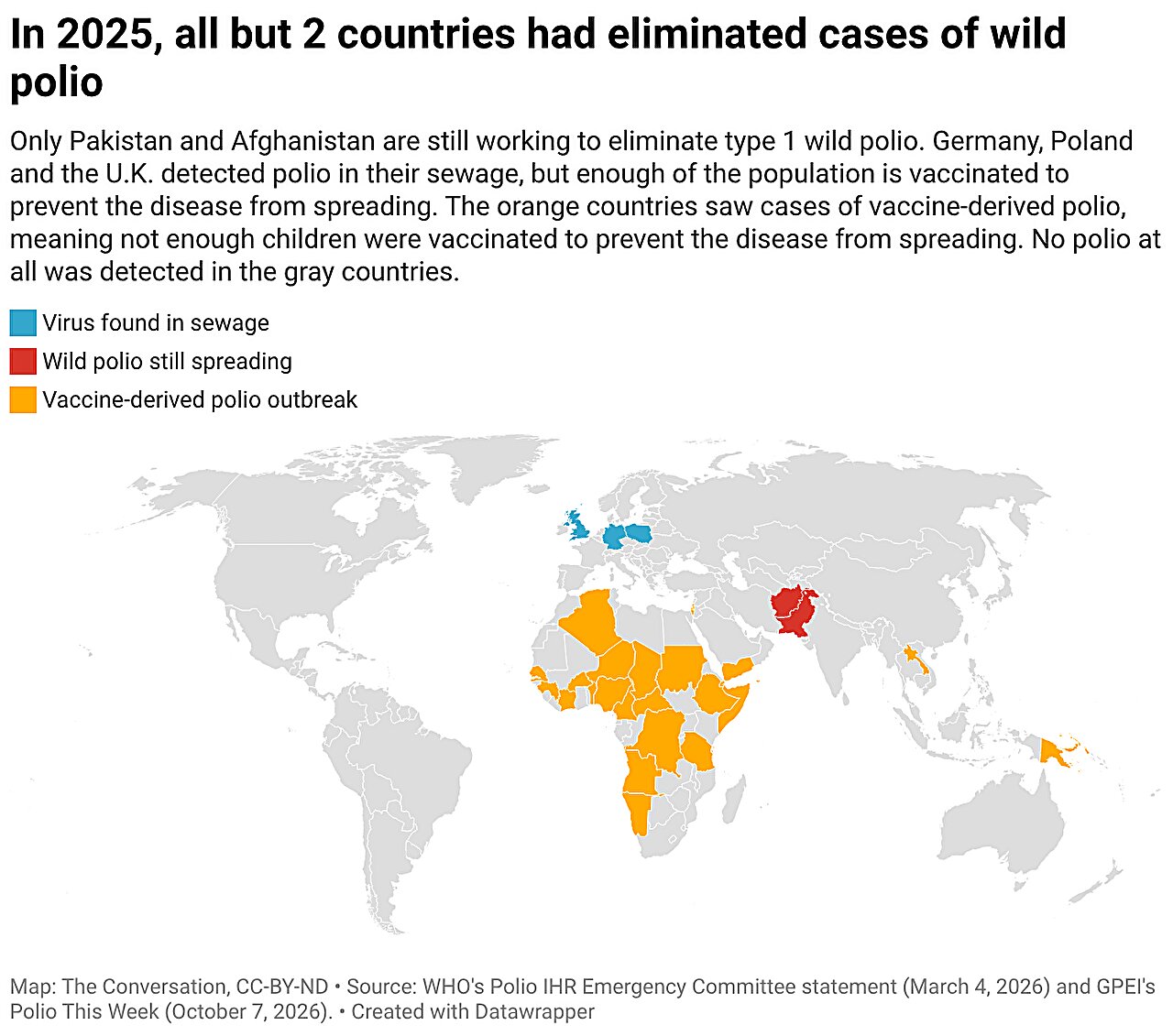
The two vaccines work a little differently, but both protect kids from the poliovirus. The countries that still see polio outbreaks are places where not enough people have gotten the preventive vaccine.
I'm an epidemiologist—a scientist who studies how diseases spread. My work focuses on diseases that vaccines can prevent, and on the false information that keeps some families from getting those vaccines.
Polio is caused by a virus that lives in the human gut. It spreads when tiny bits of poop from an infected person get onto hands, food or water, and then into someone else's mouth. That's why polio spreads fastest in places without clean water or good sewer systems.
Polio is sneaky. Most people who catch it never feel sick at all , so they can pass it on without knowing.
Source link