This article has been reviewed according to Science X's editorial process and policies. Editors have highlighted the following attributes while ensuring the content's credibility:
Most people's blood pressure falls by 10% to 20% while they sleep, giving the heart and blood vessels a chance to recover. But for some people, that nighttime dip never happens. Known as "non-dippers," these individuals face a higher risk of heart disease, stroke, kidney disease and premature death.
Now, researchers at the University of Waterloo have identified a possible reason why. The study, "Temporal misalignment of renal sodium transport promotes non-dipping blood pressure phenotypes," is published in PLOS ONE.
Their new study suggests that even a small mismatch in the timing of how the kidneys process salt may cause blood pressure to remain elevated overnight. The findings offer new insight into a condition that has puzzled researchers for decades.
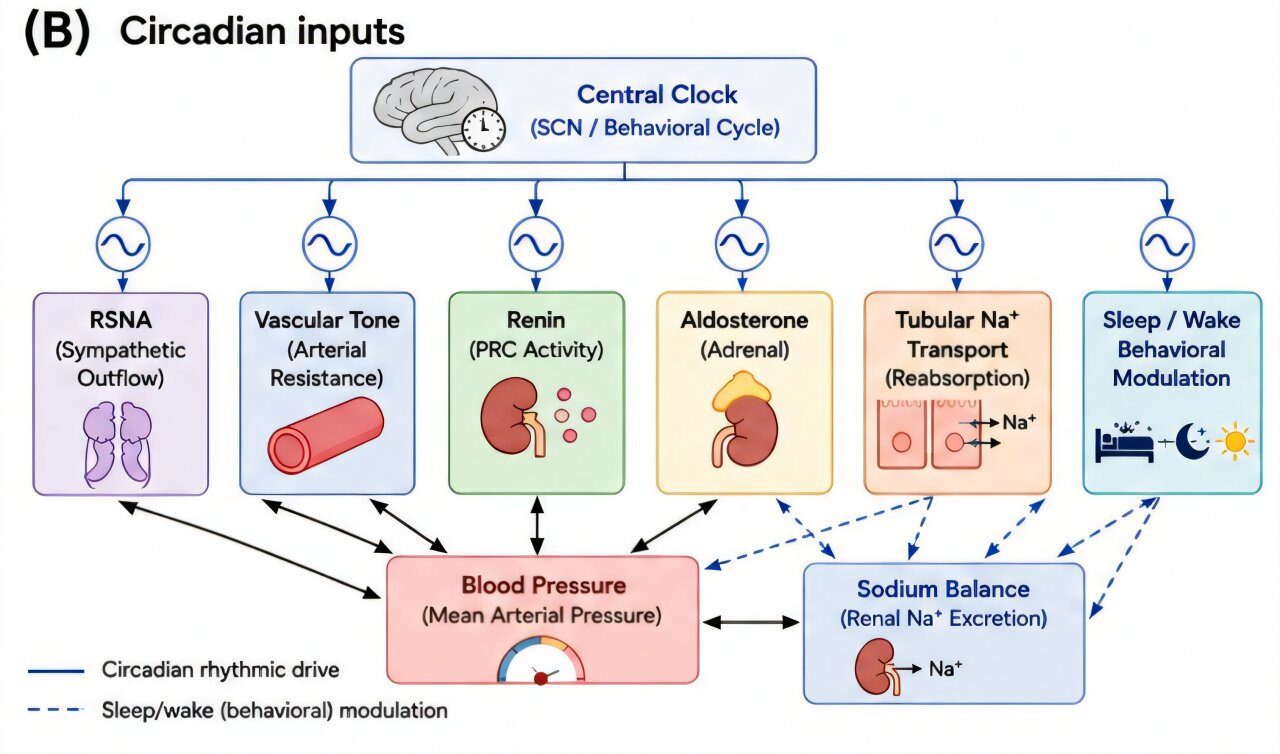
"Many systems that control blood pressure follow their own 24-hour rhythms, including the kidneys, blood vessels, nervous system and hormones," said Dr. Anita Layton, professor of applied mathematics at Waterloo and Canada 150 Research Chair Laureate in Mathematical Biology and Medicine. "What we found is that the timing of these systems' daily rhythms may be just as important as the rhythms themselves."
Together, these systems' internal clocks help regulate blood pressure throughout the day and night. Until now, little was known about how differences in timing between these systems might affect cardiovascular health.
Using a sophisticated computer model of the human body, Layton and her team conducted a series of virtual experiments to examine how changes in these biological rhythms influence blood pressure during sleep.
Source link