This article has been reviewed according to Science X's editorial process and policies. Editors have highlighted the following attributes while ensuring the content's credibility:
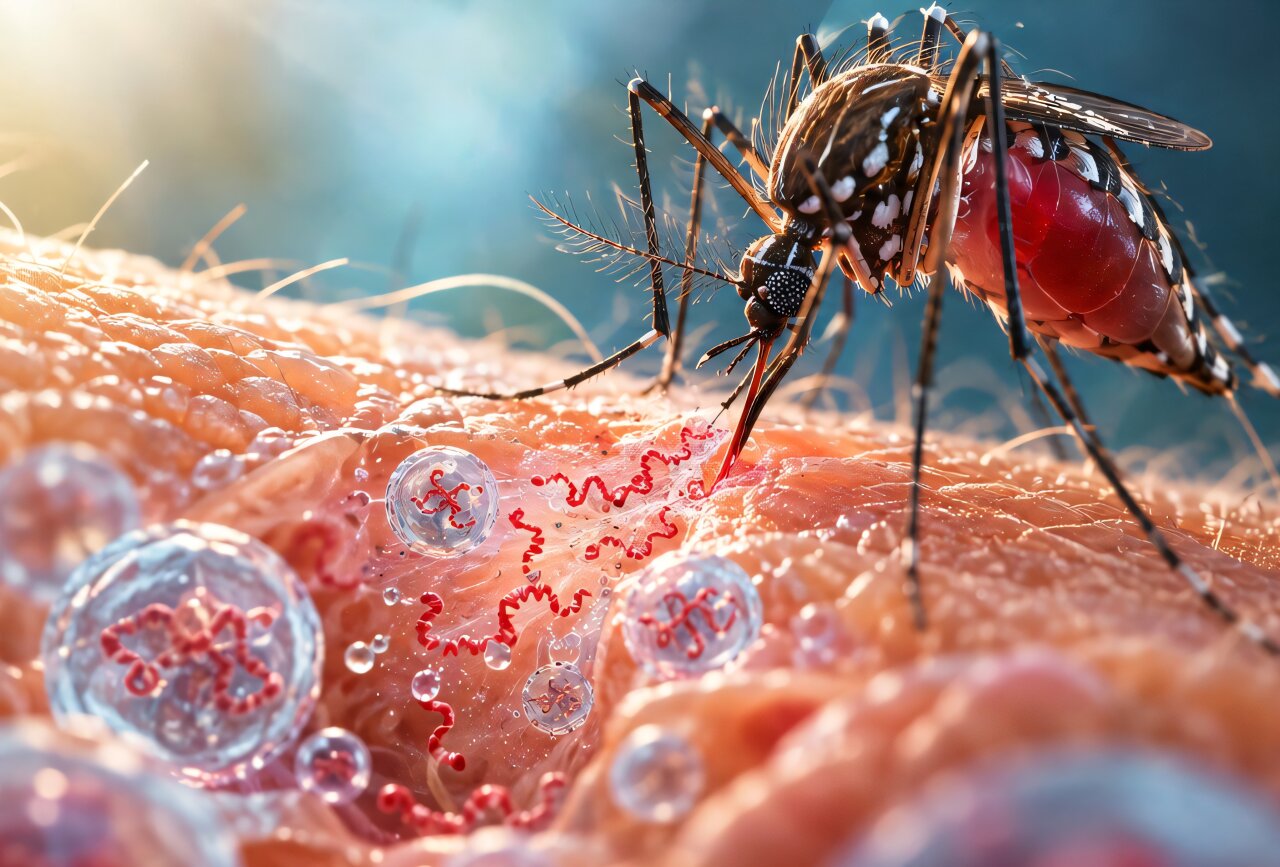
Mosquitoes do more than simply transmit the viruses they carry: Their saliva may actively help these viruses establish infection in the body from the very moment of the bite. This is the finding of a study conducted by a team from the IRD, CNRS, the University of Montpellier (France) and Mahidol University (Thailand), published in Nature Communications.
The scientists identified a viral compound in the saliva of infected mosquitoes that appears to promote infection by inhibiting the body's initial immune response. This discovery opens the door to a new vaccination strategy against mosquito-borne viruses.
Mosquito-transmitted orthoflaviviruses, which cause diseases like dengue, Zika and West Nile fever, represent a major public health threat, particularly in tropical and subtropical regions (Asia, South America, Africa). Dengue, Zika and West Nile viruses alone are responsible for around 500 million infections every year.
All of these viruses share one common feature: they are transmitted through mosquito bites. Yet there is still no effective treatment covering all of these diseases, and the mechanisms that allow the virus to establish itself in the skin after a bite remain largely unclear.
"Understanding how mosquito saliva influences skin infection is essential for better understanding transmission and identifying new prevention targets," said Julien Pompon, research director at IRD and FLAVIVACCINE coordinator.
When an infected mosquito bites the skin, it injects saliva containing viral particles.
Source link