This article has been reviewed according to Science X's editorial process and policies. Editors have highlighted the following attributes while ensuring the content's credibility:
Cancer cachexia has long been one of oncology's most stubborn unsolved problems. This severe, uncontrollable wasting affects roughly half of all cancer patients. It makes treatment harder to tolerate, erodes a person's quality of life and is associated with worse outcomes.
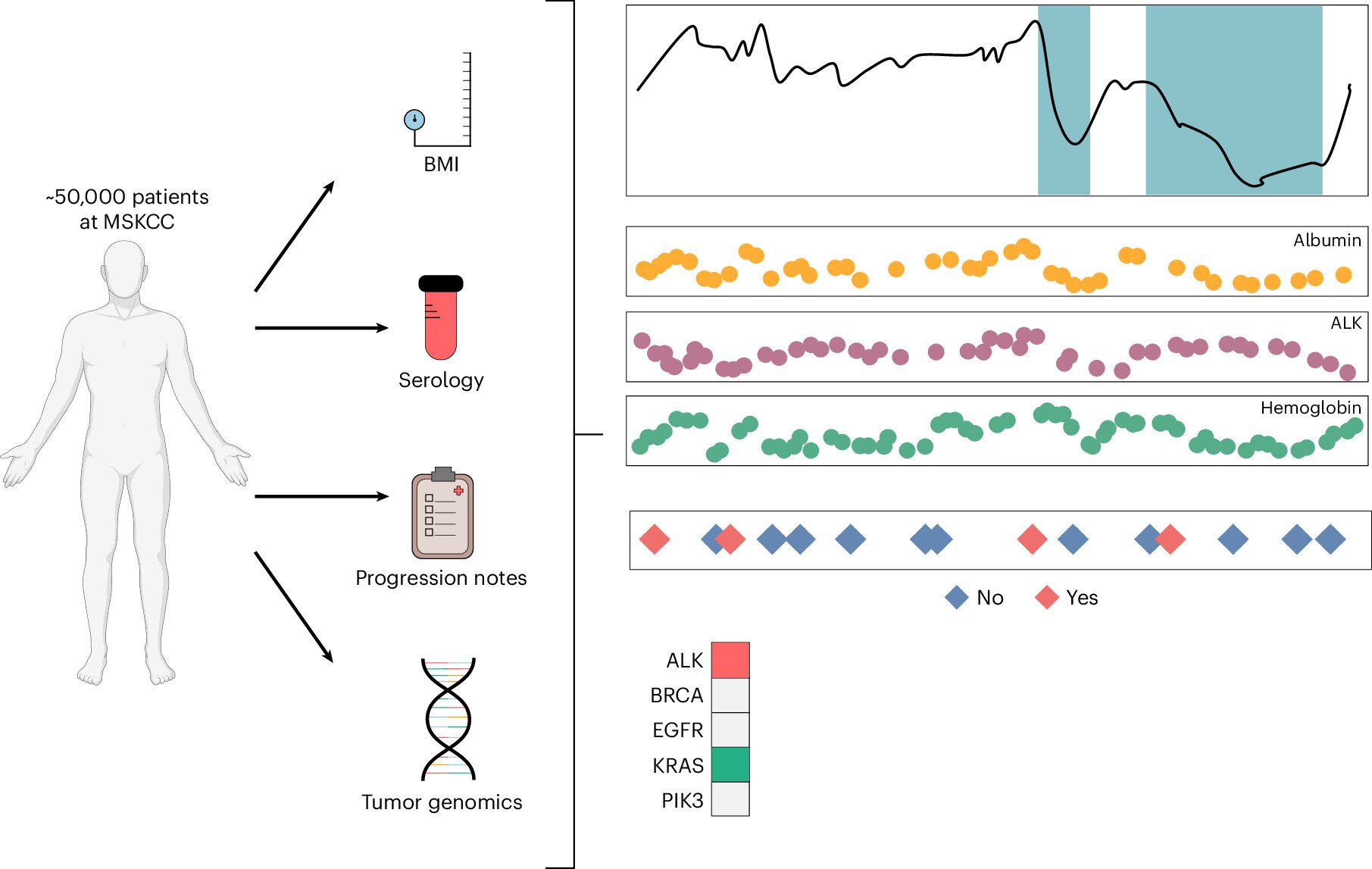
A team of researchers from Memorial Sloan Kettering Cancer Center (MSK) and their collaborators went looking for a more nuanced understanding of the condition by analyzing routine clinical data collected during the treatment of nearly 60,000 cancer patients—making it the largest human study to date.
The data included more than 2 million body weight measurements and millions of blood test results—combined with detailed treatment histories and the genetic profiles of patients' tumors.
"Much of this was routine clinical information being collected to help understand how a patient is doing at different points in time over the course of their treatment," says study senior author Ed Reznik, Ph.D., whose lab applies data science to the study of cancer metabolism. "It turns out the data had a lot to tell us."
According to findings published in Nature Medicine, the team found that cachexia:
Together, these discoveries could help predict which patients are most at risk and help facilitate timely support and interventions, the researchers say.
The study was co-led by two students from the Reznik Lab: Venise Jan Castillon, a member of MSK's Bridge program, which helps trainees transition into biomedical graduate programs, and Amy X.
Source link