This article has been reviewed according to Science X's editorial process and policies. Editors have highlighted the following attributes while ensuring the content's credibility:
When patients are diagnosed with certain brain tumors, one of the biggest unanswered questions is what happens when the cancer returns. Among those are IDH-mutant gliomas, a group of brain tumors that invariably recur despite advances in treatment.
Now, scientists from The Jackson Laboratory (JAX), Yale University and collaborators across 10 countries report that these gliomas undergo unique genetic changes when they return after treatment.
The findings, published today in Nature, could help researchers understand why these tumors become resistant to therapy and point toward more tailored treatment approaches in the future.
IDH-mutant gliomas are defined by mutations in a gene called isocitrate dehydrogenase (IDH). These tumors primarily affect patients in their 30s and 40s, making them particularly devastating. Although many patients live for years after diagnosis, these tumors almost always recur and eventually stop responding to treatment.
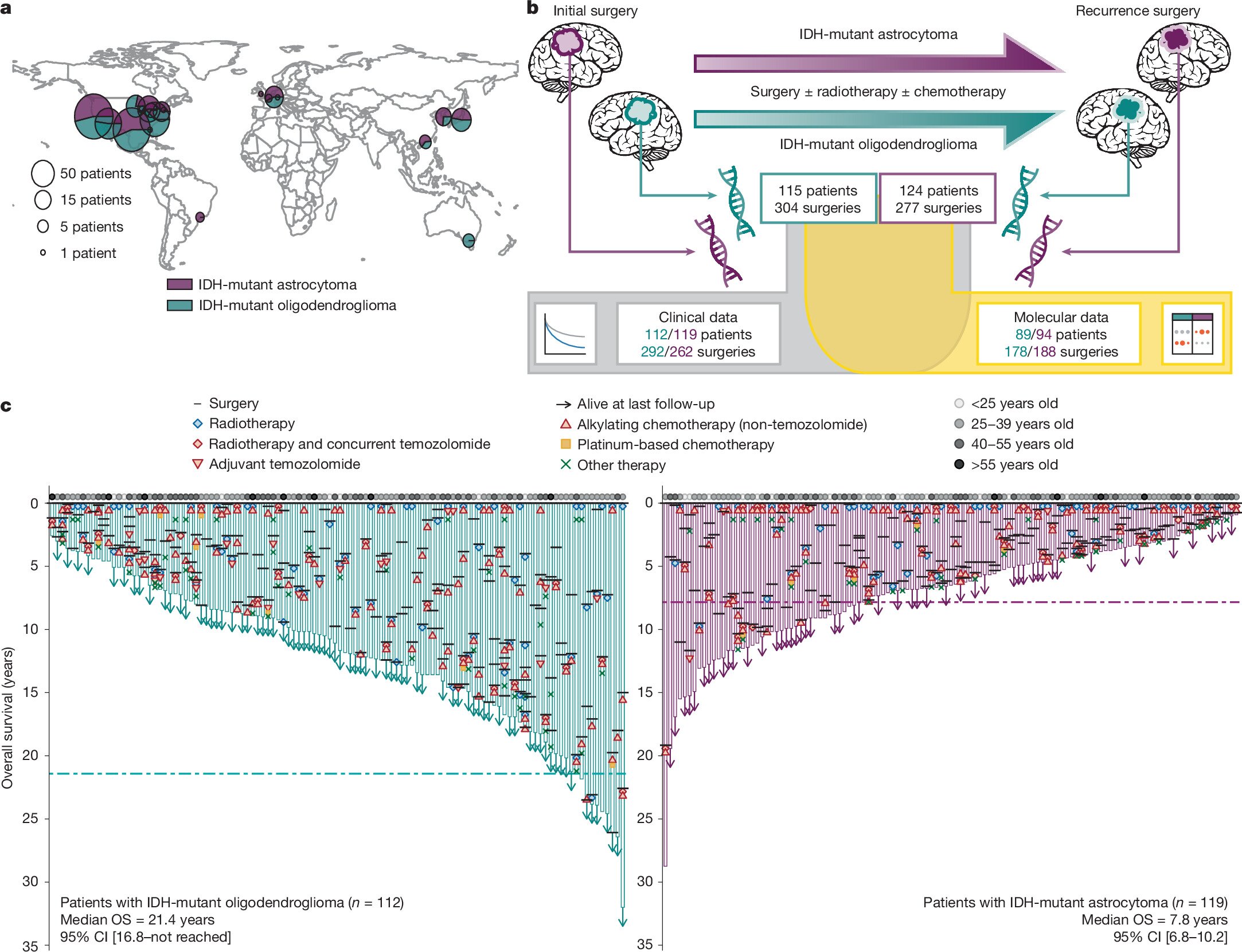
The study drew on data from the international Glioma Longitudinal Analysis (GLASS) Consortium and included 183 patients whose tumors were sampled both before and after recurrence, allowing researchers to directly compare how the cancers changed over time. Researchers analyzed samples collected through more than 500 surgeries spanning North America, Europe, Asia, Australia and South America.
"IDH-mutant gliomas are rare, which makes them challenging to study. Through this international collaboration, we were able to gather enough samples to characterize the most common ways each type of IDH-mutant glioma changes when it recurs," said study author Frederick Varn, a JAX assistant professor who co-led the research.
Source link