This article has been reviewed according to Science X's editorial process and policies. Editors have highlighted the following attributes while ensuring the content's credibility:
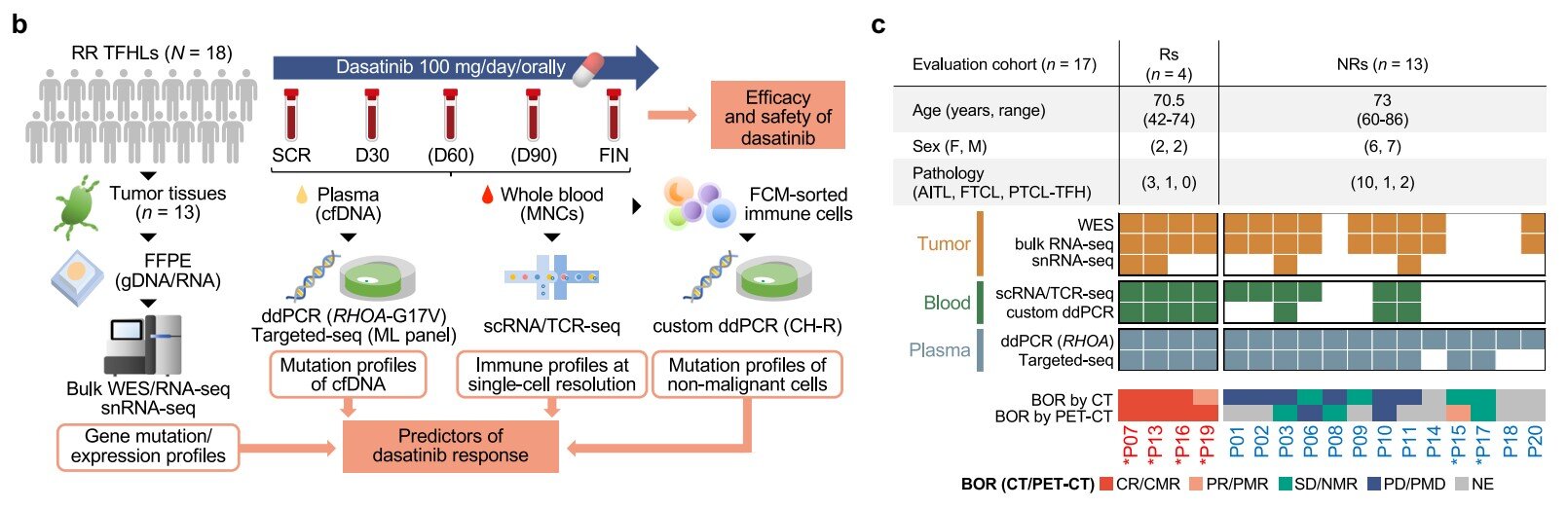
Researchers at the University of Tsukuba conducted a physician-initiated phase 2 clinical trial of dasatinib in patients with relapsed or refractory T-follicular helper cell lymphoma (TFHL), an aggressive and difficult-to-treat blood cancer. The study identified genetic alterations and features of the immune microenvironment associated with treatment response. These findings may help identify patients who are more likely to benefit from dasatinib and inform the development of personalized treatment strategies and novel immunotherapeutic approaches. The work is published in the journal Nature Communications.
TFHL is a subtype of peripheral T-cell lymphoma associated with a poor prognosis and limited treatment options following relapse. TFHL is characterized by specific molecular abnormalities, including frequent activation of the T-cell receptor (TCR) signaling pathway. In previous phase 1 studies, researchers demonstrated that dasatinib, a drug originally developed to treat leukemia, suppresses abnormal TCR signaling and has shown promising clinical activity in patients with TFHL.
In this study, researchers conducted a physician-initiated, multicenter phase 2 clinical trial involving 13 institutions across Japan to evaluate the efficacy and safety of dasatinib and identify factors associated with treatment response. The research team performed comprehensive genetic analyses of tumor tissue and blood samples, as well as single-cell transcriptomic profiling in 17 patients.
Clinical responses were observed in patients with mutations related to TCR signaling. These patients also exhibited clonal expansion of CD8-positive effector T cells, which play a key role in tumor cell elimination, along with enhanced antitumor immune activity.
Source link