This article has been reviewed according to Science X's editorial process and policies. Editors have highlighted the following attributes while ensuring the content's credibility:
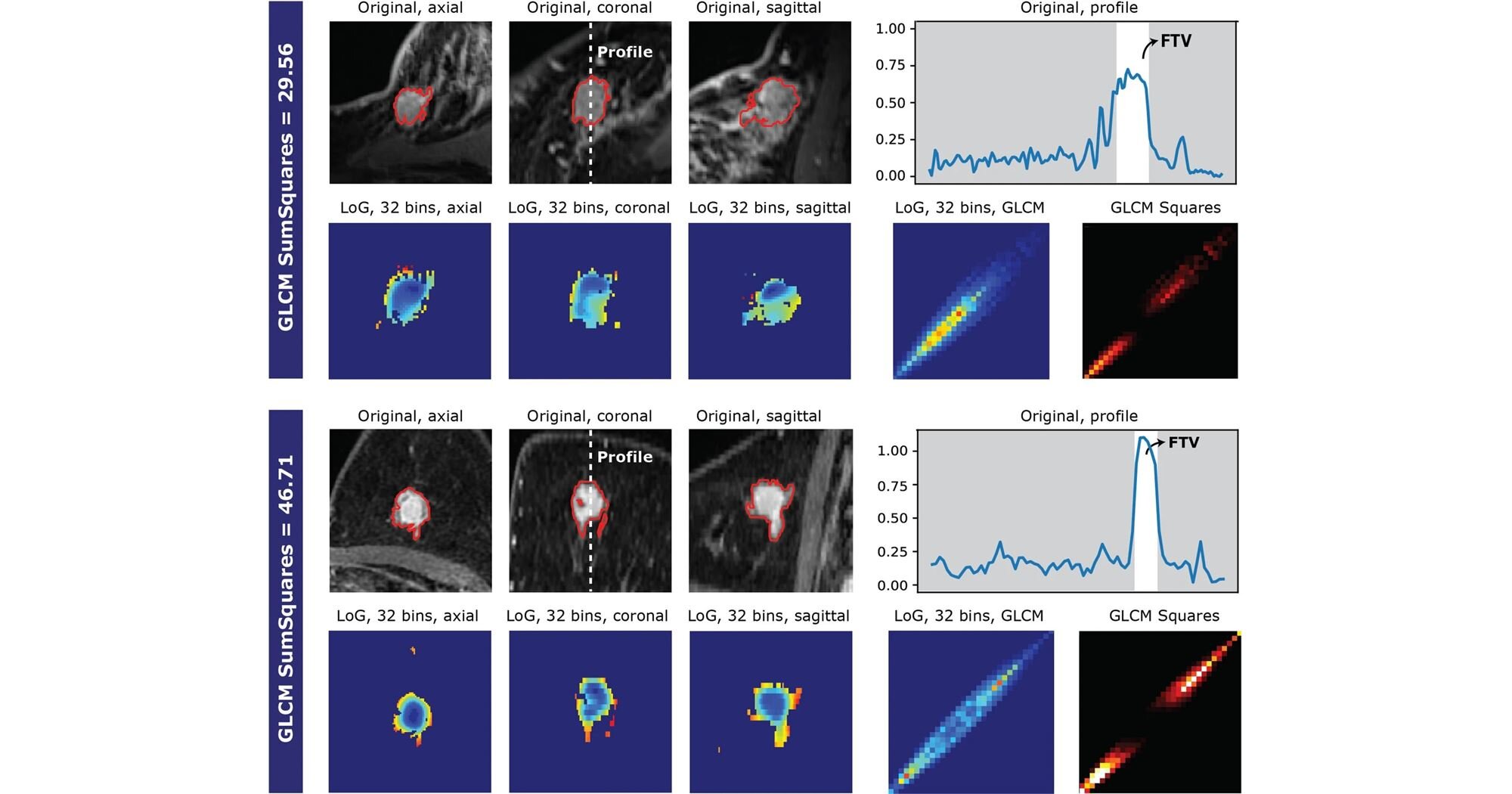
Researchers at The Hong Kong Polytechnic University (PolyU) have developed an imaging biomarker, the Tumour Heterogeneity Index (THI), which enables noninvasive assessment of breast cancer patients' response to AKT inhibitors before treatment, helping clinicians identify patients most likely to benefit from therapy. The study found that patients with a high THI achieved an estimated pathological complete response (pCR) rate of 56.1%, significantly higher than that of patients with a low THI. The technology could help patients receive the most appropriate treatment at an earlier stage, reduce unnecessary side effects and enable clinicians to better tailor treatment strategies to individual patients.
Cai Jing, head of the Department of Health Technology and Informatics (HTI) and chair professor of medical physics and intelligent oncology at PolyU, together with Dr. Teng Xinzhi, research assistant professor of HTI, and their research team, applied advanced radiomics techniques to develop THI using data from dynamic contrast-enhanced magnetic resonance imaging (DCE-MRI). DCE-MRI is widely used for cancer diagnosis and treatment planning. The team has further extended its application to the assessment of drug response, enabling clinicians to noninvasively predict treatment outcomes before therapy begins.
The study focused on patients with high-risk, early-stage breast cancer and evaluated their response to the investigational AKT inhibitor MK2206 when added to neoadjuvant chemotherapy before surgery. The AKT/mTOR/PI3K signaling pathway plays an important role in promoting tumor growth and survival and has therefore long been regarded as an important therapeutic target in cancer treatment.
Source link