This article has been reviewed according to Science X's editorial process and policies. Editors have highlighted the following attributes while ensuring the content's credibility:
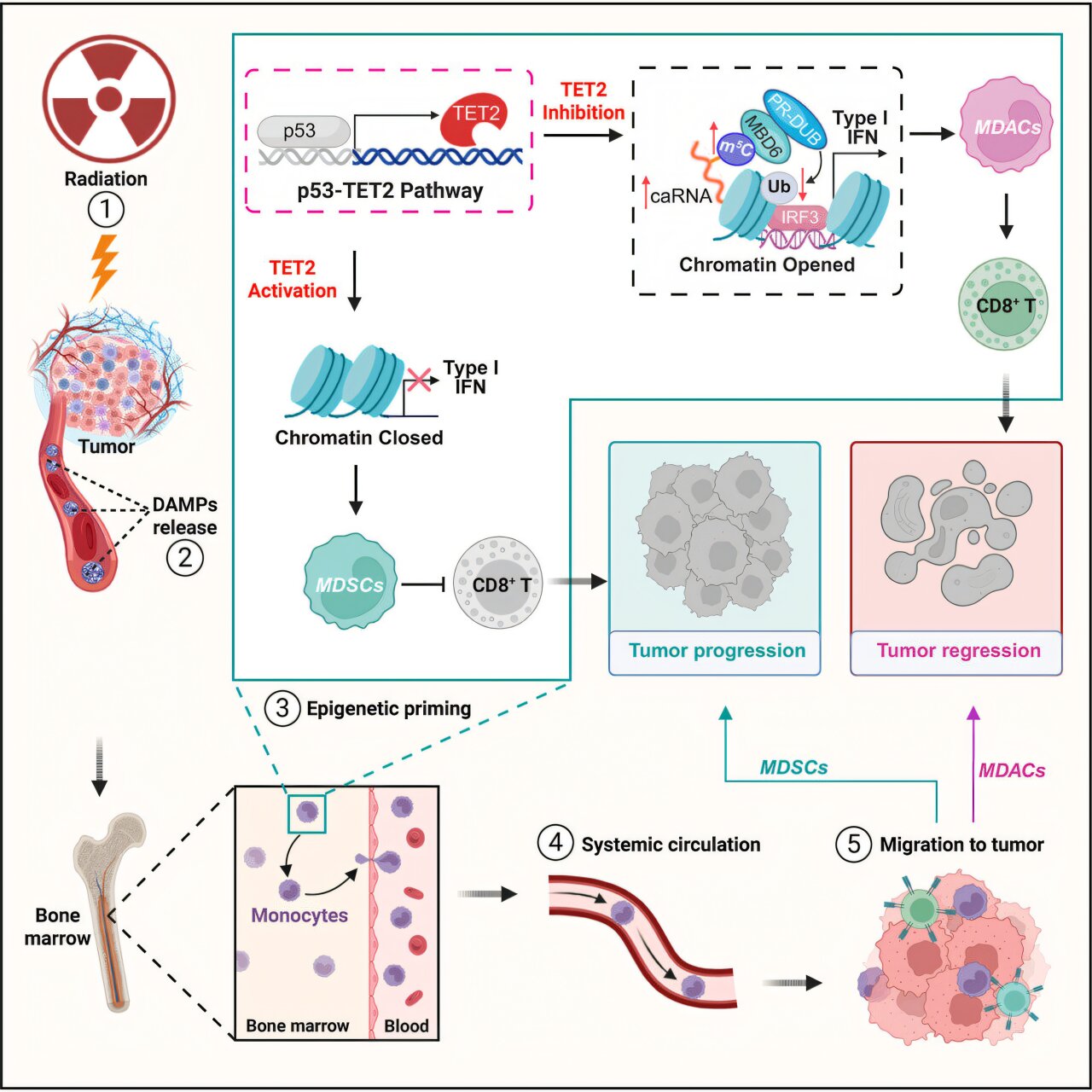
Researchers at the University of Chicago have identified a mechanism to make immune cells reprogrammed by radiation therapy attack tumors rather than protect them. The study, published in Cancer Cell, shows that radiation activates a protein called TET2 on immune cells in bone marrow, where it removes chemical tags from RNA and locks these cells into an immune-suppressing state.
When the researchers blocked TET2, the same cells began fighting cancer instead, helping radiation and immunotherapy shrink tumors and control metastasis.
Radiation therapy, given to 50% to 60% of cancer patients, kills tumor cells by damaging their DNA. In some cases, however, it also triggers the expansion of myeloid-derived suppressor cells (MDSCs), immune cells made in the bone marrow that dampen the body's defenses against cancer.
MDSCs travel to tumors and block CD8⁺ T cells, the immune system's main tumor-killing cells. In patients, a rise in MDSCs after radiation is linked to shorter survival and a higher risk of metastasis.
To understand what drives this response, the team analyzed blood samples collected before and after treatment from 33 patients with stage IV non-small cell lung cancer. The patients were enrolled in a clinical trial at UChicago Medicine, combining high-dose, precisely targeted radiation with the immunotherapy drugs nivolumab and ipilimumab.
Among all immune cell types, MDSCs had the highest levels of TET2, an enzyme that removes chemical tags called methyl groups from genetic material.
Source link