This article has been reviewed according to Science X's editorial process and policies. Editors have highlighted the following attributes while ensuring the content's credibility:
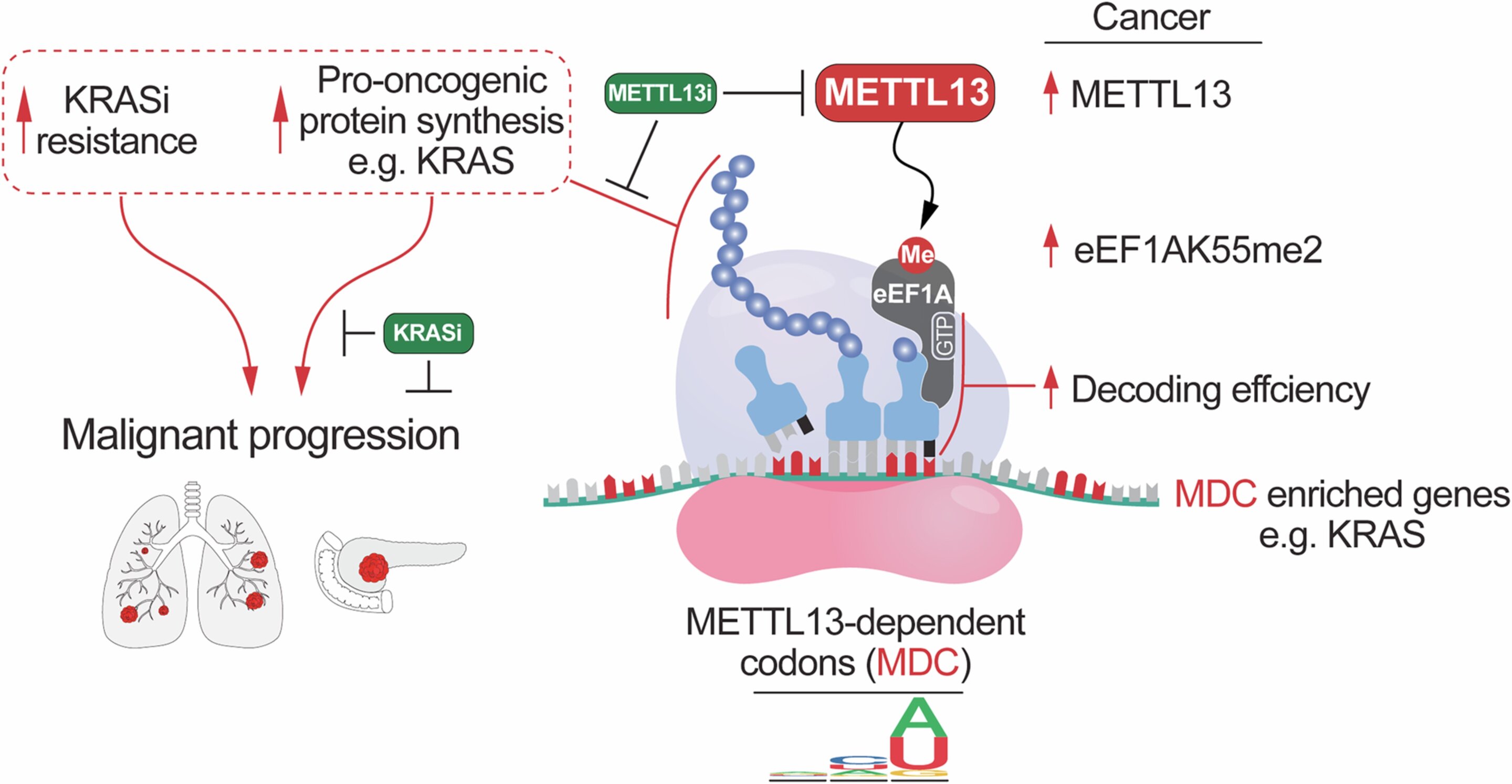
A previously unknown mechanism helps cancer cells selectively produce proteins that drive tumor growth—such as KRAS—in common cancers, according to new research from The University of Texas MD Anderson Cancer Center. The findings reveal that targeting a specific enzyme may improve responses to targeted therapies and help overcome treatment resistance.
The study, published in Nature Cell Biology, was co-led by Pawel Mazur, Ph.D., associate professor of experimental radiation oncology, along with collaborators at other institutions.
"Our findings show that, in cancer cells, the METTL13 enzyme facilitates the production of important growth-driving proteins," Mazur said. "By understanding the underlying mechanisms and removing that support, we may be able to make tumors more vulnerable to treatment and help improve patient outcomes."
KRAS is one of the most commonly mutated cancer genes, driving tumor growth in multiple types of cancers, including many lung and pancreatic cancers. Although KRAS-targeted therapies have improved outcomes for some patients, tumors often adapt and become resistant over time.
Many cancer-driving genes, including KRAS, produce large amounts of messenger RNA rich in specific strings of genetic "words," called codons, that serve as instructions to build proteins. Structural, chemical and metabolic barriers sometimes make it harder for protein-producing machinery to read those codons.
The researchers found that METTL13 adds a small chemical tag, known as methylation , to one of the proteins involved in protein production.
Source link