This article has been reviewed according to Science X's editorial process and policies. Editors have highlighted the following attributes while ensuring the content's credibility:
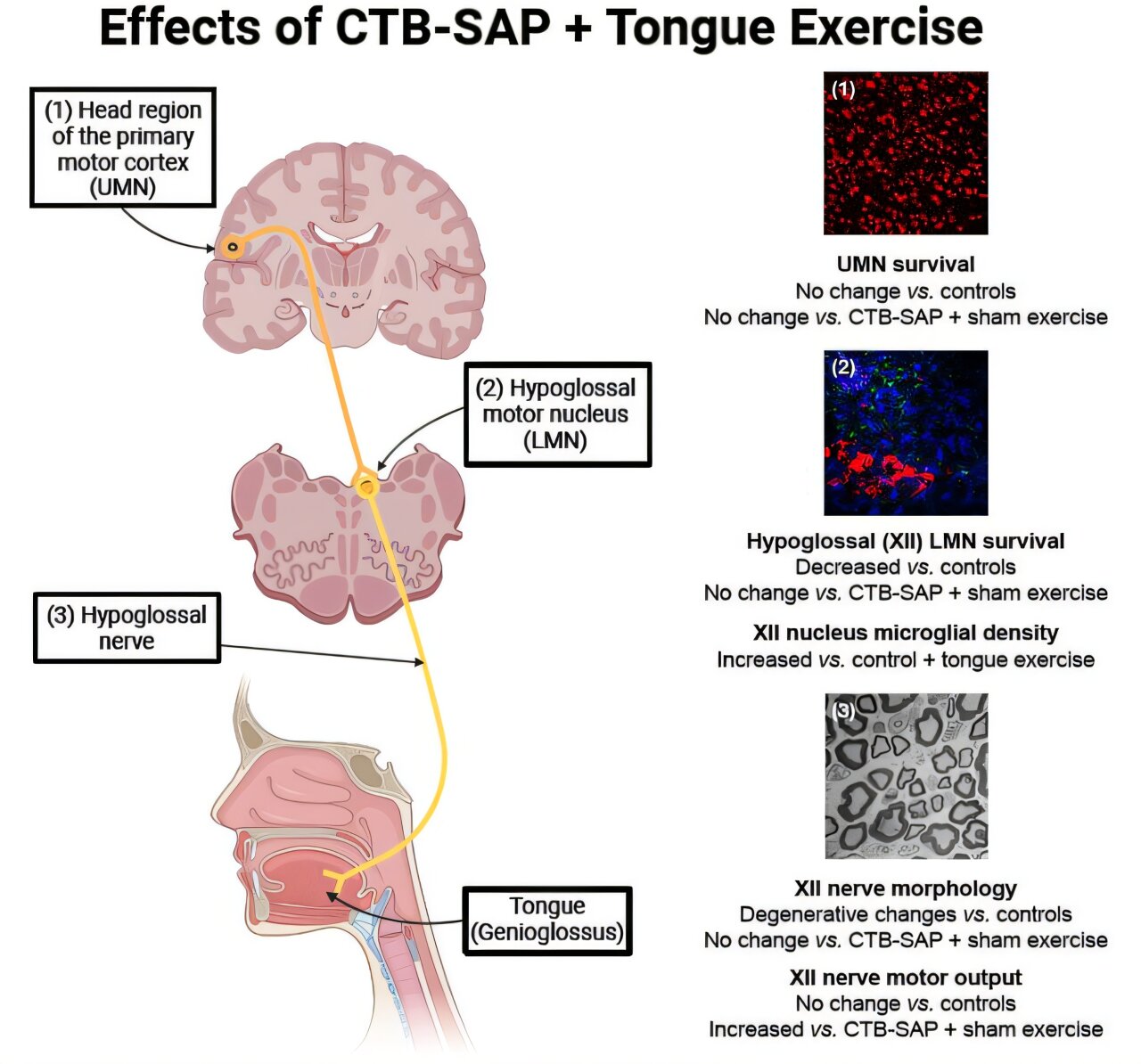
Research at the University of Missouri could lead to new therapies for people with amyotrophic lateral sclerosis (ALS) and other motor neuron diseases. In a preclinical model, the researchers discovered that tongue exercise can improve the activity of surviving neurons that control tongue movement, helping them compensate as other neurons are lost.
The finding, published in the Journal of Neurophysiology, could eventually help people preserve critical functions such as speaking, swallowing and breathing.
ALS, also known as Lou Gehrig's disease, damages neurons that control muscle movement and currently has no cure. But not all neurons controlling tongue movement die as ALS progresses, particularly in the early stages of the disease. Helping those surviving neurons adapt and work harder could preserve function longer.
"This adaptation is called neuroplasticity, meaning the nervous system changes how it operates to compensate for damage, and this finding offers hope for those with motor neuron diseases," said Nicole Nichols, an associate professor in the College of Veterinary Medicine and co-author of the study. "By boosting the activity of the surviving neurons, we can help preserve the quality of life for those with ALS, spinal muscular atrophy and other motor neuron diseases."
Researchers say the findings could inform future therapies designed to mimic the effects of exercise for patients who may not be able to perform tongue training.
"If we can figure out exactly how and why the tongue exercise helps the remaining neurons function better, that can help the development of treatments that mimic the benefits," Nichols said.
Source link