This article has been reviewed according to Science X's editorial process and policies. Editors have highlighted the following attributes while ensuring the content's credibility:
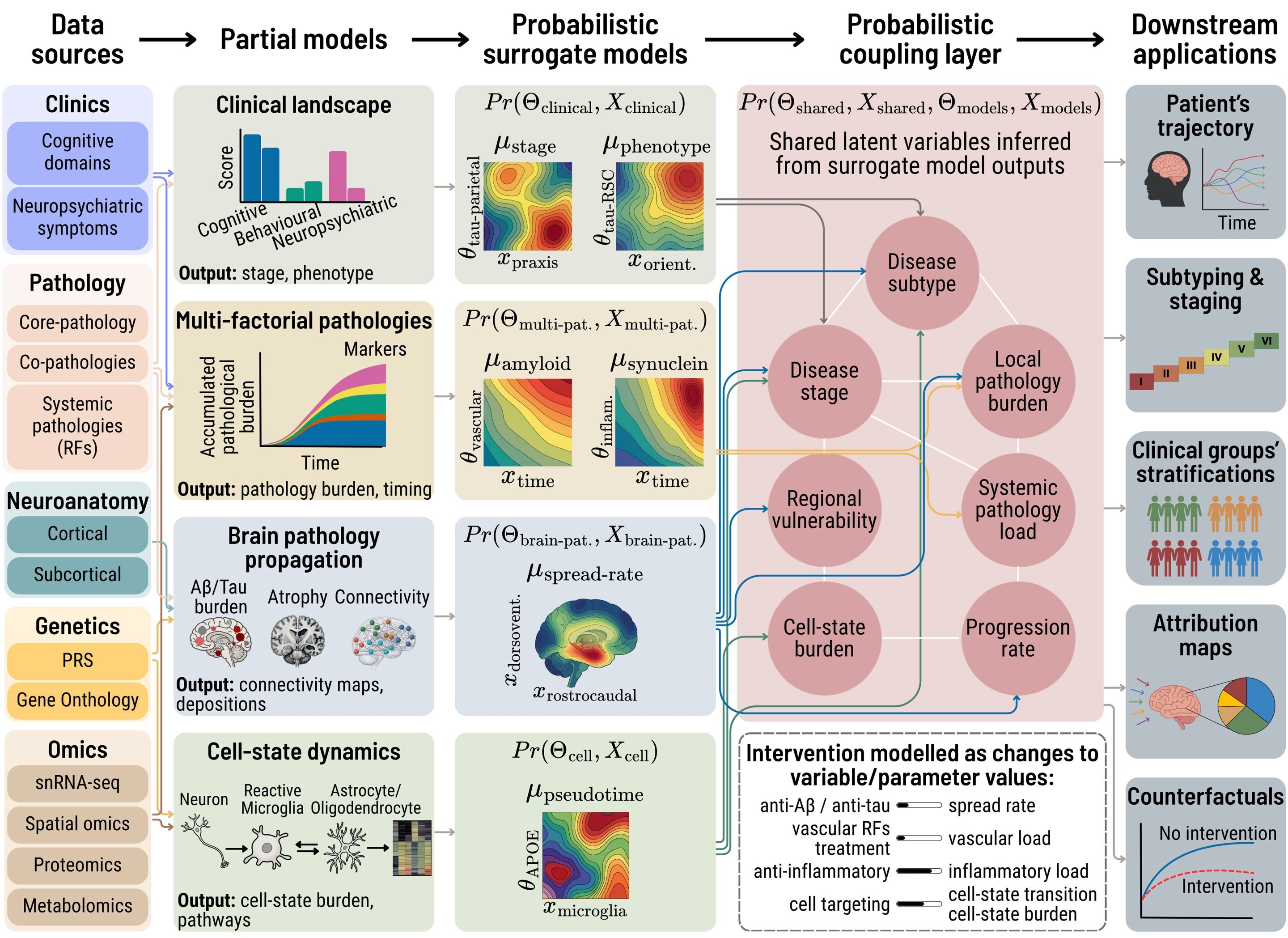
Alzheimer's disease may not be a single, uniform condition, but a complex disorder shaped by different combinations of cognitive symptoms, brain changes, biology, genetics and risk factors. A team of researchers propose using advanced computational modeling to bring these different layers together and build a more complete profile of each patient. The approach could eventually support more personalized diagnosis, better patient stratification and treatments tailored to the processes driving disease in each individual.
Their new paper published in Brain, led by professor Shahar Arzy (Faculty of Medicine), Dr. Bark Raveh (computer science) and professor Gad Marshall (Harvard Medical School), suggests that a novel computational approach may enable doctors to decipher the disease's complex nature and tailor preventive interventions to the individual long before symptoms appear.
Rather than searching for a single explanation that applies equally to every patient, the computational era may allow researchers to embrace the disease's complexity, identifying the different pathways that can lead to cognitive decline and ultimately moving toward diagnosis and treatment tailored to the individual.
The researchers point out that people diagnosed with Alzheimer's do not necessarily experience the same symptoms, show the same patterns of changes in the brain or share the same biological and genetic basis. In some people, memory loss may dominate, while others may experience problems with orientation, language, behavior, visual processing or executive functions.
Source link