This article has been reviewed according to Science X's editorial process and policies. Editors have highlighted the following attributes while ensuring the content's credibility:
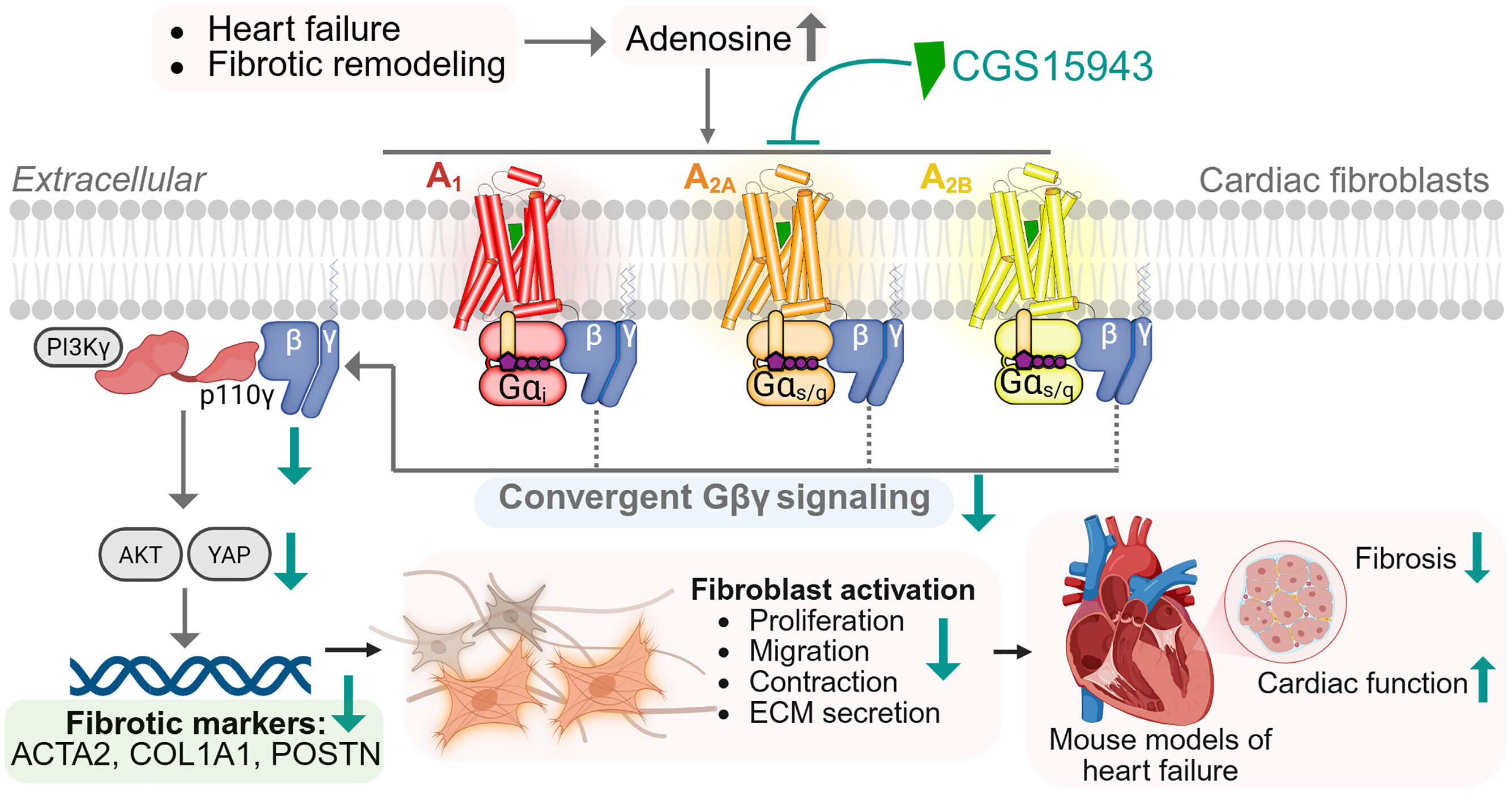
Researchers at the Stanford Cardiovascular Institute have characterized an unexpected signaling pathway that helps drive cardiac fibrosis, the buildup of scar tissue that makes the heart stiffer and less able to pump normally. Their study, "Targeting an atypical G protein-coupled receptor signaling pathway for cardiac fibrosis therapy," is published in Science.
Working with collaborators at UCLA, Boston University, MD Anderson Cancer Center, the University of Arizona and Greenstone Biosciences, the team found that three receptors on the surface of heart fibroblasts converge on the same fibrosis-promoting signal. The finding was supported in human cells, engineered human heart tissue and mouse models.
Cardiac fibrosis occurs in many forms of heart disease and contributes to heart failure, but no approved therapy directly targets the scarring process.
"This study identifies a common signal through which several adenosine receptors can drive cardiac fibroblast activation," said Joseph C. Wu, M.D., Ph.D., director of the Stanford Cardiovascular Institute and a corresponding author of the study. "By combining human stem-cell models with mechanistic studies and animal experiments, we could connect a screening result to a specific biological pathway that warrants further therapeutic investigation."
The researchers assembled a drug-screening system using human induced pluripotent stem cells, or iPSCs, which can be grown in large numbers and turned into different heart cell types.
They screened about 4,000 bioactive compounds for their ability to stop cardiac fibroblasts from becoming activated and producing scar tissue.
Source link