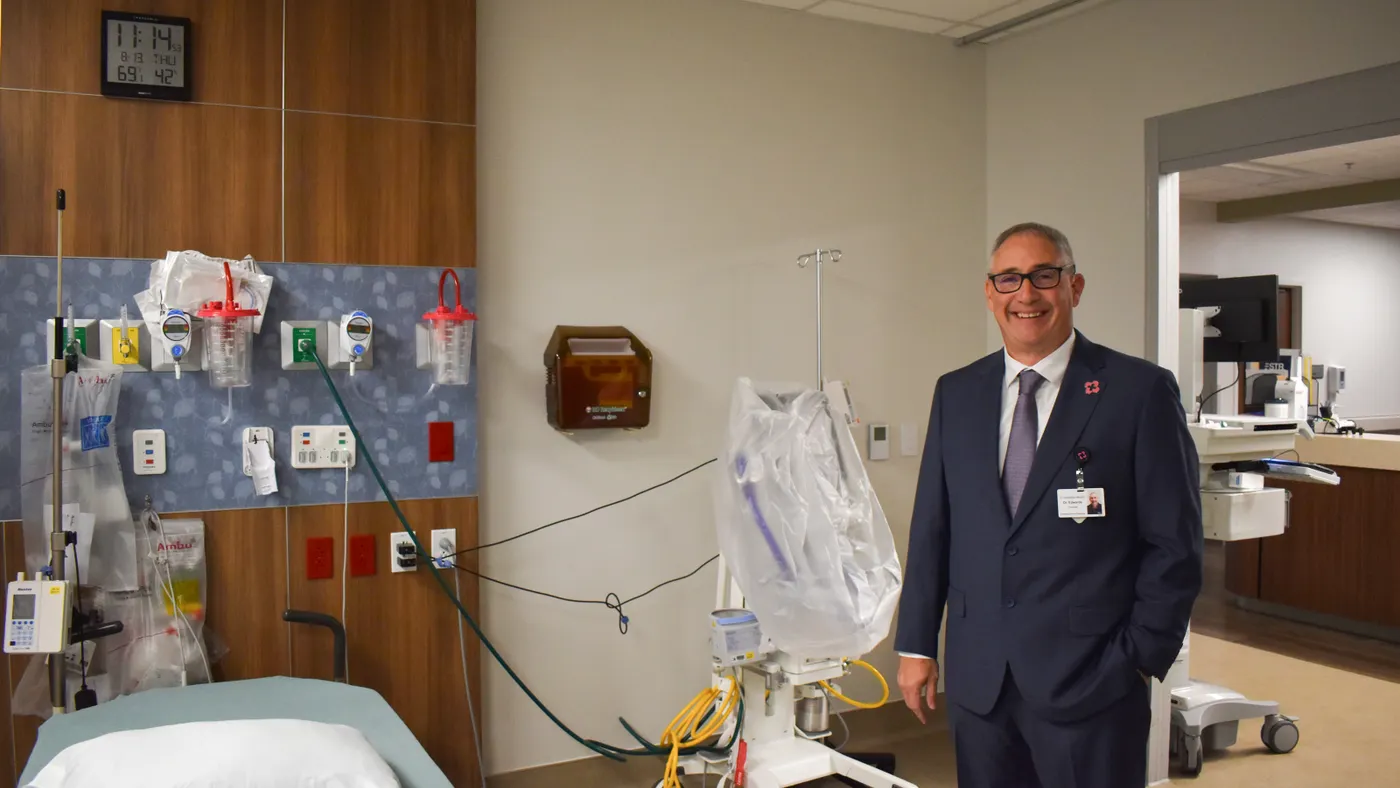
Mon Marion Neighborhood Hospital in West Virginia is part of a burgeoning trend of micro-hospitals, diminutive facilities with less than 50 beds.
WHITE HALL, W.Va. — It was a busy Thursday morning at the strip mall in White Hall, West Virginia. Once the sprawling grounds of Middletown Mall, the state’s first shopping mall before it shuttered in 2017, customers shuffled under a searing August sun between stores like Michaels, Five Below, Ace Hardware and Tractor Supply.
You’d be forgiven for overlooking the catty-cornered building sandwiched between the Department of Motor Vehicles and across the two-lane road from the Italian pizzeria.
The bright red “Emergency” sign over the front entrance might get your attention though. Or the Marion County ambulances with their engines idling around back.
The building, containing just two hallways, is Mon Marion Neighborhood Hospital, part of a burgeoning trend of small acute care hospitals dubbed “micro-hospitals” or “neighborhood hospitals” that can hold anywhere from eight to 25 inpatient beds.
The micro-hospitals are popping up nationwide — from Pennsylvania to Arizona, Colorado to Texas — as lower-cost alternatives to traditional hospitals, including in semi-urban and rural areas where care access is strained.
“It's been well received by the community,” said David Goldberg, the former CEO of Mon Health System, owner of Mon Marion. “Very busy, very widely accepted.”
Micro-hospitals differ from freestanding emergency rooms or urgent care, two types of care sites that are offered as solutions to the rural care crisis because they have inpatient care capabilities. Though diminutive, the facilities are certified as hospitals according to federal standards set by the CMS.
Source link