This article has been reviewed according to Science X's editorial process and policies. Editors have highlighted the following attributes while ensuring the content's credibility:
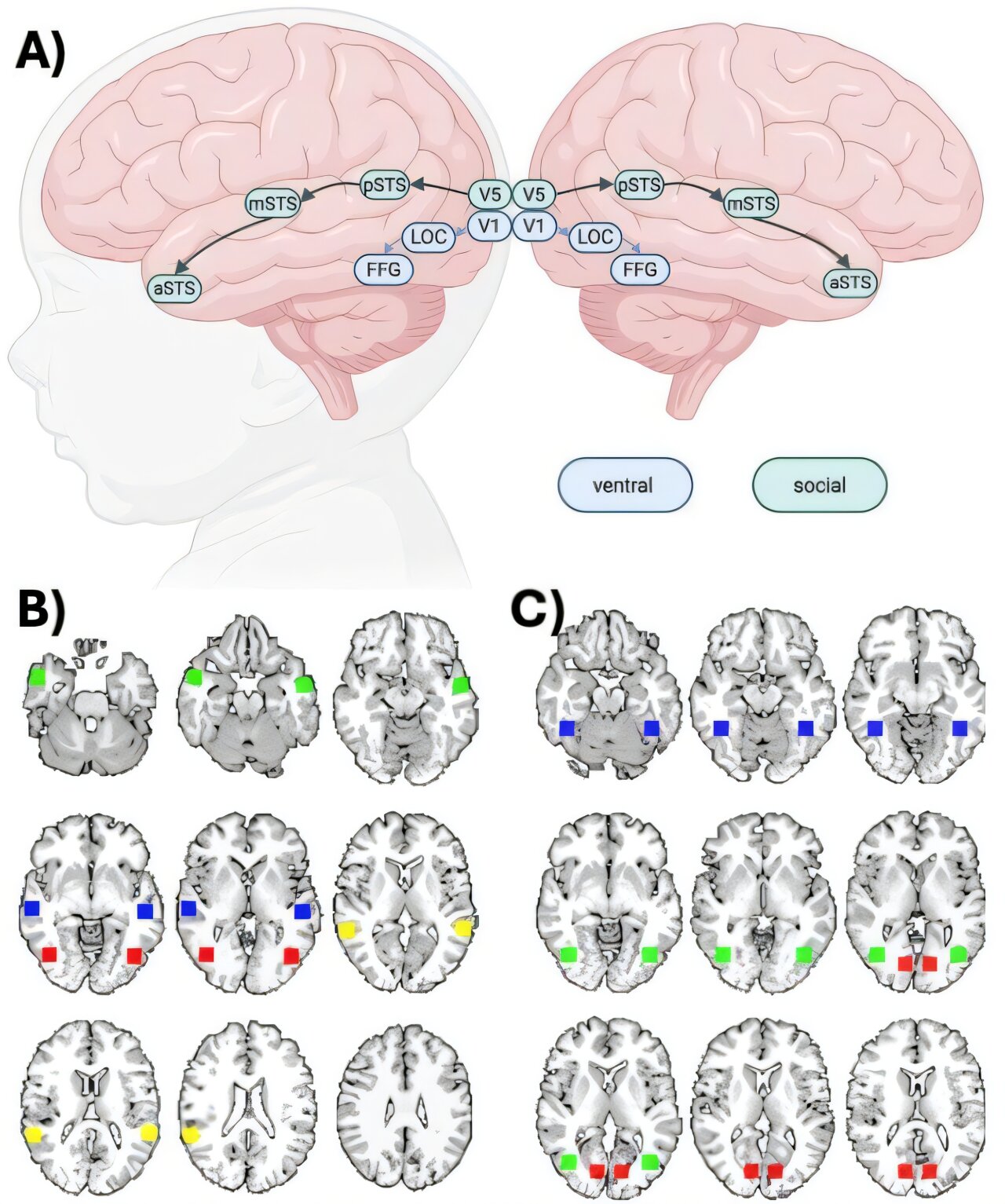
Newborn babies are naturally drawn to faces, a trait that helps them bond with their mothers and other caregivers. New Yale research has now found that the functional brain network involved in processing dynamic faces in adults can be observed as early as the third trimester of pregnancy.
For many functional brain networks, development largely occurs after birth. The findings, recently reported in Imaging Neuroscience, offer the first evidence that the brain pathway that typically supports perception of socially engaging faces can already be detected in the womb.
Studying how this pathway unfolds during the fetal and neonatal periods may help researchers understand how neurodevelopmental disorders arise, the scientists say. This includes autism spectrum disorder, which has been associated with differences in social attention.
"For newborns, being able to orient toward socially engaging faces—smiling, vocalizing, making eye contact—is a very important survival skill, because it helps them bond with their caregivers," says Katarzyna Chawarska, Ph.D., Emily Fraser Beede professor of child psychiatry and the study's first author. "In older individuals this function is supported by the social perception pathway. We now demonstrate that this pathway begins to assemble before birth."
Last year, the researchers discovered that a brain network that processes dynamic faces, gaze and speech—known as the social perception pathway— is detectable at birth . They also found that infants who had stronger connectivity in this pathway paid more attention to faces at 4 months old, which in turn predicted fewer social difficulties at 18 months.
Source link