This article has been reviewed according to Science X's editorial process and policies. Editors have highlighted the following attributes while ensuring the content's credibility:
An AI system trained on photographs of the face and tongue correctly identified every patient with coronary heart disease (CHD) in a small test, according to a new study from China.
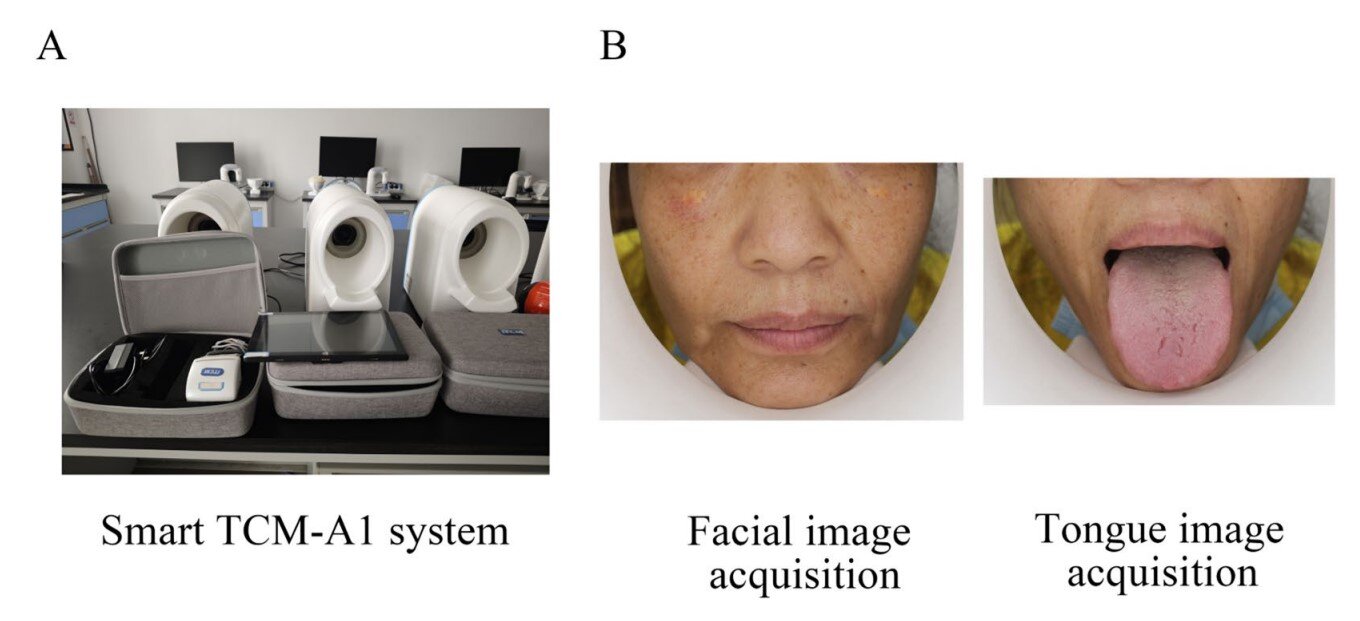
The researchers recruited 518 people: 200 with diagnosed CHD and 318 healthy volunteers. Each had their face and tongue photographed with a purpose-built scanning system. The pictures were analyzed using deep learning, a type of AI that learns to spot patterns in images.
The system examined the tongue and face photographs separately, then combined what each had picked up to predict who had CHD. Using both together performed better than either alone. The best-performing version was 98% accurate in a test of 104 people, correctly identifying all 40 patients with CHD, although two healthy participants were wrongly classified as having the condition—so-called "false positives."
The AI focused on the center of the tongue, its surface coating, the skin around the mouth and the cheeks. Some patients with CHD had darker tongues, thicker coatings or changes in facial pigmentation. The researchers say the areas highlighted by the AI are consistent with traditional Chinese medicine teachings about links between the tongue, face and heart.
Reading disease from appearance is not unique to traditional Chinese medicine. Doctors have long recognized that some visible features can point to underlying medical problems. Blue lips can signal low oxygen levels in the blood, and fatty yellow deposits around the eyelids, known as xanthelasma, can point to very high cholesterol, often caused by an inherited condition.
Source link