Medtech companies are preparing for a day when telesurgery, performed by a surgeon often hundreds of miles from the patient, could become a viable option for more people.
Felipe Rios Mendoza’s right arm fell limp, the phone in his hand slipping to the floor. Frightened family members rushed him to the hospital near their home outside Panama City, where diagnostic imaging confirmed a blockage in a major artery of the brain.
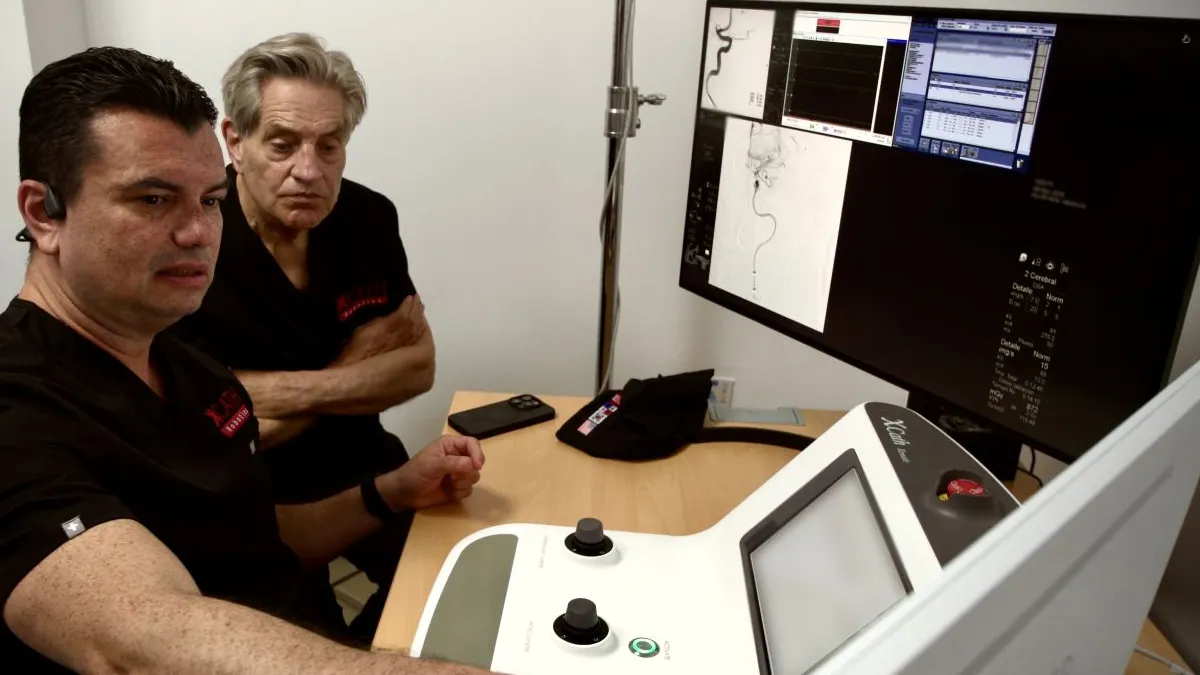
Neurosurgeon Vitor Mendes Pereira was at Hospital Medica Norte in Santiago, Panama, when he got the call. Rios Mendoza was a candidate for an experimental procedure that the doctor, his colleagues and robot developer XCath had spent years preparing for: the world’s first telerobotic neurosurgery.
Transferred to a clinic some 150 miles from Hospital Medica Norte, Rios Mendoza was diagnosed with a severe form of ischemic stroke. The 68-year-old’s survival depended on rapid intervention to remove the blood clot. Sitting at the controls of XCath’s system in Santiago that March day, Pereira performed a telerobotic mechanical thrombectomy, assisted by clinicians at the patient’s bedside. The procedure was a success.
“This patient was very much on the most extreme end of what we thought we could manage,” recalled XCath CEO Eduardo Fonseca. Yet two hours later, Rios Mendoza was talking and moving again. “It is the best-case scenario,” said Fonseca.
Remote stroke treatment illustrates the promise of telesurgery to reach people who lack timely access to the level of care that can save lives or prevent disability. S. and globally.
Source link