This article has been reviewed according to Science X's editorial process and policies. Editors have highlighted the following attributes while ensuring the content's credibility:
A study of how cells repair radiation-induced genetic damage offers clues to why some people develop cancer early in life or more than once. The findings were recently published in the journal Proceedings of the National Academy of Sciences.
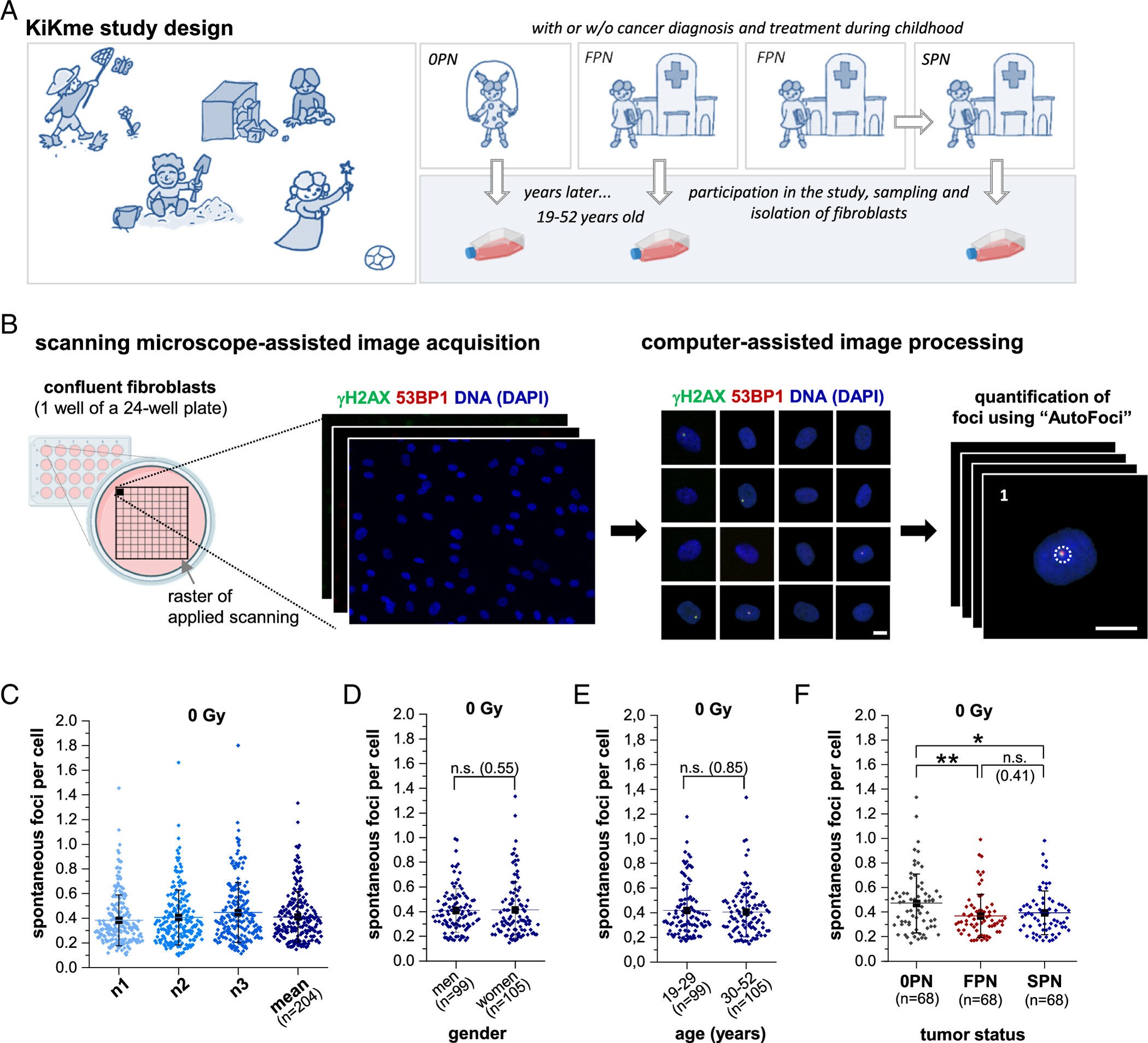
The study was conducted as part of the collaborative project ISIBELa (Intrinsic Radiosensitivity: Identification of Biological and Epidemiological Long-term Effects). Researchers used X-rays to induce genetic damage of varying severity in skin cells, then tracked the cells' repair process and assessed the damage that remained.
The study involved 204 adult cell donors: cancer-free individuals and survivors of childhood cancer, half of whom had gone on to develop another cancer unrelated to the first tumor. The survivors were recruited with the help of the German Childhood Cancer Registry (Mainz) and the Leibniz Institute for Prevention Research and Epidemiology—BIPS (Bremen).
The aim was to establish whether the groups differed in how effectively they repaired genetic damage and whether this might explain why some people develop cancer early in life or go on to develop several cancers in succession.
For the analysis, connective tissue cells (fibroblasts) were isolated from small skin samples taken from all participants and processed into a biobank at the radio-oncology research laboratory of Mainz University Medical Centre. 5, 5, 10, 25 and 100 milligray).
Source link