This article has been reviewed according to Science X's editorial process and policies. Editors have highlighted the following attributes while ensuring the content's credibility:
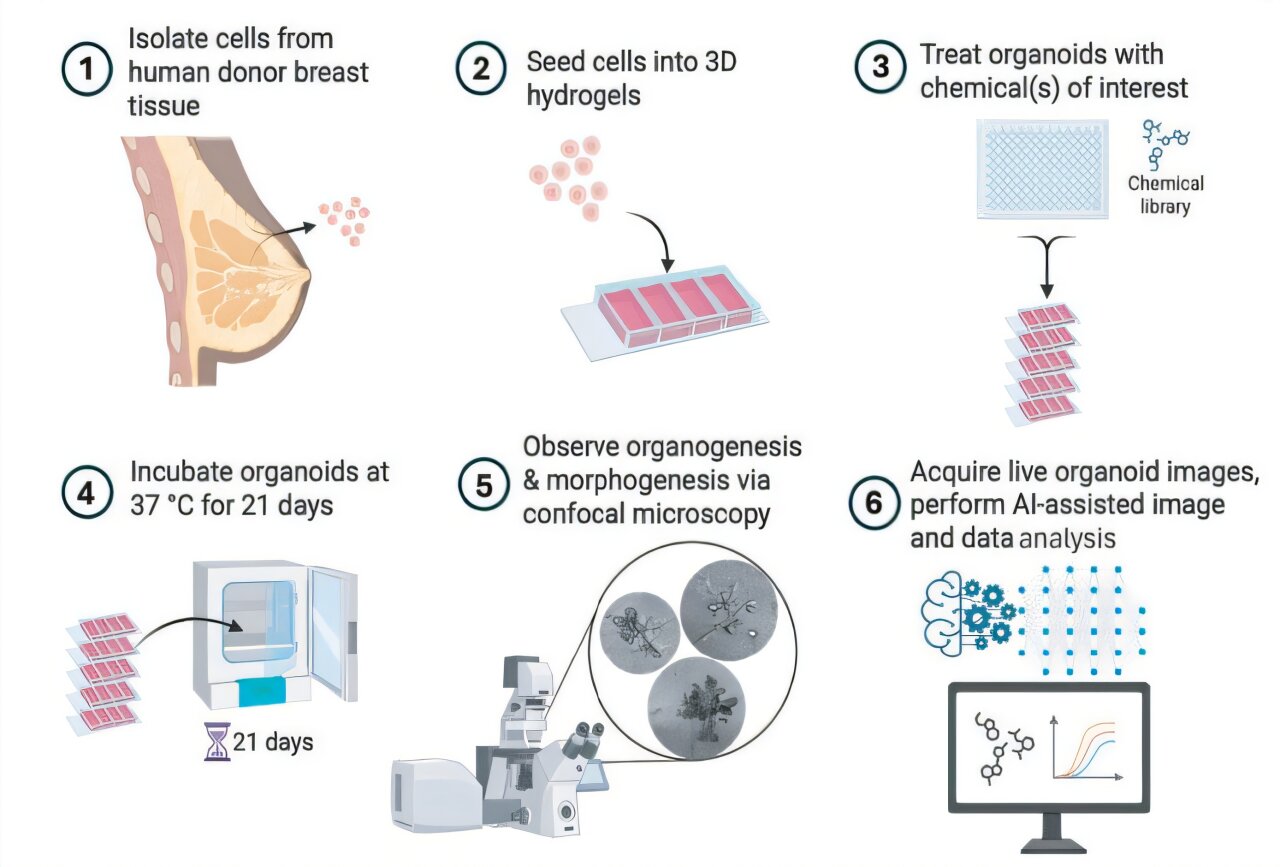
Exposure to common chemicals may alter how normal human breast tissue develops, according to a new study from researchers at Tufts University School of Medicine and Boston University. The findings, published in the Proceedings of the National Academy of Sciences, suggest that exposure to some chemicals—particularly multiple bisphenols at once—may create molecular changes in breast tissue that could influence susceptibility to breast disease later in life.
The findings lay the groundwork for scientists to investigate whether these molecular changes persist in human tissues, contribute to disease later in life and could yield biomarkers to help assess breast cancer risk.
"If these results are validated by additional studies, they could change how we think about cancer prevention," said Charlotte Kuperwasser, the study's senior author and a professor of developmental, molecular and chemical biology at Tufts University School of Medicine.
A growing body of research has raised questions about whether exposure to endocrine-disrupting chemicals—substances that can interfere with the body's hormones—may contribute to breast cancer risk. But much of what scientists know about how chemicals affect breast tissue comes from animal models or laboratory-grown cells that cannot fully reproduce the complexity of human tissue.
"The breast is also unusual in that it undergoes major developmental changes well after birth, including during puberty and pregnancy," said Kuperwasser.
Source link