This article has been reviewed according to Science X's editorial process and policies. Editors have highlighted the following attributes while ensuring the content's credibility:
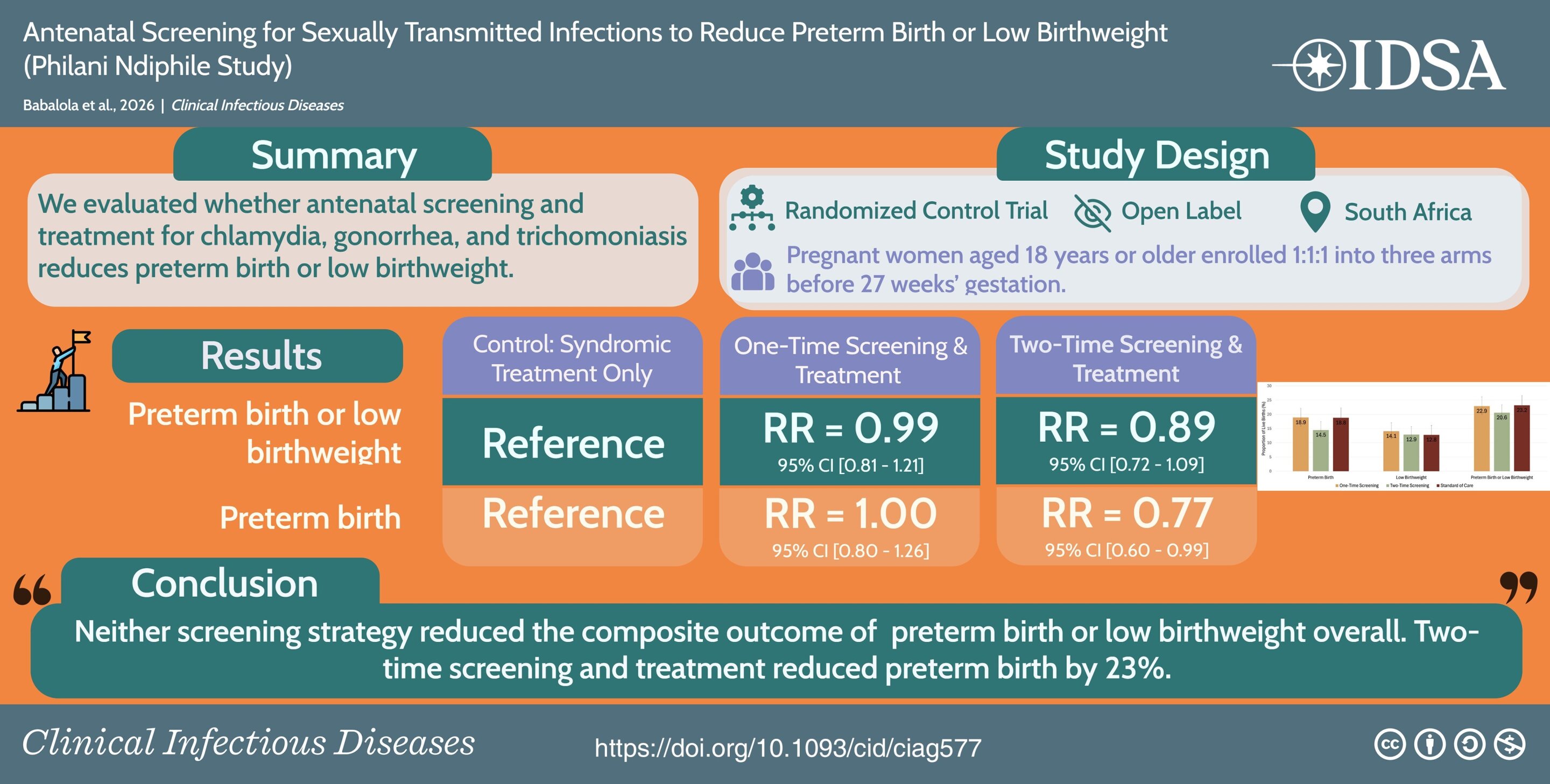
Screening and treating pregnant patients for three common sexually transmitted infections (STIs) twice during pregnancy was associated with a 23% lower risk of preterm birth compared with standard care, according to a randomized clinical trial published in Clinical Infectious Diseases from researchers at the University of Pennsylvania and University of Southern California.
In practical terms, 14.5% of participants who received screening and treatment twice during pregnancy had a preterm birth, compared with 18.8% of those receiving standard care. Screening only once was not associated with a reduction in preterm birth.
"Complications from preterm birth are among the leading causes of death among children under 5 years of age globally. This study suggests that testing for STIs during pregnancy could help us find and treat infections that might otherwise go unnoticed, and that screening more than once may be important for reducing the risk of preterm birth," said co-lead author Andrew Medina-Marino, Ph.D., adjunct associate professor of psychiatry at the University of Pennsylvania Perelman School of Medicine.
"Because most of the infections we found caused no symptoms, waiting for symptoms alone means we may miss an opportunity to intervene."
The trial focused on three common, treatable STIs: chlamydia, gonorrhea and trichomoniasis. These infections have been linked to preterm birth and low birth weight. However, whether routine screening and treatment during pregnancy can improve birth outcomes has remained uncertain.
Source link