This article has been reviewed according to Science X's editorial process and policies. Editors have highlighted the following attributes while ensuring the content's credibility:
As the steadfast protector of the body's interior, the skin must be able to swiftly respond to stressors from the outside world and then return to a steady state to maintain everyday operations. Coordinating that agile response are epidermal stem cells (EpSCs), which initiate development of specialized skin cells sent to the surface while also maintaining a ready pool of new stem cells to draw from.
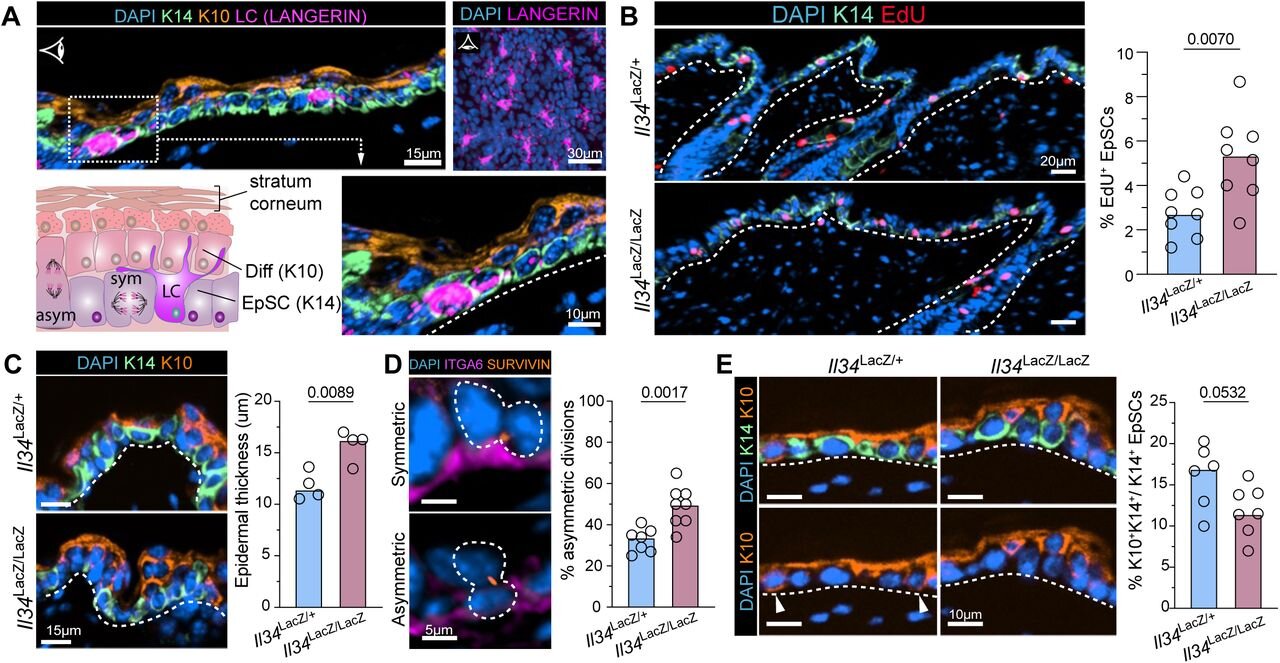
The mechanisms that regulate this system to maintain a normal flow of cells have long remained elusive. Now researchers at Rockefeller University have discovered a circuit that acts as a system regulator, connecting the skin surface to stem cells via Langerhans immune cells, which occupy the epithelial layers between the two. They published their results in Science.
"This circuit acts like a rheostat that continuously fine-tunes the stem cells' response to the environment at the skin surface," says first author Anita Gola, a research associate in the Robin Chemers Neustein Laboratory of Mammalian Cell Biology and Development, led by Elaine Fuchs. "Langerhans cells pick up signals from microbes on the surface and, through chemical messaging, signal to stem cells whether they need to produce new cells or direct cells to differentiate."
"Essentially, Langerhans cells coordinate barrier integrity, antimicrobial peptide production and host–microbe interactions," Fuchs says.
Fuchs' lab has already discovered epidermal circuits that trigger an acute inflammatory response, wound repair and epigenetic memory, among other mechanisms.
Source link