This article has been reviewed according to Science X's editorial process and policies. Editors have highlighted the following attributes while ensuring the content's credibility:
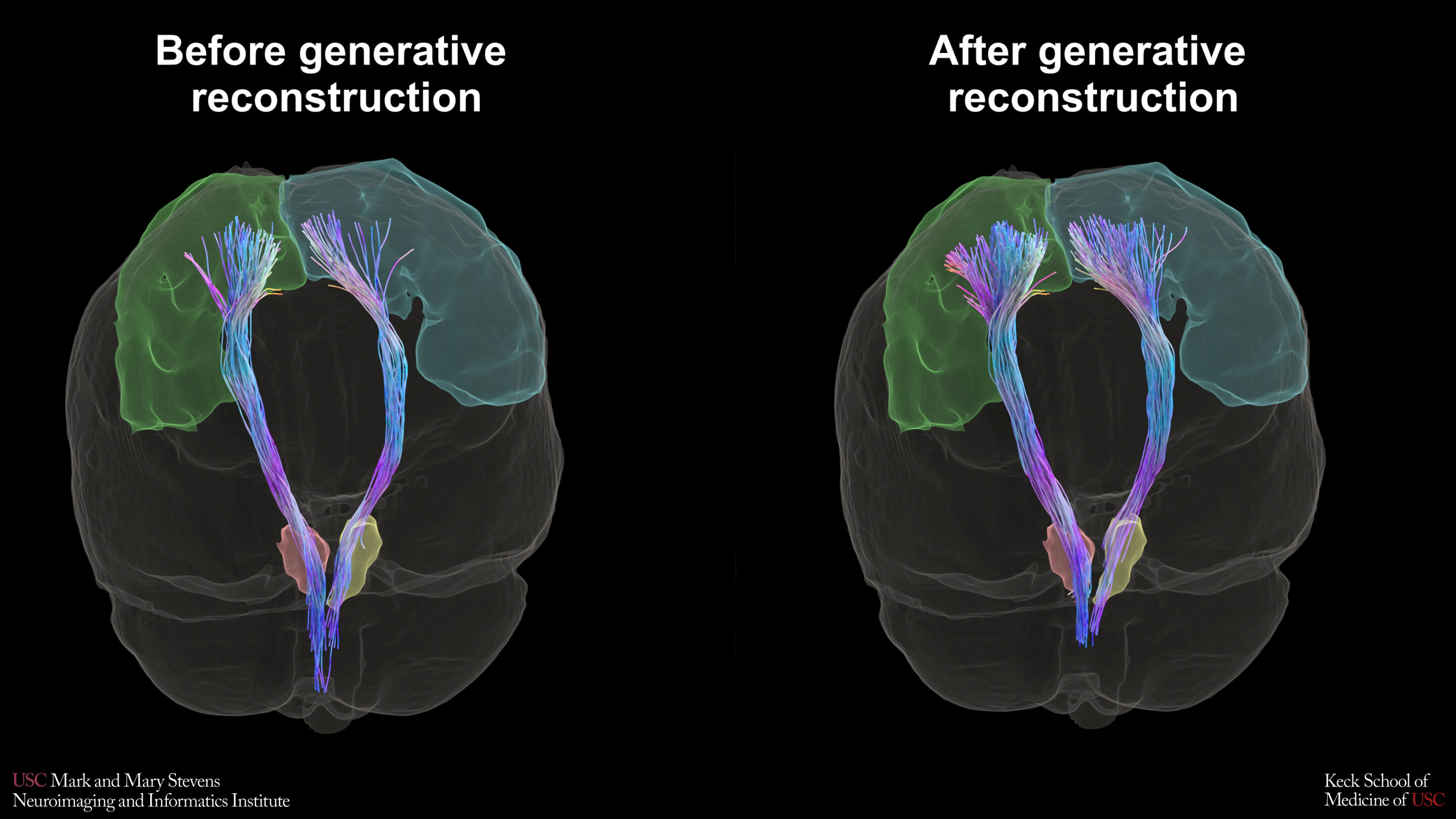
Patients with early-onset Alzheimer's disease, whose symptoms start before age 65, have more extensive deposits of tau, a hallmark protein of the condition, compared with patients whose symptoms start at 65-plus, a new study found. What's more, tau accumulates at more than twice the rate in younger compared to older patients and spreads widely throughout the brain.
The findings may help explain why early-onset Alzheimer's typically progresses faster and is more likely to produce unusual syndromes involving language, visual and spatial abilities, and executive functioning, experts said.
The study is the largest to examine tau in patients with early-onset disease—who make up 5% of all Alzheimer's patients—and compare them with late-onset patients.
"Patients with early-onset Alzheimer's are more likely than older patients to present with symptoms unrelated to memory, at least initially," said co-senior author Renaud La Joie, Ph.D., Edward and Pearl Fein endowed professor in precision care for memory disorders at UCSF.
"They might have difficulty interpreting what they are seeing despite a normal eye exam. They might struggle with judging distances and may have trouble reading," La Joie continued. "Some patients may experience a decline in language abilities in which they have difficulty retrieving words and following long sentences, although speech remains fluent. Others may struggle with executive functioning, such as attention, problem-solving, planning and adapting to changing situations."
The researchers studied 390 patients from the Longitudinal Early-Onset Alzheimer's Disease Study, whose average age was 59, and 211 late-onset patients from the Alzheimer's Disease Neuroimaging Initiative, whose average age was 78.
Source link