This article has been reviewed according to Science X's editorial process and policies. Editors have highlighted the following attributes while ensuring the content's credibility:
Atypical meningiomas are tumors that originate in the meninges and are associated with a high risk of recurrence. Until now, it was unclear whether patients benefit from radiotherapy after complete surgical removal of the tumor. An international study in which MedUni Vienna played a key role provides new evidence that radiotherapy can significantly reduce the recurrence rate. The results, recently published in The Lancet, are set to be incorporated into national and international guidelines.
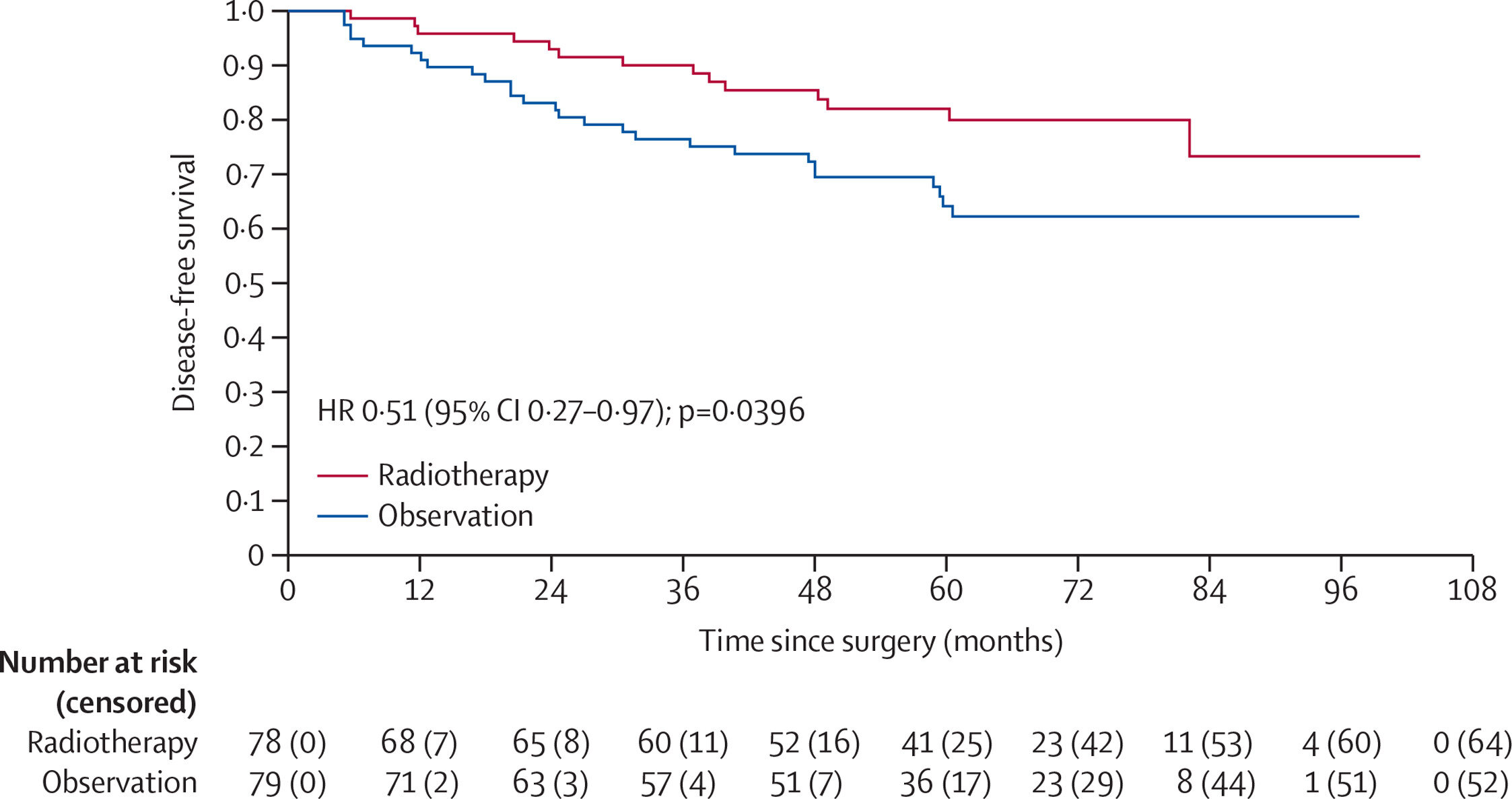
The study, known as ROAM/EORTC-1308, involved 157 patients after the complete removal of an atypical meningioma. Of those, 78 randomly selected patients each received 30 sessions of radiotherapy, while 79 were monitored regularly through imaging. The clinical trial was conducted at 58 hospitals in 11 countries (Austria, Australia, Belgium, Ireland, France, Germany, New Zealand, Italy, Spain, Switzerland and the United Kingdom). The Medical University of Vienna played a leading role in the study through the Division of Oncology at the Department of Medicine I and its head, Matthias Preusser.
The results provide the first robust evidence from a randomized trial that radiotherapy after complete removal of an atypical meningioma significantly reduces the risk of recurrence. After a median follow-up period of around five years, 11 of 78 patients (14%) in the radiotherapy group experienced a meningioma recurrence, compared with 24 of 79 patients (30%) in the observation group. 3% of those under imaging surveillance.
Source link