This article has been reviewed according to Science X's editorial process and policies. Editors have highlighted the following attributes while ensuring the content's credibility:
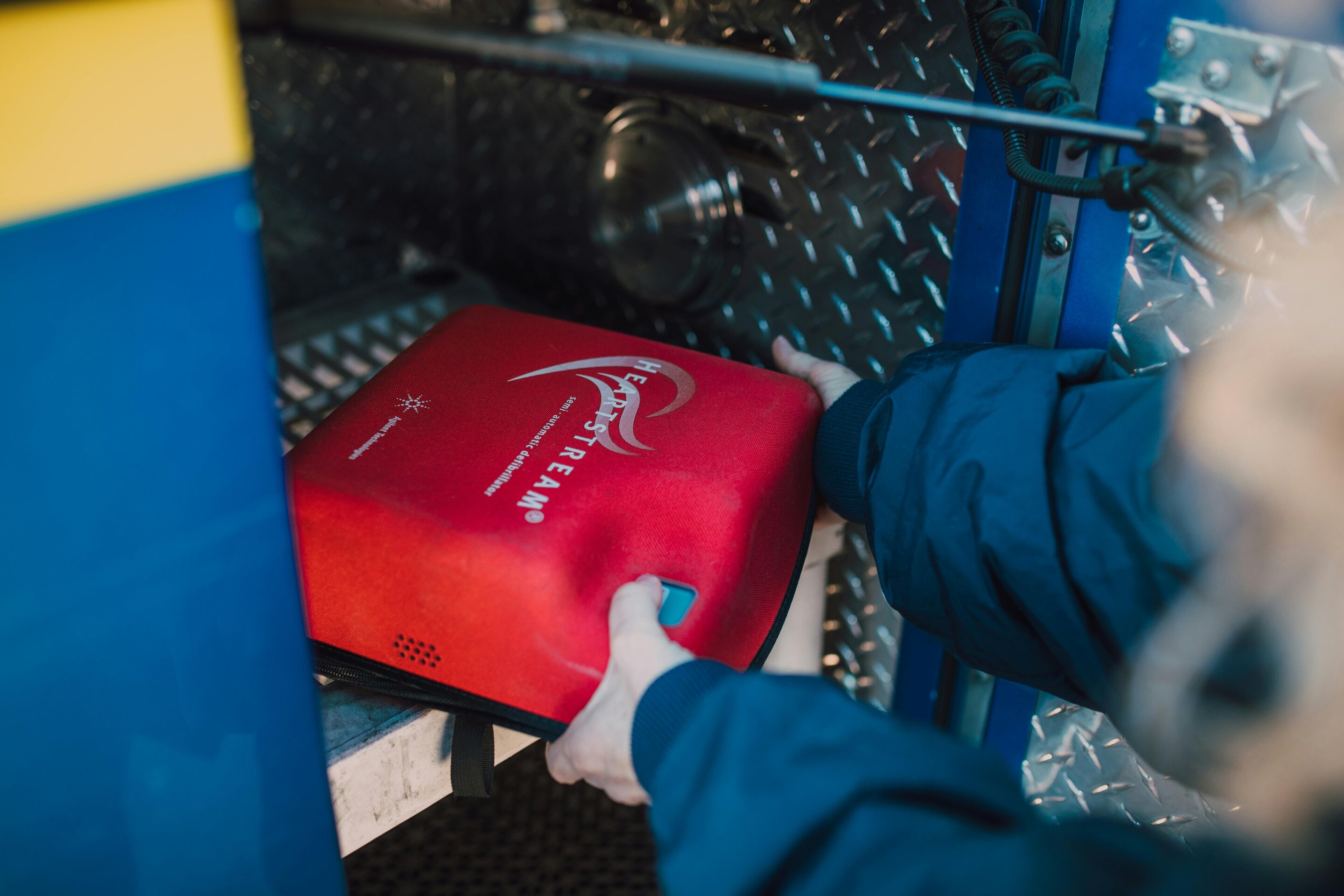
Drones could be used to deliver automated external defibrillators (AEDs) to people experiencing out-of-hospital cardiac arrest, according to a study presented at the European Emergency Medicine Congress.
AEDs can be far apart, making timely access uneven, particularly in rural areas or heavily congested urban environments. The research showed that delivering AEDs by drone, combined with providing more fixed AEDs, significantly reduced the time between an out-of-hospital cardiac arrest (OHCA) being reported and the start of defibrillation.
"Out-of-hospital cardiac arrest is a major public health issue. Survival depends strongly on early cardiopulmonary resuscitation and timely defibrillation," Dr. Hillary Minka, an emergency physician at Lariboisière Hospital in Paris, told the congress. "Every minute of delay before defibrillation reduces the chances of survival.
"We wanted to investigate whether drones could provide faster AED access than road-based retrieval of existing fixed AEDs and thereby improve access to defibrillation across the Île-de-France region."
Minka and her colleagues used data on OHCAs in seven departments (administrative areas) in Île-de-France, excluding central Paris, to conduct a computer simulation study that looked at three strategies:
They divided the region into units called Ilots Regroupés pour l'Information Statistique (IRIS), the smallest census areas used by the French National Institute of Statistics. They estimated the time needed for an AED to arrive at the center of each unit under each strategy. They also evaluated several potential locations for drone deployment, including existing AED sites, mobile intensive care units (MICUs) and fire stations.
Source link