This article has been reviewed according to Science X's editorial process and policies. Editors have highlighted the following attributes while ensuring the content's credibility:
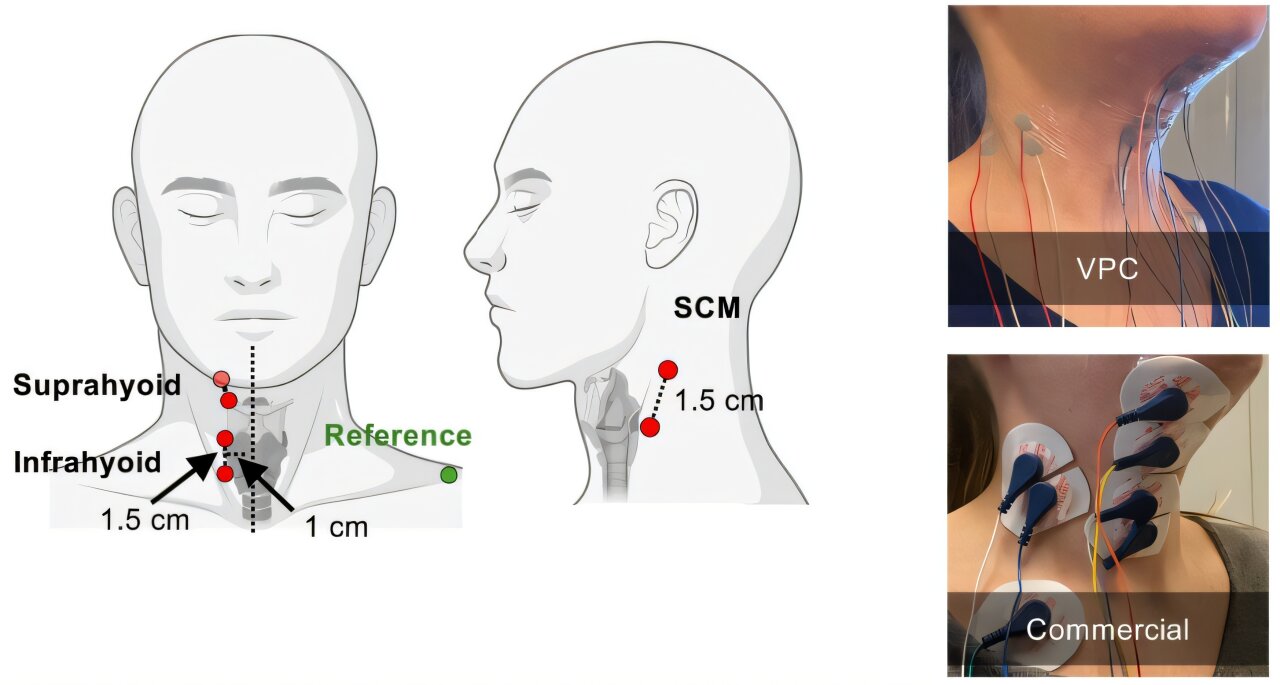
A team of McGill University researchers has developed a putty-like electrode that molds to the skin to improve treatment and monitoring of voice disorders and upper airway diseases. In a proof-of-concept study, the sensor matched a standard clinical electrode for noise and stability while recording activity from small neck muscles.
The sensor could help track breathing, swallowing and speaking during rehabilitation after a stroke or in neurodegenerative diseases such as Parkinson's, the researchers said. The work is published in the journal Science Advances.
"As a speech pathologist, I have muscle-strengthening exercises I can give to patients, but we can only see them 30 minutes a week, or even monthly," explained study co-author Nicole Li-Jessen, professor in the School of Communication Sciences and Disorders and an associate investigator in the Translational Research in Respiratory Diseases Program at the Research Institute of the McGill University Health Center.
"If we have a muscle sensor that can be used as biofeedback for the patient while they practice at home, they can know if they are using the muscle correctly."
Current electromyography (EMG) sensors are effective for large areas like the legs and arms, but developing practical options for the neck has been challenging because the muscles are small and the surface is highly curved, the researchers said.
Additionally, most commercial sensors require a gel to adhere to the skin and conduct physiological signals.
Source link