This article has been reviewed according to Science X's editorial process and policies. Editors have highlighted the following attributes while ensuring the content's credibility:
Some people are born with a defect in their genetic material that prevents their immune system from functioning properly. In people with a condition known as GATA2 deficiency, the body does not produce enough immune cells, leaving them at increased risk of infections and disease. Now, researchers at Aarhus University have demonstrated that they can repair the genetic defect directly in patients' own blood stem cells.
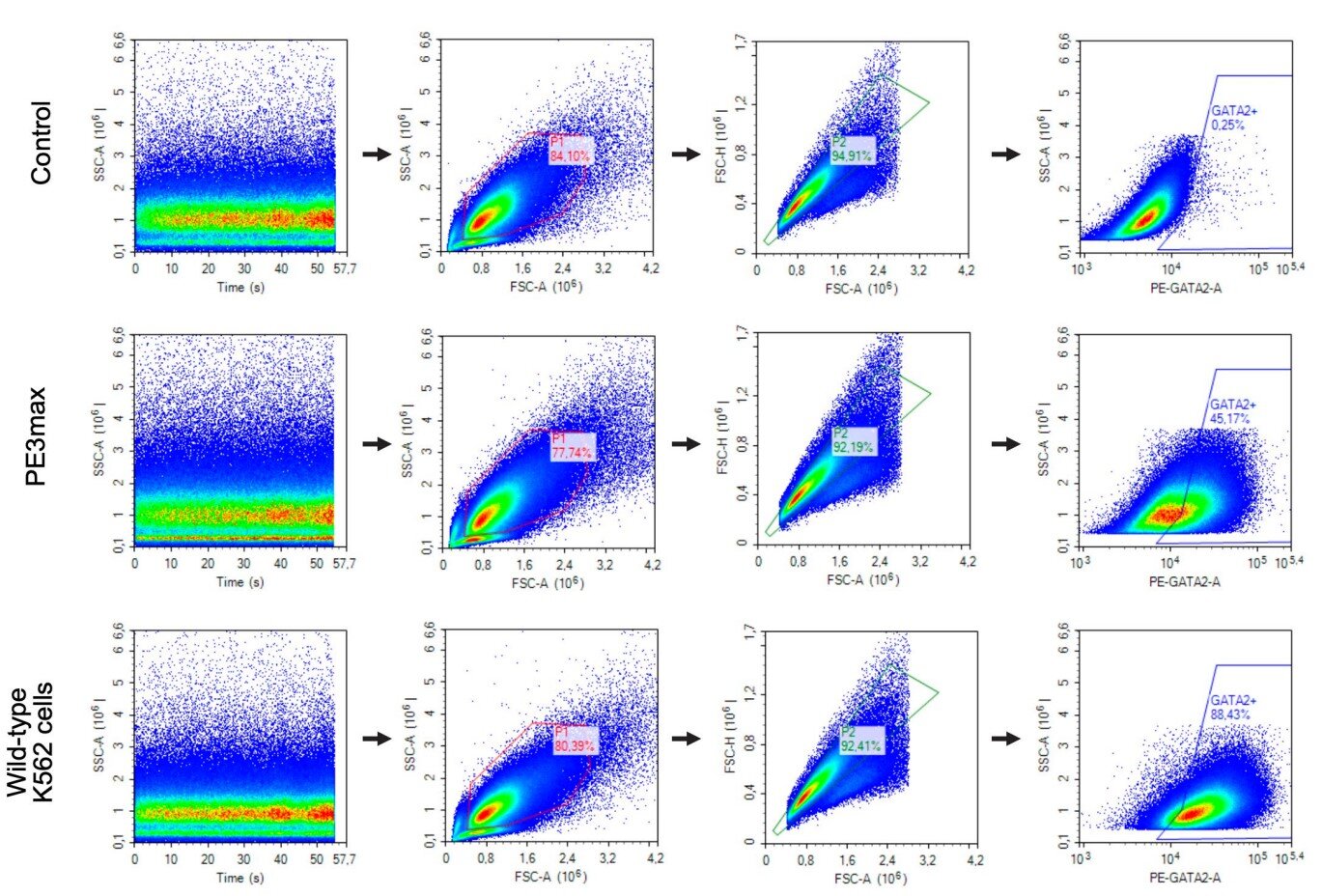
Using a new technique called prime editing, the researchers have successfully corrected part of the genetic defect in stem cells taken from a patient. According to Jonas Holst Wolff, a postdoctoral researcher at the Department of Biomedicine who conducted the study together with professor Jacob Giehm Mikkelsen, the technique could have significant implications for patients with genetic disorders in the future.
"We have shown that it's possible to repair the genetic defect directly in a patient's own stem cells. This brings us one step closer to a treatment that addresses the underlying cause of the disease rather than simply treating its consequences."
Prime editing builds on the well-established CRISPR technology but works in a different way.
Traditional CRISPR involves cutting through DNA to make changes. This can affect the cells and, in some cases, lead to unintended changes elsewhere in the genetic material.
With prime editing, the DNA is not cut all the way through. Instead, researchers can insert a small piece of correct DNA at the precise location of the defect.
Source link