This article has been reviewed according to Science X's editorial process and policies. Editors have highlighted the following attributes while ensuring the content's credibility:
In the 1997 film "Men in Black," one of the prominent pieces of alien technology the main characters use in their work to police extraterrestrial activity on Earth was the neuralyzer. This flashy handheld device would erase the witnesses' memories of their close encounter. For as long as human inquiry has existed, people have tried to understand how and why we remember and forget. As we have begun to understand how the brain works, researchers have slowly uncovered the biological mechanisms underlying memory.
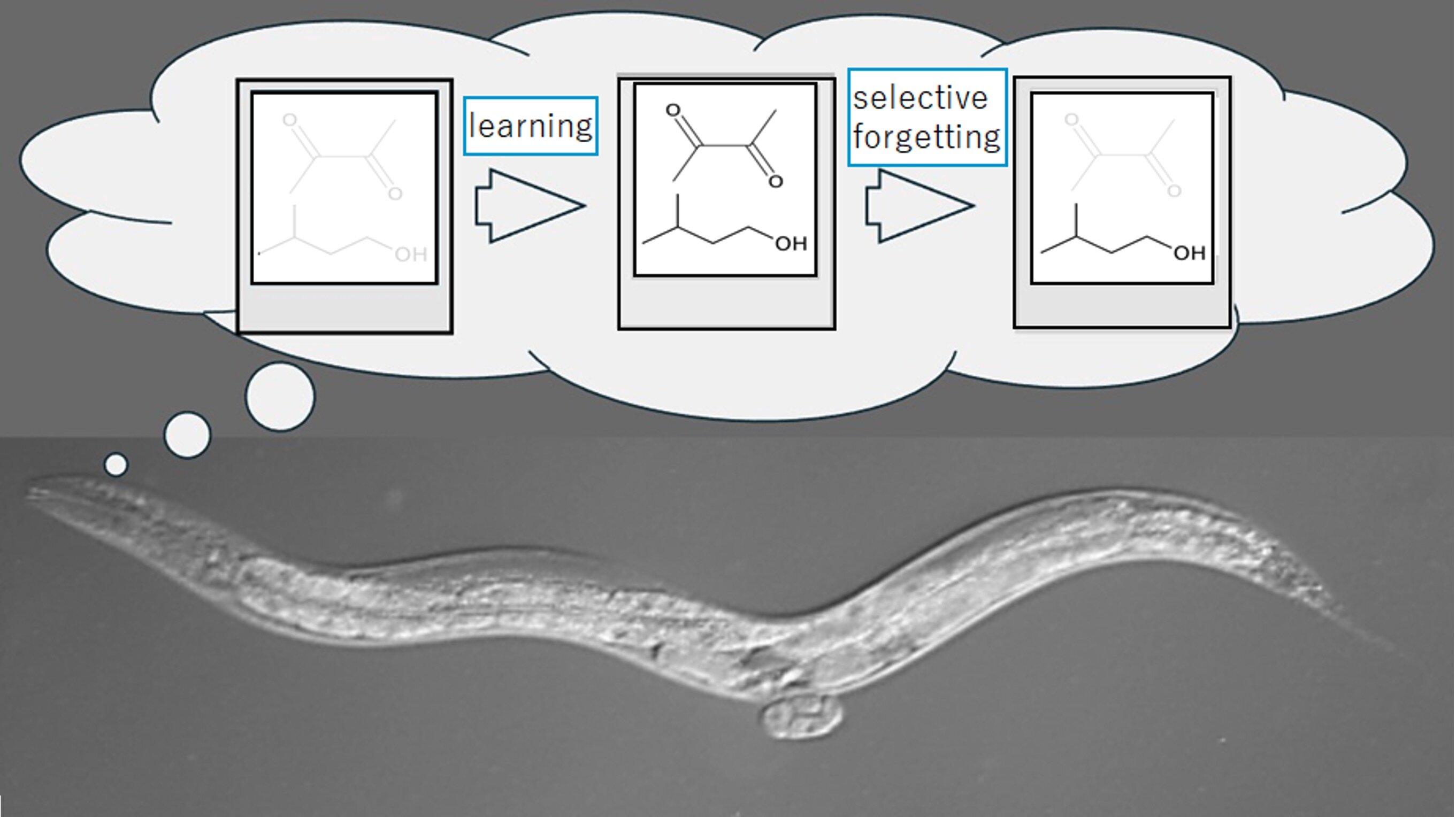
Publishing in Current Biology, researchers from Kyushu University have found the key molecular and neural pathways that cause the nematode C. elegans to actively forget a specific odor it previously remembered.
Through extensive studies of the C. elegans nervous system, the team discovered that a peptide called NLP-47 triggers this process of active forgetting. NLP-47 is received by a different neuron further along the circuit, which in turn sends a signal to the neuron storing the memory of the odor, leading to its erasure. Most strikingly, when C. elegans memorized two different odors simultaneously, this circuit erased the memory of only one odor while leaving the other intact.
"Research on memory has focused on how it is formed and maintained. How memories are lost has received less attention," explains Professor Takeshi Ishihara from Kyushu University's Faculty of Science, who led the study.
Source link