This article has been reviewed according to Science X's editorial process and policies. Editors have highlighted the following attributes while ensuring the content's credibility:
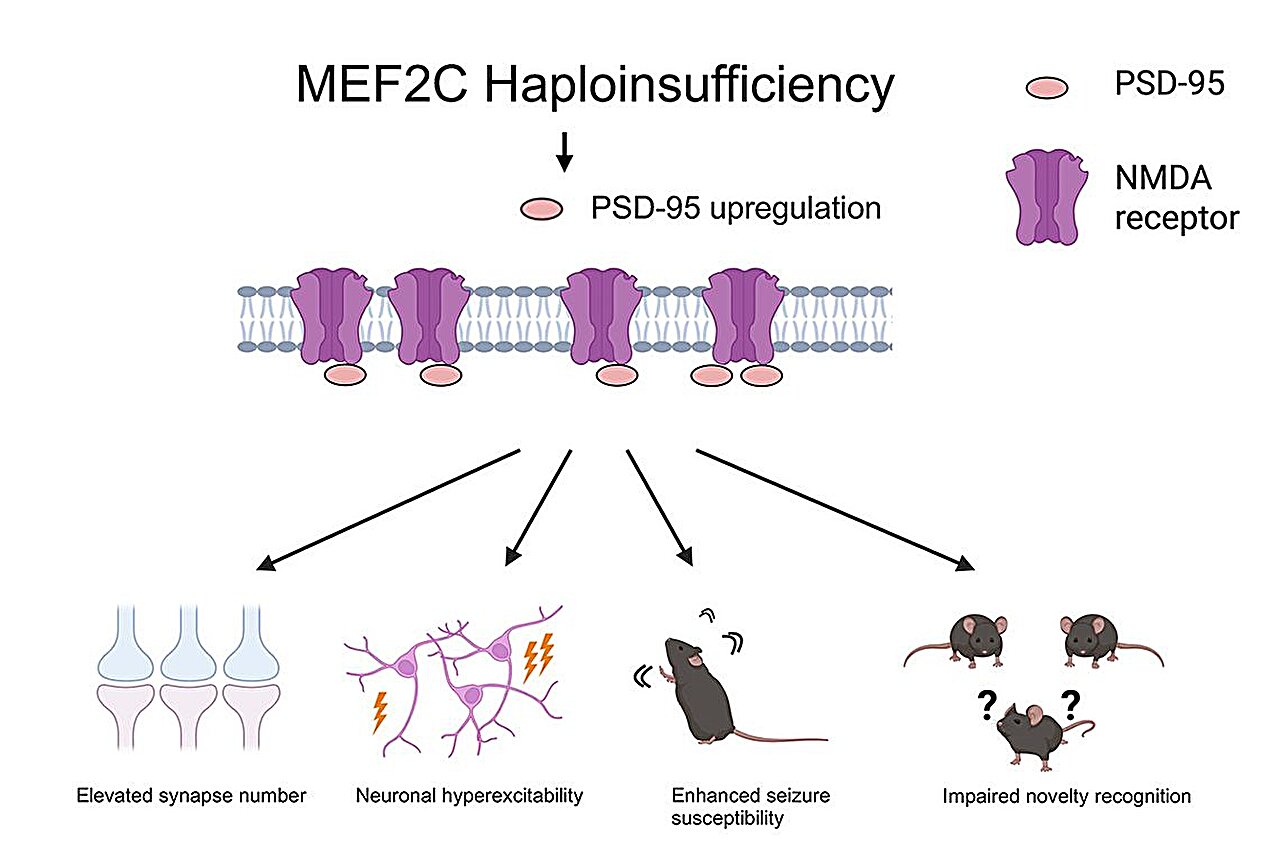
A particular signaling protein in the brain could be a therapeutic target for neurological disorders arising from the deletion of the autism-linked gene MEF2C, University of Illinois Urbana-Champaign researchers found in a new mouse study published in the journal Proceedings of the National Academy of Sciences.
Deletions or mutations to MEF2C are associated with a number of neurological and developmental disorders, from autism to epilepsy to Alzheimer's disease, said study leader Nien-Pei Tsai, an Illinois professor of molecular and integrative physiology.
MEF2C haploinsufficiency is the term for when someone has only one copy of the gene, rather than the typical two. It is a condition characterized by intellectual disability, autism spectrum disorder and seizures.
"Although MEF2C haploinsufficiency is a rare genetic disorder, the MEF2C protein is associated with many other diseases. Its dysregulation has been linked to many different types of autism," Tsai said. "By understanding MEF2C, hopefully we can increase the knowledge of not just haploinsufficiency, but many other neurodevelopmental disorders associated with MEF2C."
Tsai's previous work found a link between MEF2C haploinsufficiency and the neural signaling protein PSD-95, which also is associated with epilepsy, Alzheimer's and other neurological disorders. In the new work, Tsai's group looked more closely at that link to explore whether PSD-95 could be a therapeutic target for MEF2C deletions.
"MEF2C has an indirect link to regulate the stability of this PSD-95 protein," said Tsai, who also is affiliated with the Beckman Institute for Advanced Science and Technology at the U.
Source link