This article has been reviewed according to Science X's editorial process and policies. Editors have highlighted the following attributes while ensuring the content's credibility:
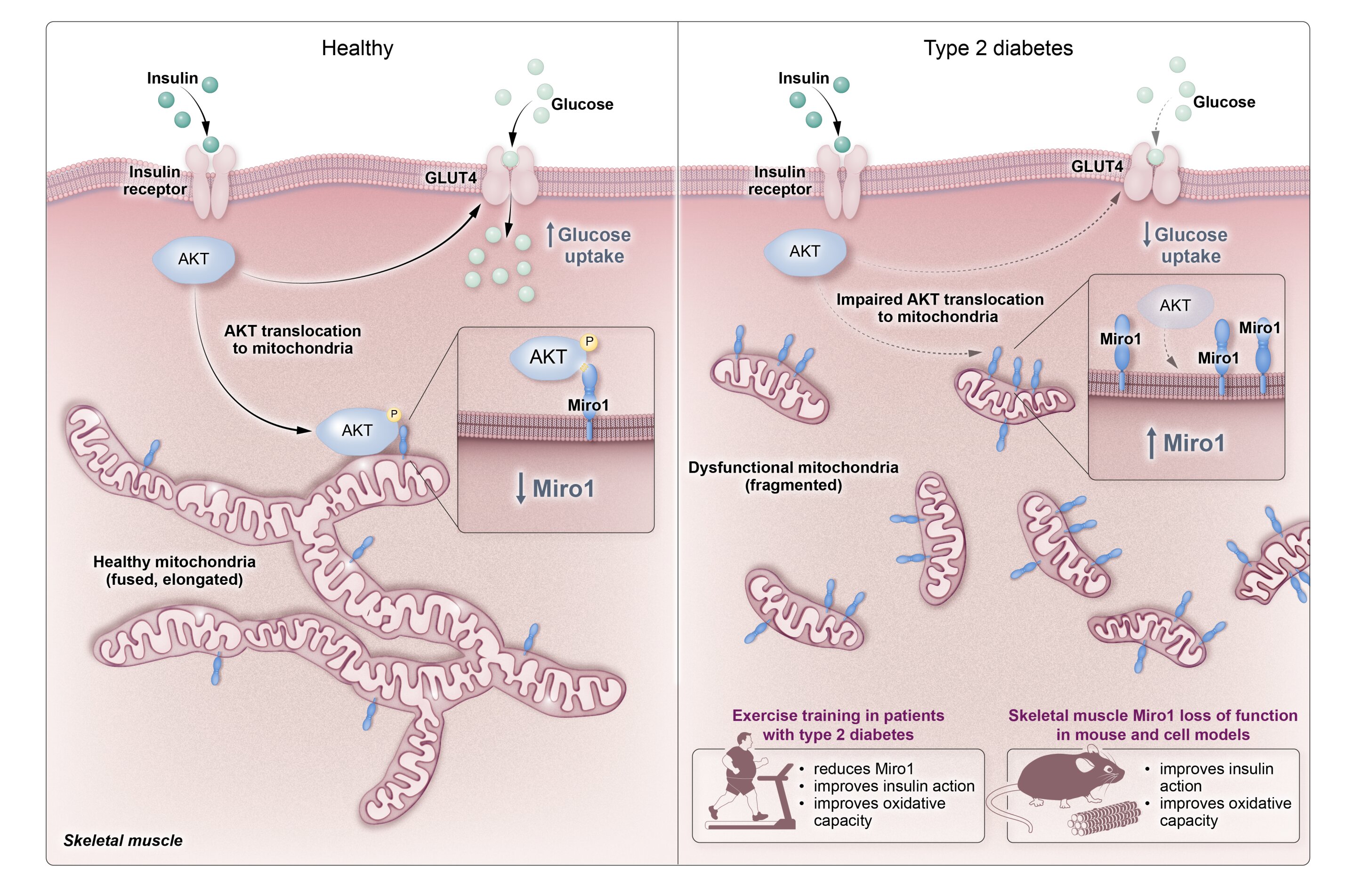
A protein called Miro1, found at elevated levels in the skeletal muscle of people with type 2 diabetes, may contribute to insulin resistance, potentially making it a target for future treatments that help the body regulate blood sugar, according to a study published in Nature Communications.
Researchers found that removing Miro1 restored the muscles' response to insulin in preclinical models, while exercise reduced the protein's levels in people with type 2 diabetes.
The study was led by senior author Dr. John P. Kirwan, recently named executive director of the OU Health Harold Hamm Diabetes Center at the University of Oklahoma. He conducted the research while at LSU's Pennington Biomedical Research Center and now brings his translational research program to OU, where he will build on his work to advance the understanding and treatment of diabetes.
The study's first author is Elizabeth Heintz, a doctoral candidate who worked in the Integrated Physiology and Molecular Medicine Laboratory at Pennington Biomedical, and the co-corresponding author is Christopher Axelrod, who has since joined Kirwan at the Harold Hamm Diabetes Center.
"This research exemplifies the breadth of scientific discovery at Pennington Biomedical, where research spans all levels, from basic science that reveals the biological mechanisms underlying disease to clinical studies and population-based research that informs public health," said Dr. Jennifer Rood, interim senior vice chancellor and executive director of Pennington Biomedical.
Source link