This article has been reviewed according to Science X's editorial process and policies. Editors have highlighted the following attributes while ensuring the content's credibility:
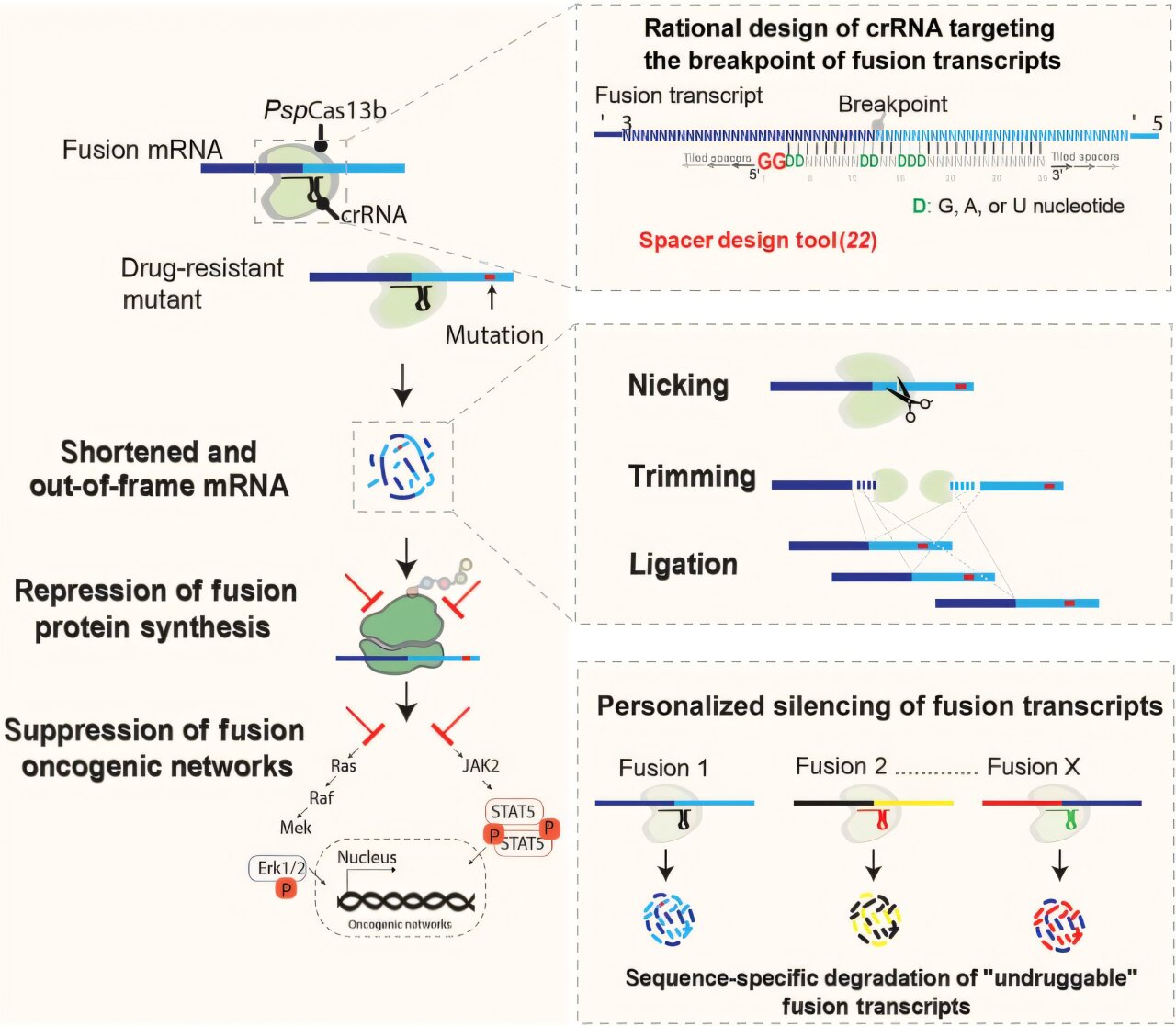
Peter Mac scientists have developed a way to precisely target the "unique molecular fingerprint" created when two genes become abnormally fused together, a discovery that could lead to a new way to treat a wide array of cancers.
Dr. Mohamad Fareh explains that gene fusions are a common trigger for cancer to develop in the body. They happen when DNA breaks inside a cell and it is incorrectly repaired, joining parts of two different genes together.
In a paper published in Science Advances, Fareh notes gene fusions are present in about 20% of all cancers and gene fusions are "bona fide oncogenic drivers" for 16.5% of all cancers.
For example, the gene fusion called BCR-ABL1 (a fused version of the BCR and ABL1 genes) is present in nearly all cases of the blood cancer chronic myeloid leukemia. EWSR1-FLI1 is found in more than 85% of cases of Ewing's sarcoma, a rare cancer that can develop in bone and surrounding soft tissue.
In the paper, Fareh, along with Dr. Wenxin Hu and colleagues, describes a novel method that can precisely target gene fusions and silence them, stopping their cancer-driving downstream effects. It could lead to a new and highly personalized way to treat a wide array of fusion-driven cancers.
"In this study, we describe a new strategy to eliminate this class of notorious cancer drivers that are implicated in many blood and solid tumors by focusing on a unique fingerprint found only in cancer cells," Fareh says.
Source link