This article has been reviewed according to Science X's editorial process and policies. Editors have highlighted the following attributes while ensuring the content's credibility:
No amount of lead exposure is considered safe for children. Even low levels of lead in a child's blood can cause serious health problems and developmental delays. But data on lead exposure are sparse at the neighborhood level in the United States, leaving significant gaps in knowledge about where lead exposure may be occurring.
The sale of lead paint for home use was banned in 1978, so neighborhoods built before then, as well as neighborhoods with a higher poverty rate, face a greater risk of lead exposure. Lower-income communities are also less likely to have funds for lead remediation.
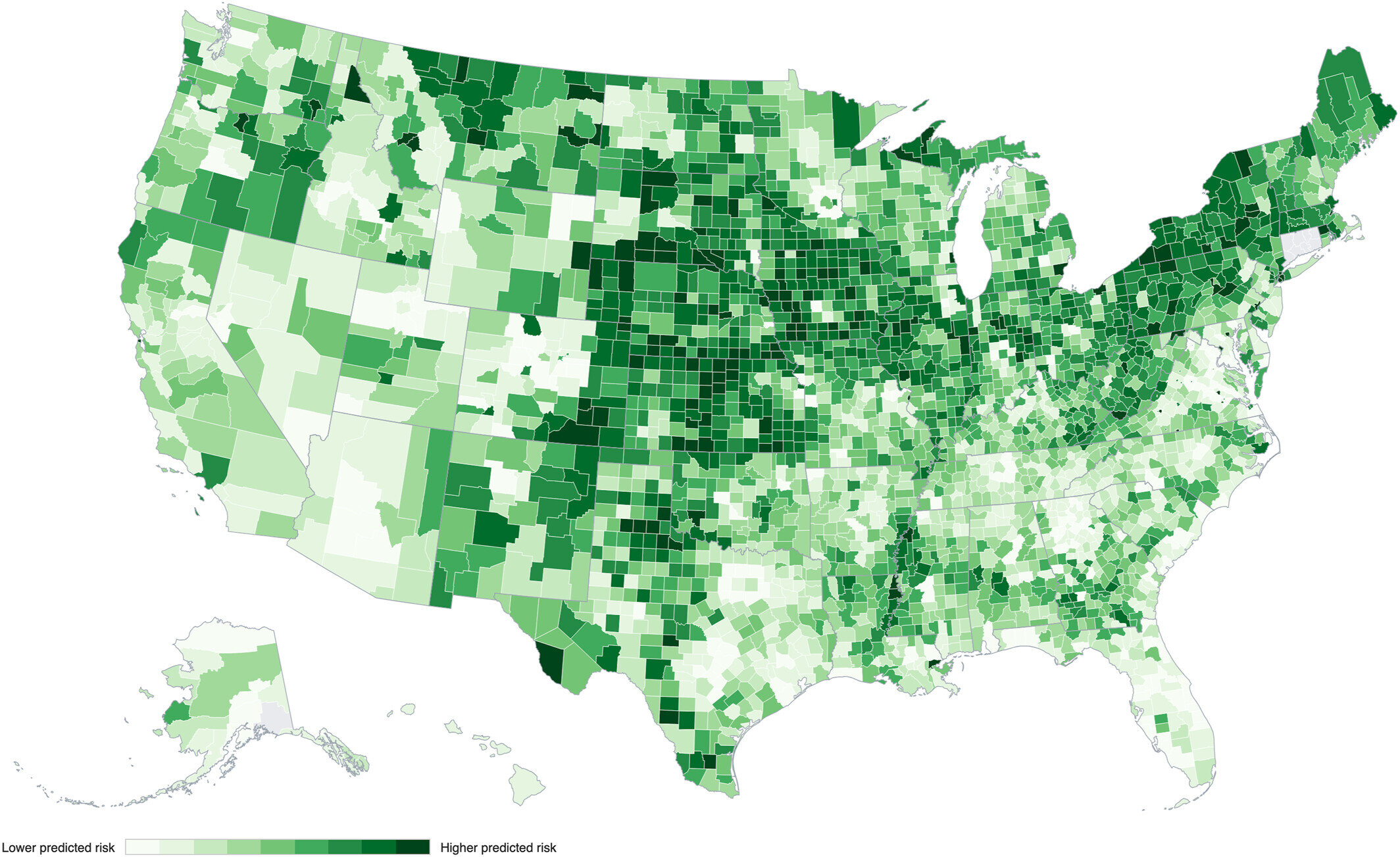
Working from EPA research that suggests the age of a community's housing stock and its poverty level are predictors of childhood lead exposure, Ritter and team, computed a lead exposure risk score that covers all 83,388 U.S. census tracts and 3,222 counties. The paper is published in the journal GeoHealth.
Though this metric for estimating lead exposure risk is not novel—it is an approach adopted by other public health agencies—the author updated it with data from the 2018–2022 American Community Survey and applied it across the entire country, creating a screening tool that may be useful for identifying places where children are at higher risk for lead exposure.
To validate the risk map, the author examined how closely the lead risk prediction score matched the actual blood lead levels found in children in 11 states: Illinois, Iowa, Massachusetts, Michigan, Minnesota, Missouri, New Jersey, New York, Ohio, Rhode Island and Wisconsin.
Source link