This article has been reviewed according to Science X's editorial process and policies. Editors have highlighted the following attributes while ensuring the content's credibility:
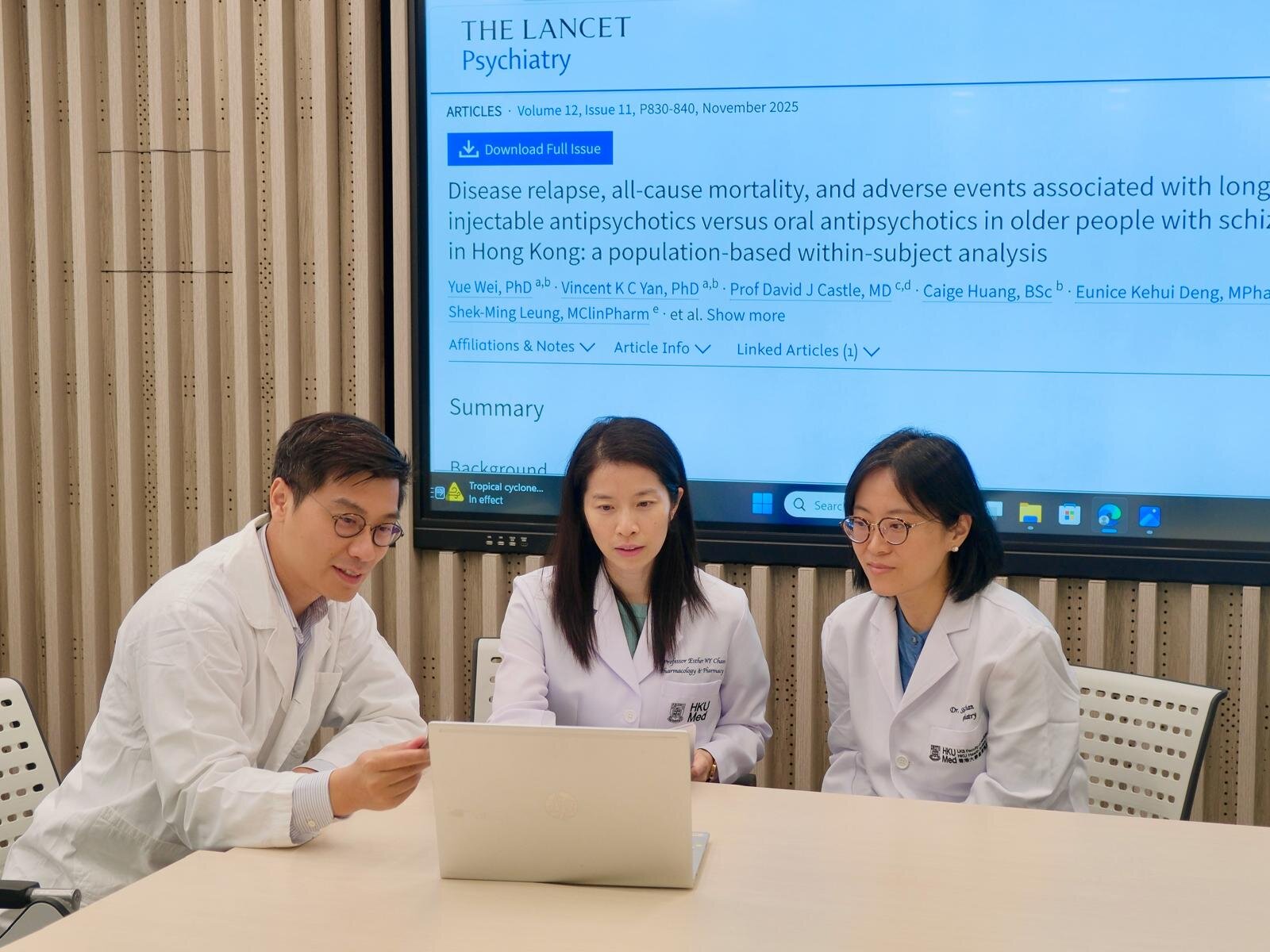
A research team from the Department of Pharmacology and Pharmacy at the LKS Faculty of Medicine, the University of Hong Kong (HKUMed), has found that long-acting injectable (LAI) antipsychotics provide better treatment outcomes than oral antipsychotic medications for patients 65 and older with schizophrenia.
Among this group, LAI antipsychotics were associated with 29% fewer relapse-related hospital admissions and 77% lower all-cause mortality than oral antipsychotics.
Among people with bipolar disorder, LAI antipsychotics were associated with 33% fewer relapse-related hospital admissions. Both studies highlight their potential value, particularly that of second-generation formulations, in improving long-term stability for patients with poor medication adherence. Benefits were greatest when LAI antipsychotics were used earlier in the illness.
The findings were published in The Lancet Psychiatry and the American Journal of Psychiatry, respectively.
Medication nonadherence is a well-recognized challenge among people with severe mental illness (SMI), including schizophrenia and bipolar disorder. Oral antipsychotics typically require daily dosing, which patients may struggle to maintain, increasing the risk of relapse. LAI antipsychotics, administered at intervals ranging from weeks to months, were developed to support sustained adherence to treatment.
"People living with SMI often face challenges that can affect medication adherence and continuity of treatment," said Esther Chan Wai-yin, a professor in the Department of Pharmacology and Pharmacy at HKUMed. "These challenges include cognitive decline, multiple chronic conditions and complex medication regimens.
Source link