This article has been reviewed according to Science X's editorial process and policies. Editors have highlighted the following attributes while ensuring the content's credibility:
Understanding how the human brain processes and represents spoken language remains an important goal for neuroscientists. Understanding spoken words involves more than simply recognizing sounds—it also requires the brain to decipher the meaning of words and how those meanings change with context.
Large language models (LLMs), the artificial intelligence systems underpinning ChatGPT, Gemini and similar conversational platforms, have opened new possibilities for studying the processing of language. For instance, comparing how these models represent the meaning of words with patterns of brain activity recorded while people listen to spoken language could shed light on how both the brain and LLMs interpret words in different contexts.
Researchers at Baylor College of Medicine, Rice University, the University of California, Berkeley and Texas Children's Hospital recently carried out a study investigating how groups of brain cells encode the meaning of words, drawing inspiration from how LLMs process language. Their findings, published in Nature Neuroscience, suggest that the meaning of words is represented through patterns of activity spread across multiple neurons (i.e., nerve cells) in the hippocampus, a brain region involved in memory.
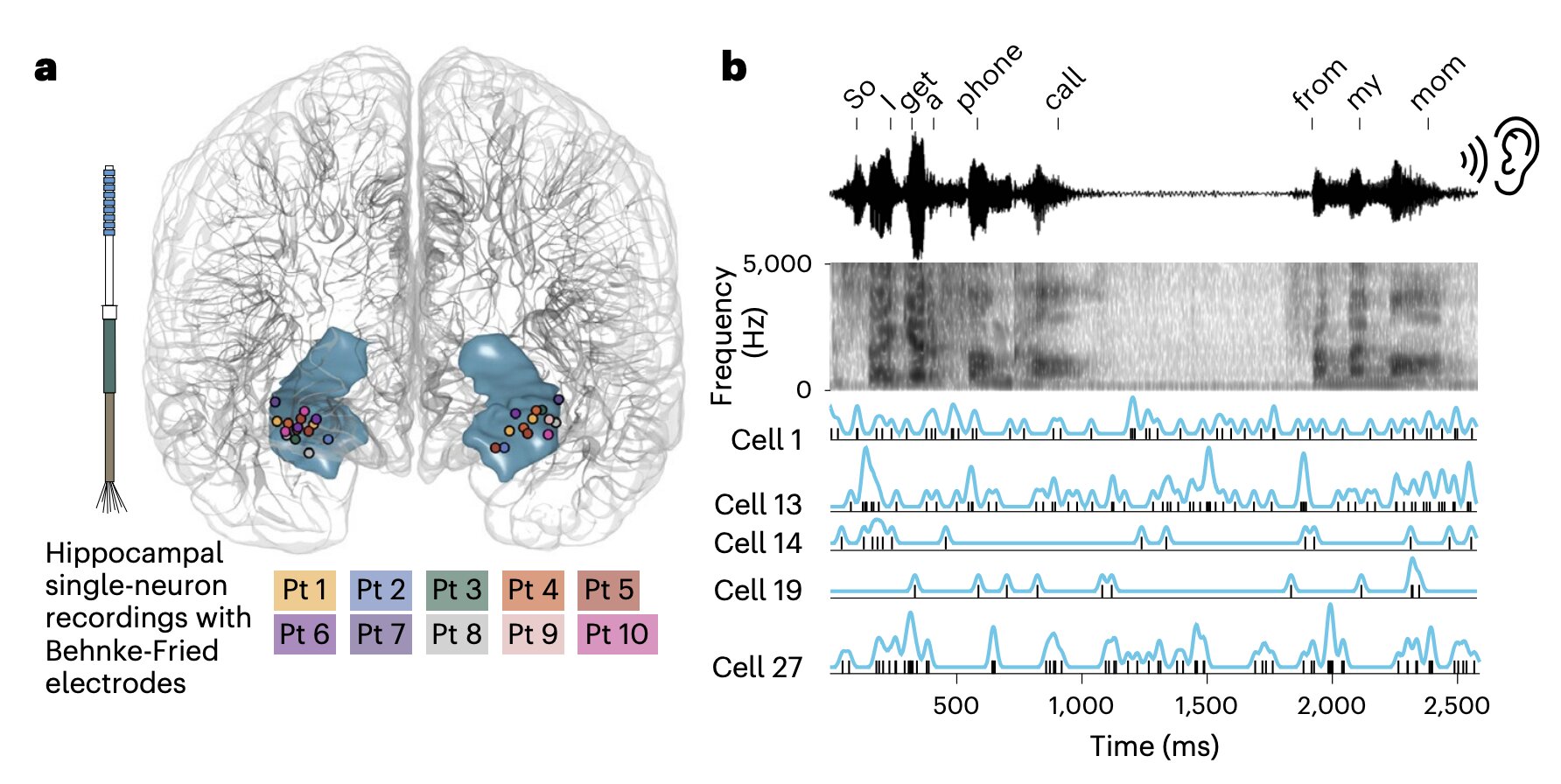
To investigate how the brain encodes the meaning of words, the researchers first recorded the activity of individual neurons in the hippocampus of 10 people who were listening to stories. Their recordings were collected using tiny wire electrodes that were implanted in the participants' brains as part of clinical monitoring procedures for epilepsy.
Source link