This article has been reviewed according to Science X's editorial process and policies. Editors have highlighted the following attributes while ensuring the content's credibility:
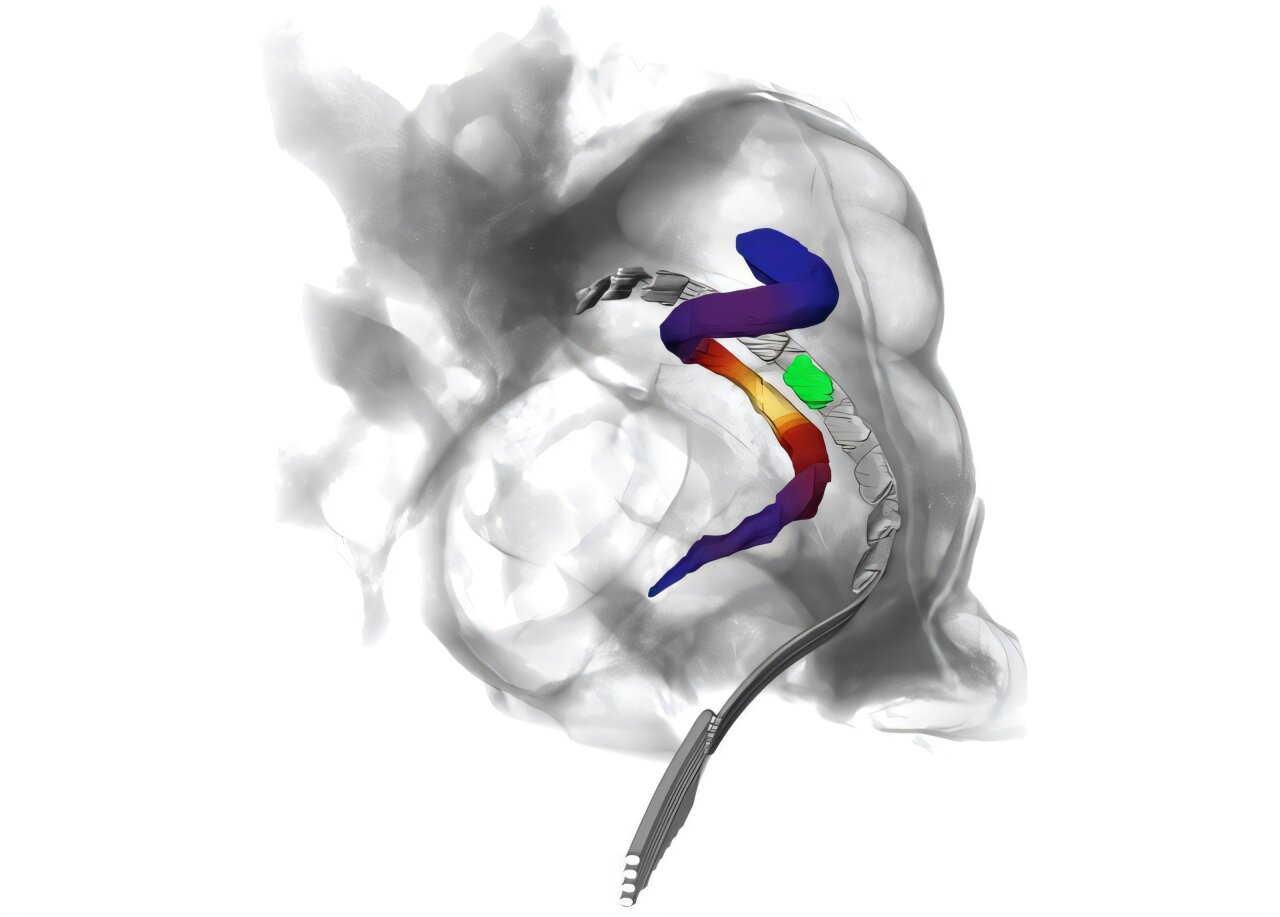
Today's cochlear implants use electrical impulses to stimulate the auditory nerve. This enables many people who are deaf or have severe hearing loss to understand speech. The electrical current spreads through the conductive fluids of the cochlea, causing a larger population of auditory nerve fibers to be stimulated simultaneously, resulting in overlapping nerve signals. This limits the spatial precision of the stimulation and makes it particularly difficult to understand speech in the presence of background noise.
Modern cochlear implants have 12 to 24 "stimulation channels." These channels allow the auditory nerve to be electrically stimulated, generating various nerve signals that are transmitted to the brain. However, in most cases, no more than 10 channels can be distinguished.
Results from previous animal studies have shown that the auditory nerve can be activated more precisely with light than with electrical impulses. This promises nerve signals that are more distinguishable from one another, leading to improved hearing restoration.
A team led by Dr. Tobias Moser, director of the Institute for Auditory Neuroscience at the University Medical Center Göttingen (UMG), has genetically engineered the auditory nerve of Mongolian gerbils to express highly light-sensitive ion channels that can be selectively turned on and off like a "molecular light switch."
Pioneers of this method of optogenetics were awarded the 2026 Nobel Prize in Physiology or Medicine, and its potential for clinical applications is currently being evaluated worldwide, including for hearing restoration as done here.
Source link