This article has been reviewed according to Science X's editorial process and policies. Editors have highlighted the following attributes while ensuring the content's credibility:
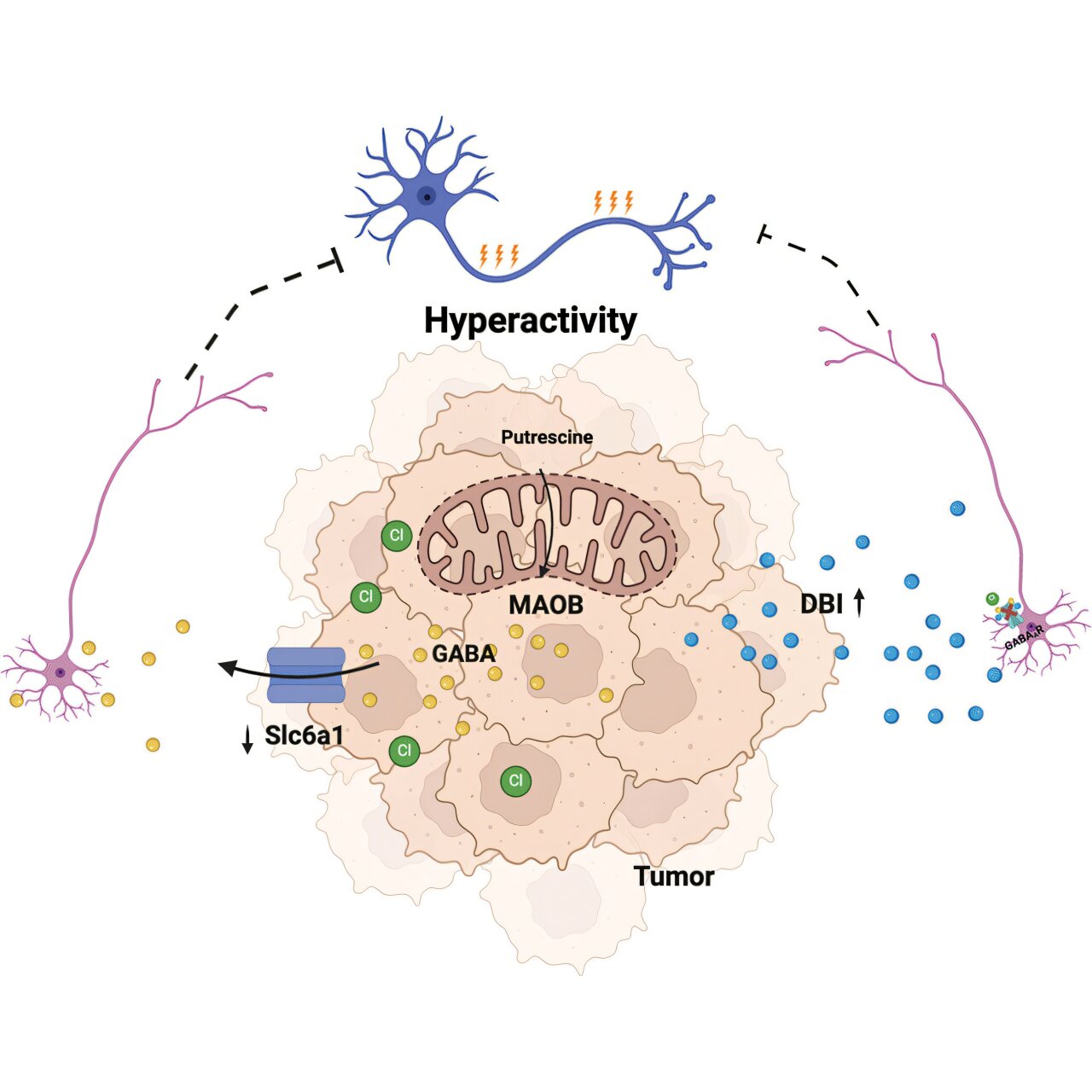
Researchers at Baylor College of Medicine have discovered a new strategy that glioblastoma, the most common and aggressive form of adult brain cancer, uses to fuel its own growth. Published in the journal Neuron, the study shows in animal models that glioblastoma hijacks the activity of neighboring brain cells, flipping them from a role that limits tumor growth to one that promotes it. The findings point to new treatment possibilities for this deadly cancer, which has seen only minimal gains in patient survival over the past half century.
"Previous studies from our lab and others showed that glioblastoma and surrounding neurons communicate with each other, and that this conversation makes brain circuits hyperactive, which helps tumors grow faster," said co-corresponding author Dr. Benjamin Deneen, professor and Dr. Russell J. and Marian K. Blattner Chair in the Department of Neurosurgery, Center for Cell and Gene Therapy, and director of the Center for Cancer Neuroscience, all at Baylor. Deneen also is a member of the Duncan Neurological Research Institute at Texas Children's Hospital.
"In the current study, we found a different way glioblastoma manipulates its surrounding environment to favor its own growth."
"We knew that tumors surrounded by hyperactive brain circuits grow faster than tumors surrounded by quieter brain activity. We also knew that two different types of neurons control how active or quiet those circuits are: Excitatory neurons send signals that rev up brain circuits, while inhibitory neurons send signals that calm them down," said corresponding author Malcolm F.
Source link