This article has been reviewed according to Science X's editorial process and policies. Editors have highlighted the following attributes while ensuring the content's credibility:
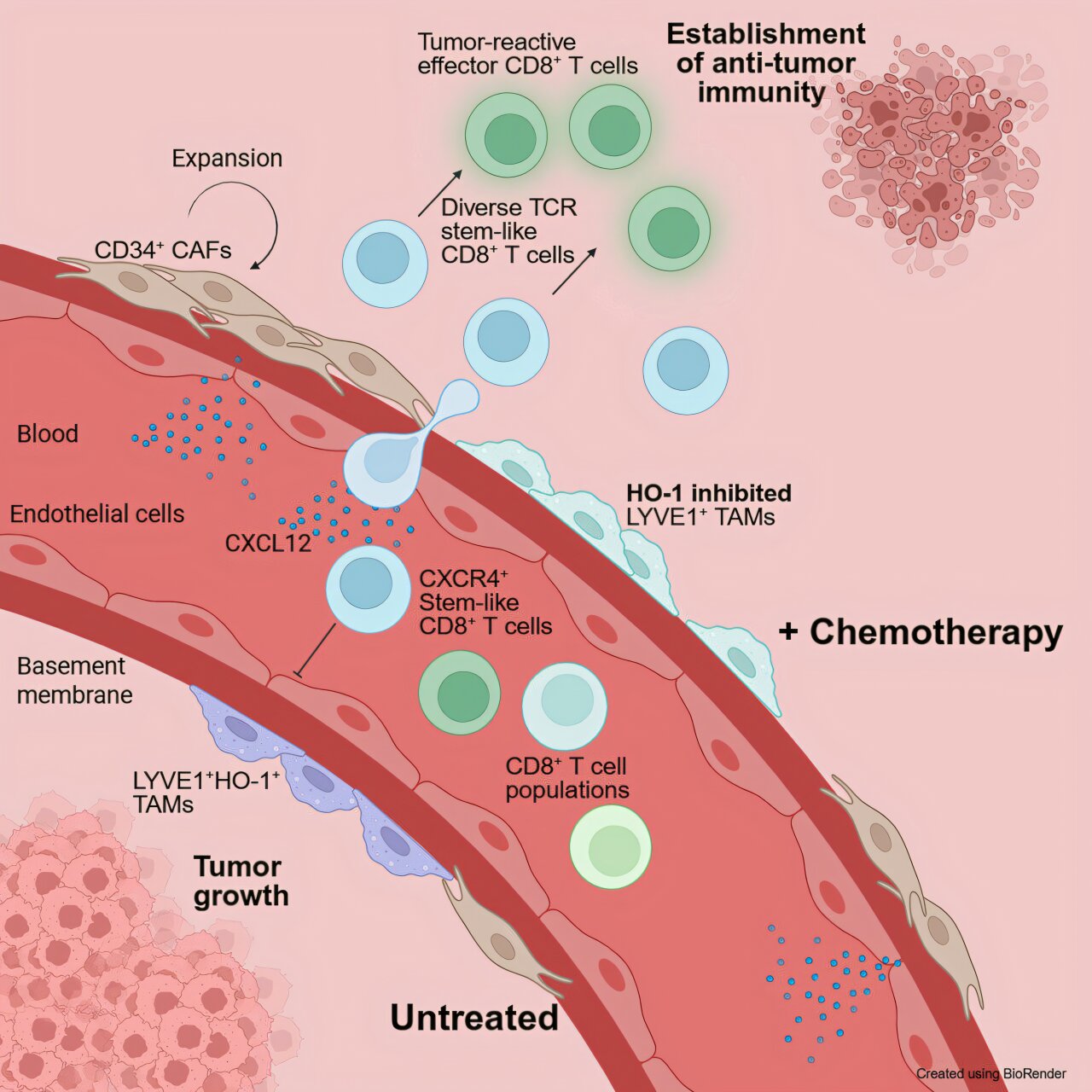
A new study led by King's College London has found that chemotherapy helps attract a specific population of immune cells called stem-like T cells toward tumors. The research, published in Cell Stem Cell, found that macrophages around tumor blood vessels can act as a barrier, limiting the T cells' ability to enter. By blocking an enzyme called heme oxygenase-1 (HO-1) in these macrophages, the researchers were able to reduce this barrier, allowing more stem-like T cells to enter the tumor and contribute to an antitumor immune response.
The findings could help explain differences in responses to chemotherapy and may also have implications for immunotherapies that depend on stem-like T cells.
T cells play an important role in the body's ability to recognize and attack cancer. Certain "stem-like" T cells are particularly important because they can renew themselves and develop into other T cells that can attack cancer cells. They can therefore help sustain an immune response against a tumor over time and have also been shown to play an important role in responses to immunotherapy.
However, while we know these cells can be important in the immune response to cancer, less is understood about how they enter tumors and the barriers that may hinder their entry. The researchers found that a specific population of a type of white blood cell called macrophages, located around the tumor's blood vessels, can act as a kind of "gatekeeper," controlling whether stem-like T cells can move from the bloodstream into the tumor.
Source link