This article has been reviewed according to Science X's editorial process and policies. Editors have highlighted the following attributes while ensuring the content's credibility:
Tumors possess myriad mechanisms to ensure their survival even at the peril of the host. Now scientists are delving deeper into how cancer cells alter the metabolism of specific amino acids to support the malignancy's growth while simultaneously evading the antitumor activity of the host's immune system.
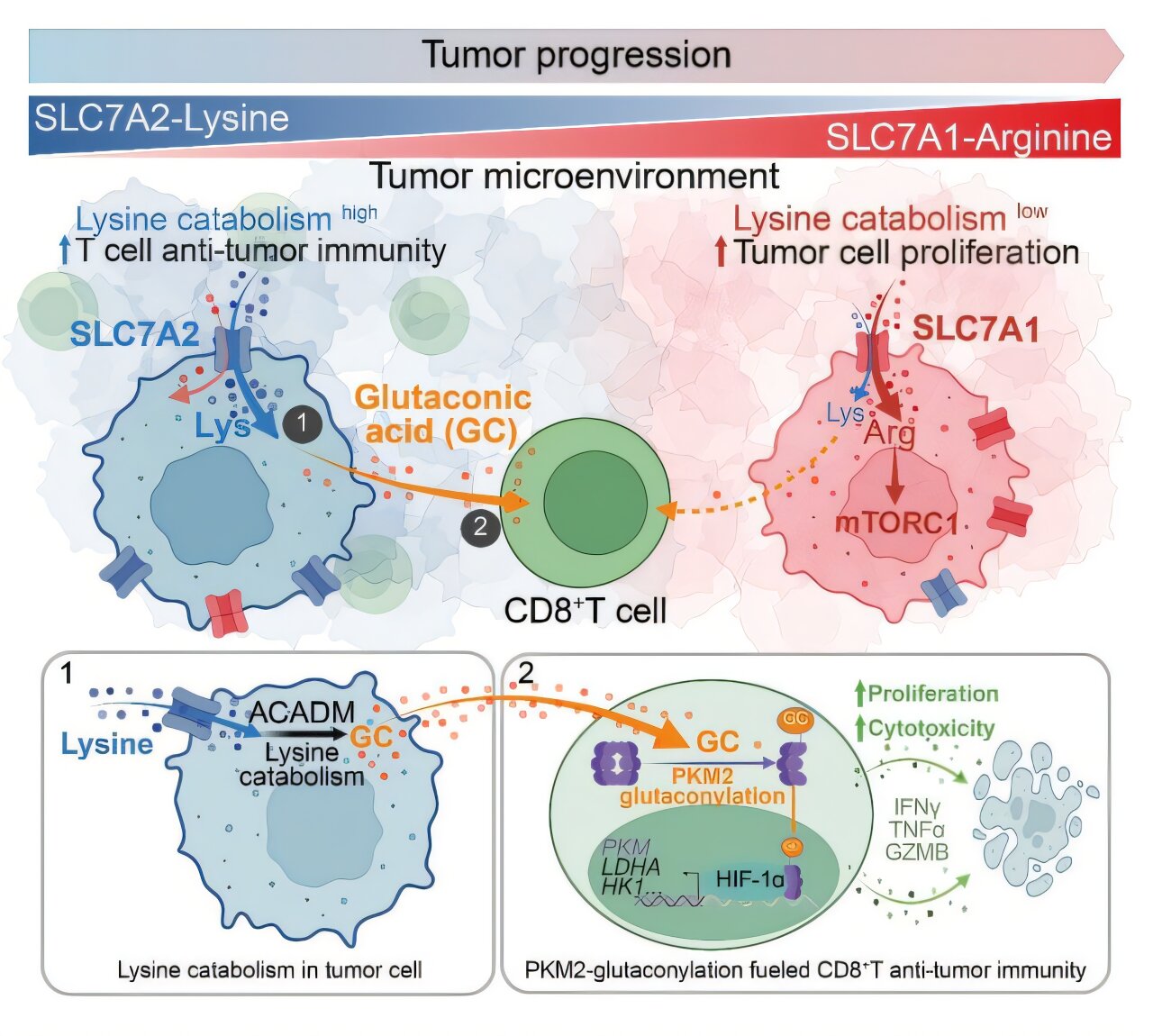
Tumor biologists in the Department of Colorectal Cancer at Zhejiang University School of Medicine in Hangzhou, China, found in both animal models and human cancers that specific amino acids predominate in crucial cancer-cell survival strategies. For example, increased usage of the amino acid arginine aided rapid tumor progression, while reduced metabolism of another amino acid, lysine, prevented the activation of cytotoxic T cells, commonly known as killer T cells. The research is reported in the journal Science Immunology.
"Our study highlights an amino acid trade-off that dynamically optimizes the metabolic preferences of tumors to promote proliferation and immune evasion," writes Dr. Weiwei Yu, lead author of a multipronged investigation that explored the metabolic adaptations that alter the tumor microenvironment and potentially boost the growth of tumors.
Although scientists have been aware for decades of various tactics that malignant cells employ to ensure their survival, the impact of dual amino acid activities on tumor progression and antitumor immunity has remained somewhat cloudy. The new research adds a clearer perspective by demonstrating that arginine and lysine metabolism are substantially altered to support the growth and survival of the tumor.
Source link