This article has been reviewed according to Science X's editorial process and policies. Editors have highlighted the following attributes while ensuring the content's credibility:
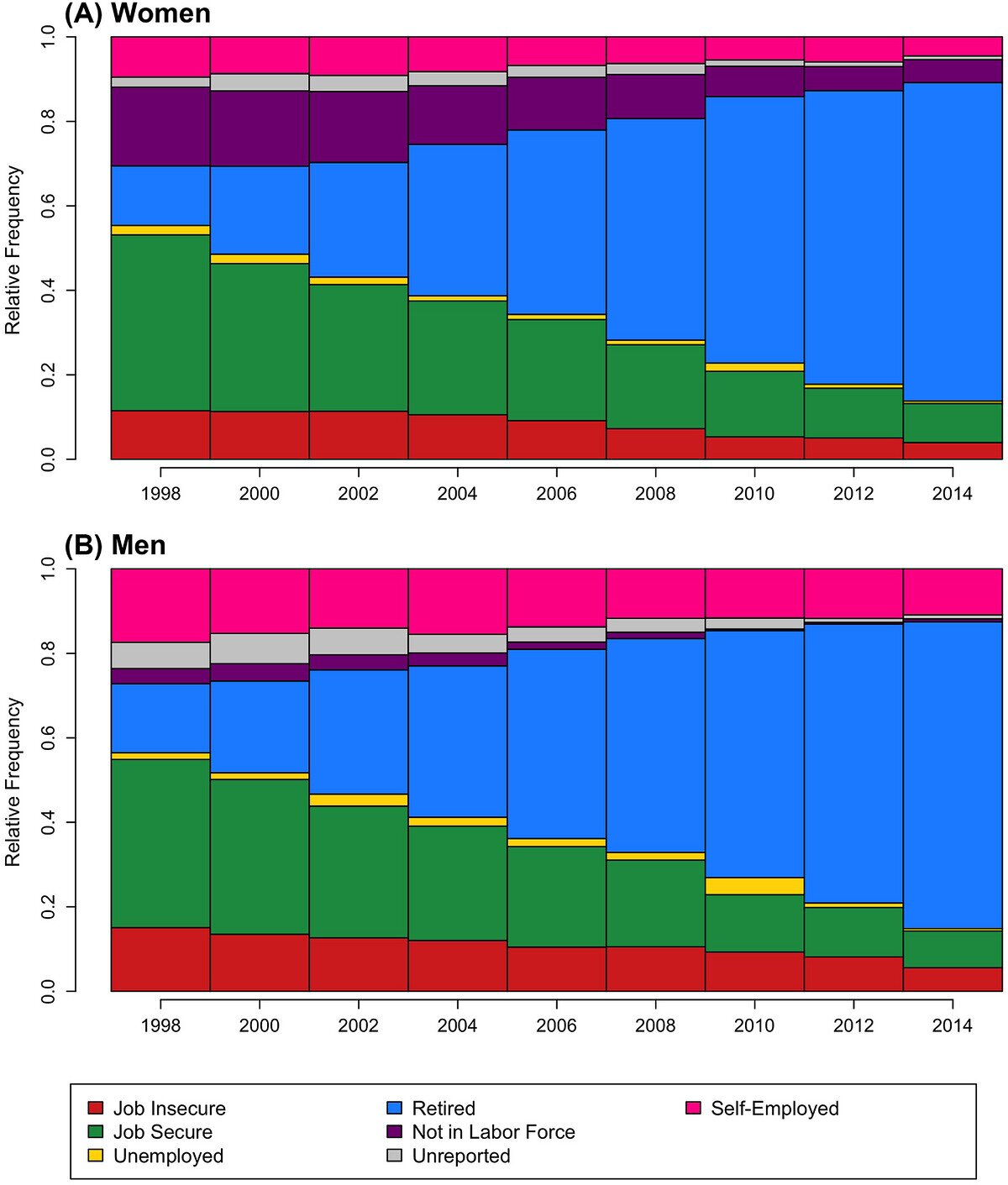
Stable employment in midlife was associated with better cognitive health later in life, according to a new study from Columbia University Mailman School of Public Health's Butler Aging Center. Conversely, employment instability, early retirement and leaving the labor force were linked to significantly poorer cognitive outcomes.
Among men, inconsistent employment was associated with lower cognitive scores and greater odds of cognitive impairment. Among women, employment instability and early retirement were associated with lower executive function and memory scores. The findings were published in Alzheimer's & Dementia.
The results show that for men, a history of inconsistent employment corresponds to a cognitive deficit equivalent to approximately seven years of cognitive aging. For women, early retirement or prolonged periods outside the labor force equate to roughly six years of memory deficits.
A critical, previously unanswered question in cognitive aging research was whether perceived job insecurity affects brain health beyond objective employment status. By tracking long-term employment trajectories, the Columbia researchers found that while both matter, maintaining employment continuity emerged as the more important protective factor for cognitive health.
, a postdoctoral research scientist at the Butler Columbia Aging Center.
Source link