This article has been reviewed according to Science X's editorial process and policies. Editors have highlighted the following attributes while ensuring the content's credibility:
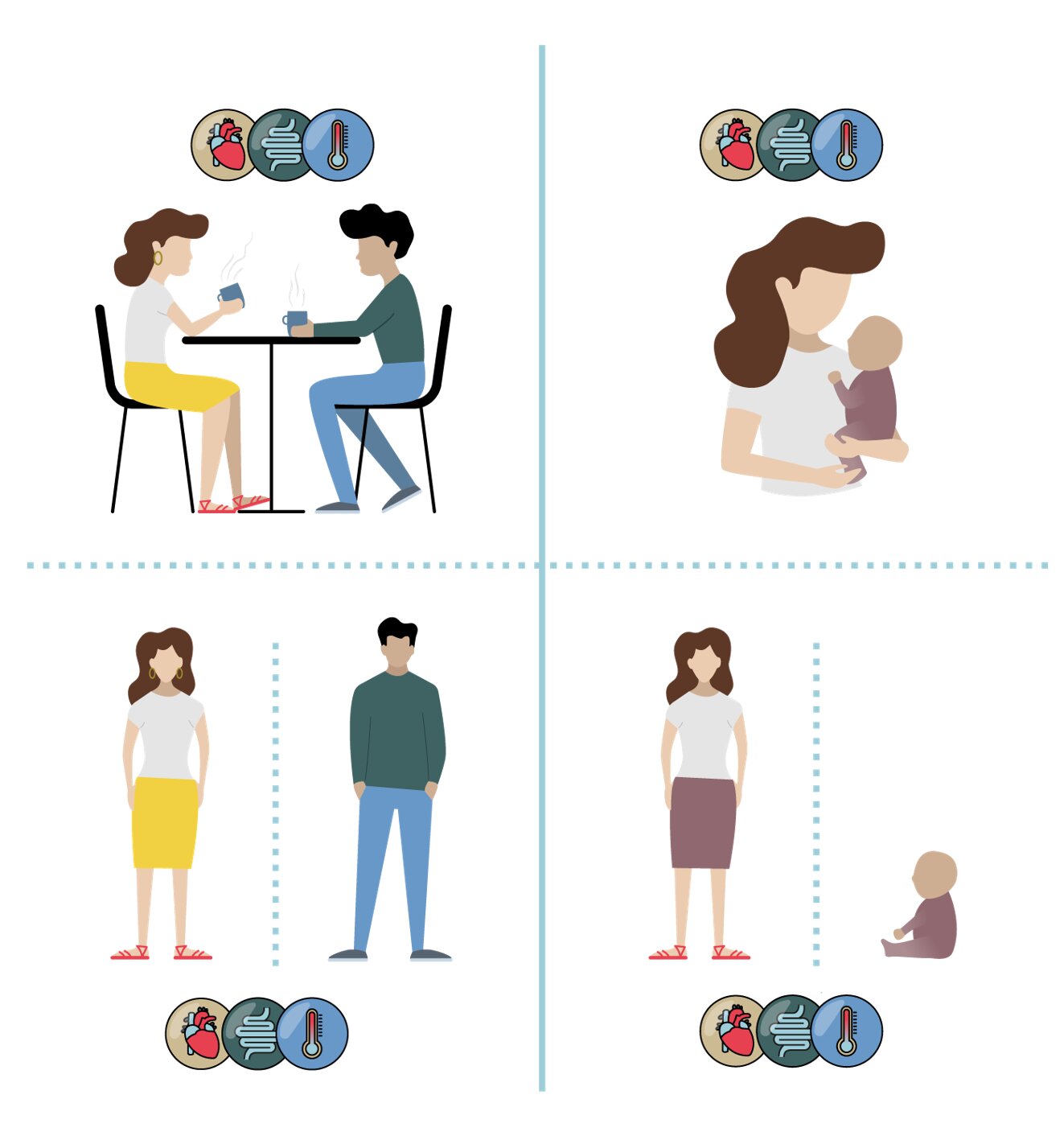
We know that being near someone we love can make us feel good. A new study explains why: It helps the body work better. A study led by Professor Shir Atzil and doctoral student Monia Masalha of Hebrew University and Dr. Shai Fuchs of Sheba Medical Center found that blood glucose levels after a meal were lower when participants ate with others than when they ate alone. After the same standardized carbohydrate meal, participants had smaller glucose spikes and quicker glucose recovery in the social condition.
The researchers call this principle Social Physiology: The human body regulates itself more efficiently in the presence of social partners.
"We used to think of the body as an isolated system that regulates itself," said Professor Shir Atzil. "Our findings show that human physiology is inherently social. Being close to someone you love lowers the physical energy your body spends on regulating itself. This gives us a direct metabolic benefit to being together and reveals a core evolutionary reason why humans form bonds in the first place: our bodies run better together."
The effect extended beyond blood sugar. Social proximity also improved temperature regulation during cold exposure and reduced stress responses in adults and infants. The benefits appeared even without physical touch and were not explained by reduced stress. Across preregistered experiments, the evidence suggests that Social Physiology is a domain-general principle of human physiology.
Source link