This article has been reviewed according to Science X's editorial process and policies. Editors have highlighted the following attributes while ensuring the content's credibility:
Robin Williams, Monica Vitti, Patrick Stewart or French actress Nathalie Baye: All these famous people lost their lives to dementia with Lewy bodies.
This neurocognitive disease only tends to get publicity when a celebrity dies from it. Yet it is a common disease (and one of the most common forms of dementia). In France alone, it affects about 250,000 people, which makes it the country's second most widespread neurodegenerative disease, after Alzheimer's, putting it on a par with Parkinson's. It is estimated that dementia with Lewy bodies (commonly known as "DLB") affects more than 10 million patients worldwide.
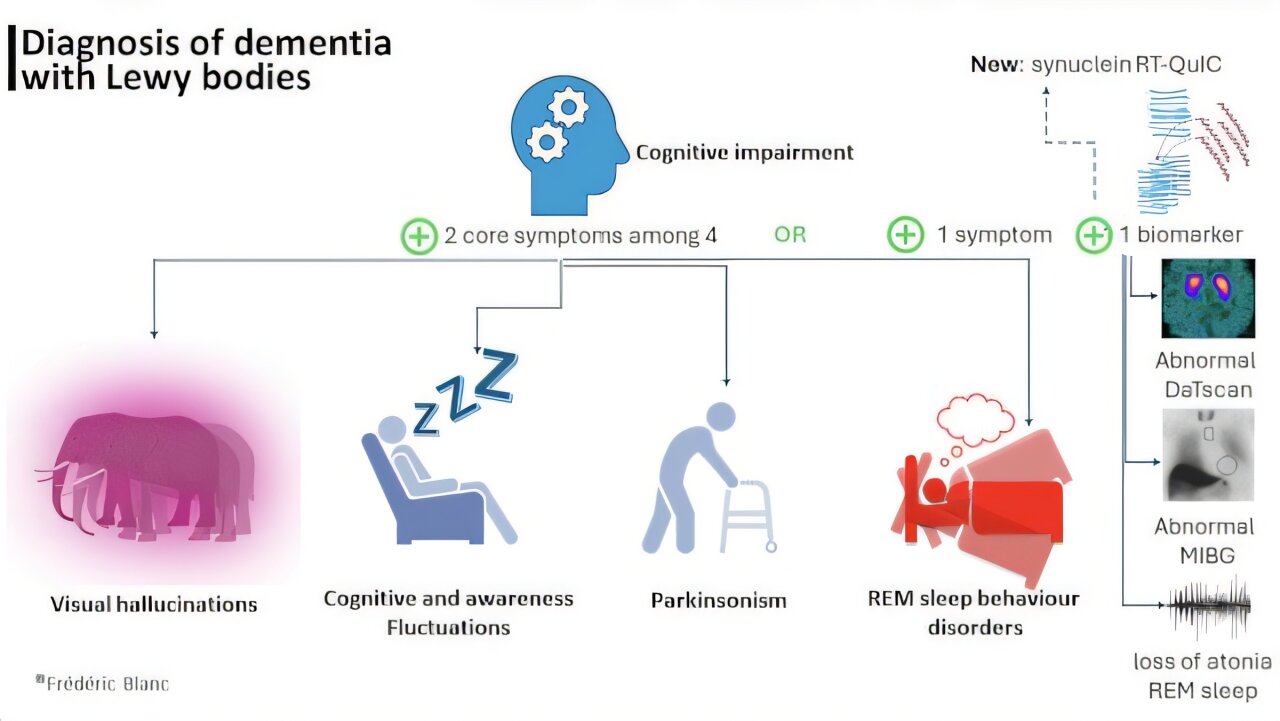
What causes the disease? What symptoms should we look out for? How is it treated? Here is what you need to know.
Dementia with Lewy bodies owes its name to inclusions that develop inside patients' neurons called "Lewy bodies," after the German-born doctor Friedrich Heinrich Lewy, who first discovered their existence in 1912.
However, it was only in 1976 that the first clinical case was formally described, while the first international clinical criteria were defined much later, in 1996.
In its earliest stages (the prodromal stage before full-blown dementia develops , followed by the early, milder stage ), dementia with Lewy bodies is characterized by the dysfunction of certain parts of the outer layers of the brain, such as the insula and the olfactory bulbs (OB) .
Source link