This article has been reviewed according to Science X's editorial process and policies. Editors have highlighted the following attributes while ensuring the content's credibility:
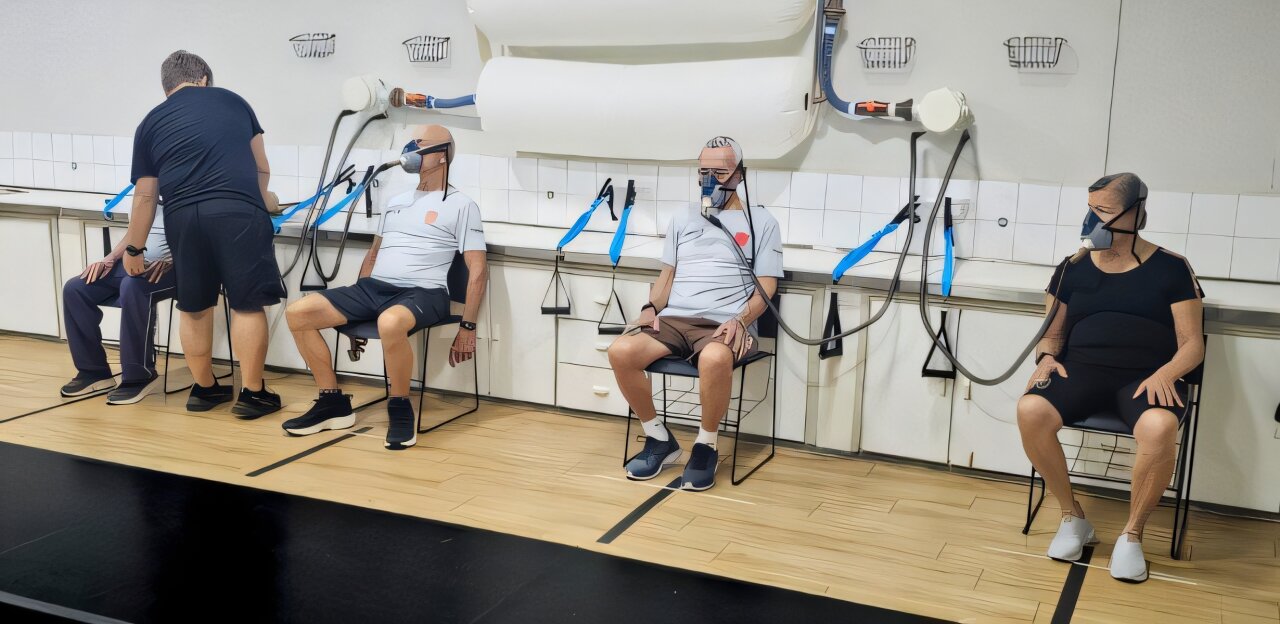
Breathing thin air, such as that found at high mountain summits, is usually taxing on the body. However, a study conducted at São Paulo State University (UNESP) in Brazil showed that short, controlled exposure to low-oxygen air is safe and does not interfere with sleep. This exposure can also modulate hormones and markers associated with inflammation in people with Parkinson's disease. These preliminary results pave the way for further research into using this technique as a complementary therapy for the condition.
The approach, known scientifically as intermittent hypoxia, aims to stimulate the body's adaptive responses without overburdening it. "The initial results indicate that the technique activates protective mechanisms that can safely benefit people with Parkinson's disease without causing adverse effects. That's important because it allows us to conduct studies with a larger number of volunteers and with long-term protocols that evaluate the effects of repeated sessions," says Fabio Barbieri, coordinator of the Human Movement Research Laboratory (MOVI-LAB) and the "Ativa Parkinson" outreach project at UNESP in Bauru. Barbieri led the research.
An estimated 11 million people worldwide have Parkinson's disease. The condition is characterized by the progressive degeneration of neurons that produce dopamine , a neurotransmitter that is essential for movement control. It causes well-known motor symptoms, such as tremors, muscle rigidity and slowness of movement. However, it also triggers significant nonmotor manifestations, including metabolic changes, inflammatory processes and sleep disorders.
Source link