This article has been reviewed according to Science X's editorial process and policies. Editors have highlighted the following attributes while ensuring the content's credibility:
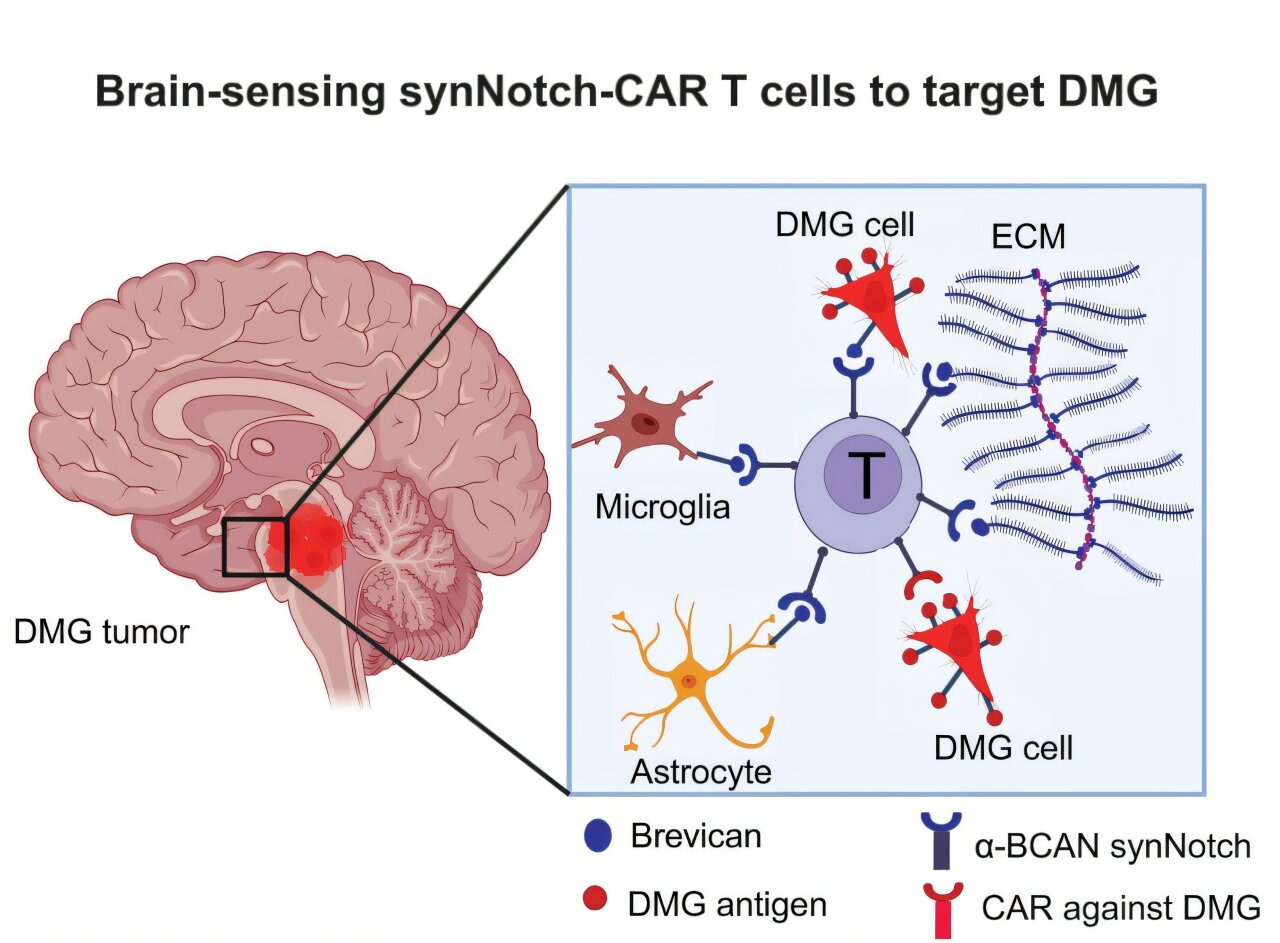
Scientists at UC San Francisco have engineered CAR-T cells that stay dormant until they reach the brain, where they switch on and destroy tumor cells. In mice, these CAR-T cells were able to clear diffuse midline glioma (DMG), a lethal form of childhood brain cancer that integrates into healthy tissue. The cells also had staying power. When scientists introduced another round of cancer several weeks later, the cells were still able to fight.
DMG is exceptionally hard to treat because it infiltrates the brainstem, which controls essential functions like breathing, heartbeat and swallowing. Children almost always die within a year of diagnosis.
The new therapy, however, has the potential to succeed where standard CAR-T cell therapy failed. Scientists aren't sure why, but they suspect that focusing the CAR-Ts on the brain somehow made them more potent.
Thanks to strong results in the laboratory, the team is now preparing the therapy, called B-SYNC CAR-T, for clinical trials at UCSF Health that may begin as early as April 2027.
"It's been a struggle to make CAR-T cells that overcome DMG without causing unacceptable side effects," said Hideho Okada, M.D., Ph.D., a professor of neurological surgery at UCSF and co-corresponding author of the paper, which appeared in Science Translational Medicine on Oct. 28.
"By limiting B-SYNC's CAR expression to when and where it matters—in the brain—we saw consistent, total shutdown of DMG tumors in the lab."
Source link