Colossal Biosciences announced Wednesday a new AI platform to help accelerate its efforts to bring back extinct species, TechCrunch can exclusively report.
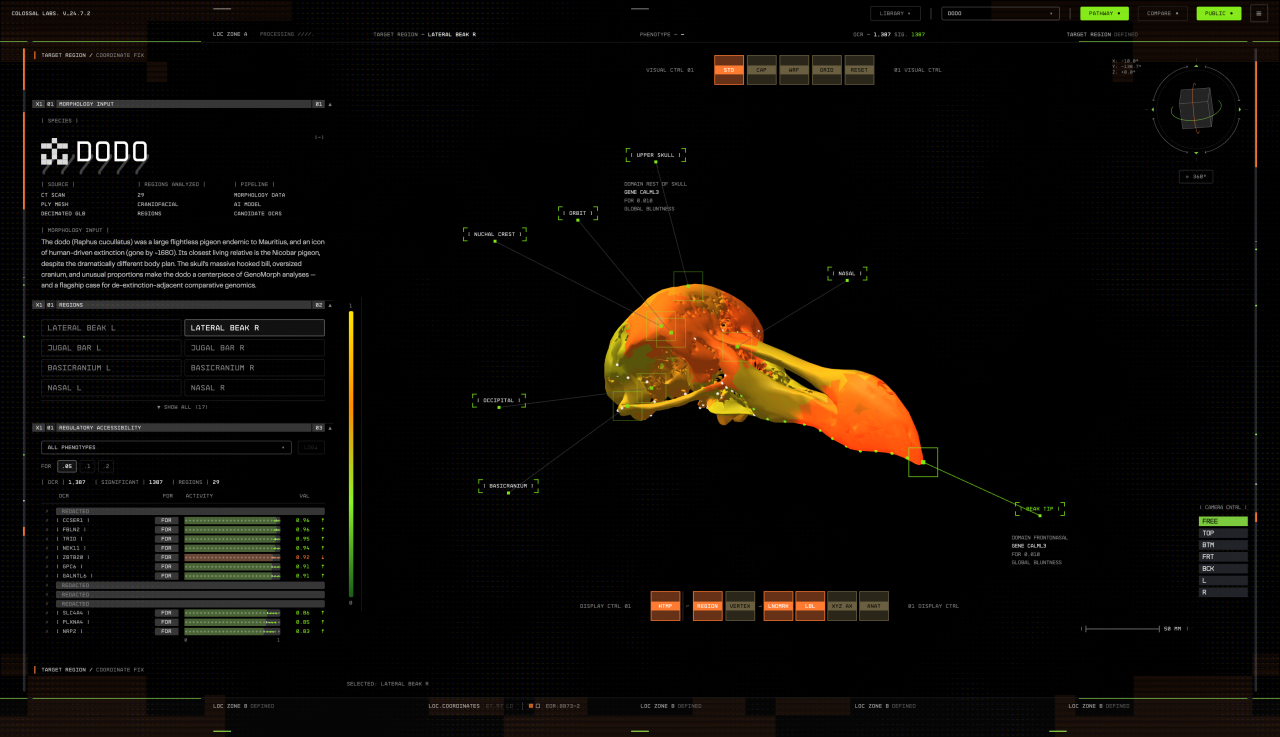
The platform, called GenoMorph, uses advanced 3D morphology, comparative genomics, and developmental biology to identify genes that could be edited in de-extinction projects with limited gene data. The company is using it as part of its effort to bring back the dodo bird, for which there are limited genomes to work with.
For example, the company is working with only one dodo genome compared to the 100 genomes it has been able to obtain as part of its woolly mammoth de-extinction project. DNA from the woolly mammoth is more plentiful because the colder climates the animal lived in preserve the DNA better than the tropics where the dodo lived, the company said.
“Normally, scientists can compare many genomes to understand which genetic differences are responsible for certain traits,” Colossal CEO and co-founder Ben Lamm told TechCrunch. “We don’t have that luxury with ancient DNA from extinct species whose DNA is severely limited, and we can only get a small number of complete genomes.”
To build GenoMorph, Lamm said the company collected a bunch of developmental data from “chickens, quail, ducks, and pigeons,” and combined it with the “genetic information and 3D skull measurements from more than 70 bird species.” He said it took more than a year of work to build this platform, which also builds on the company’s years of work in de-extinction.
” He said to think of the platform as a “treasure map for the dodo genome,” where, rather than searching through a bunch of potential genetic differences, GenoMorph can help the Colossal team find only the genetic differences that matter.
Source link