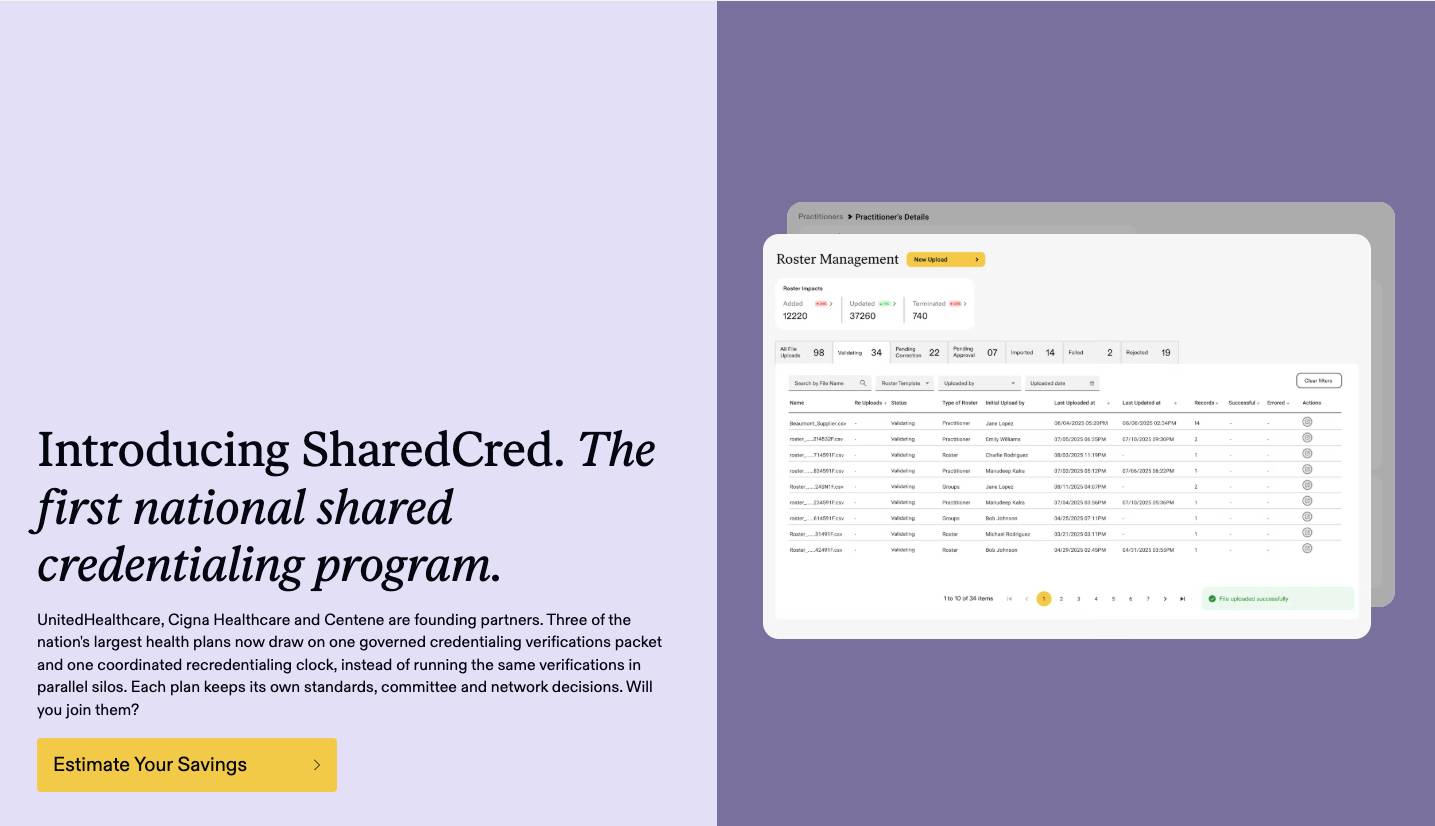
Provider data infrastructure company CertifyOS launches its National Shared Credentialing Program, establishing a unified, multi-payer verification network designed to eliminate duplicative credentialing and recredentialing workflows.
Flagship commercial participants at launch include three of the nation’s largest health insurance payers: UnitedHealthcare, Cigna Healthcare, and Centene Corporation.
The program addresses an administrative crisis where the United States healthcare system spends more than $2 billion annually verifying provider credentials, with industry estimates indicating that up to 75 percent of those expenses ($1.5 billion) could be avoided through shared verification infrastructure.
Payer operations currently incur costs ranging between $200 and $500 per provider per recredentialing cycle, repeating identical primary source verification steps across disconnected internal silos.
The National Shared Credentialing Program restructures how commercial payers and managed care organizations handle primary source verification:
Centralized Payer Rostering: Participating health plans share active provider recredentialing rosters directly with CertifyOS. Rather than multiple payers conducting parallel outreach to the same clinic, CertifyOS runs a consolidated verification process.
Unified Provider Portal: Clinicians submit their Council for Affordable Quality Healthcare (CAQH) ID and supporting credentials a single time through the CertifyOS portal, eliminating repeated, piecemeal documentation requests.
Standardized Primary Source Verification (PSV): CertifyOS conducts PSV to National Committee for Quality Assurance (NCQA) and state Medicaid standards across all licensure jurisdictions, packaging verified profiles into a standardized data model that satisfies participating payers’ compliance mandates.
Accelerated Time-to-Network: By cutting redundant administrative processing windows, the program drastically shrinks the typical 90- to 120-day payer enrollment lag, enabling clinicians to begin seeing in-network patients and billing claims weeks faster.
Source link