This article has been reviewed according to Science X's editorial process and policies. Editors have highlighted the following attributes while ensuring the content's credibility:
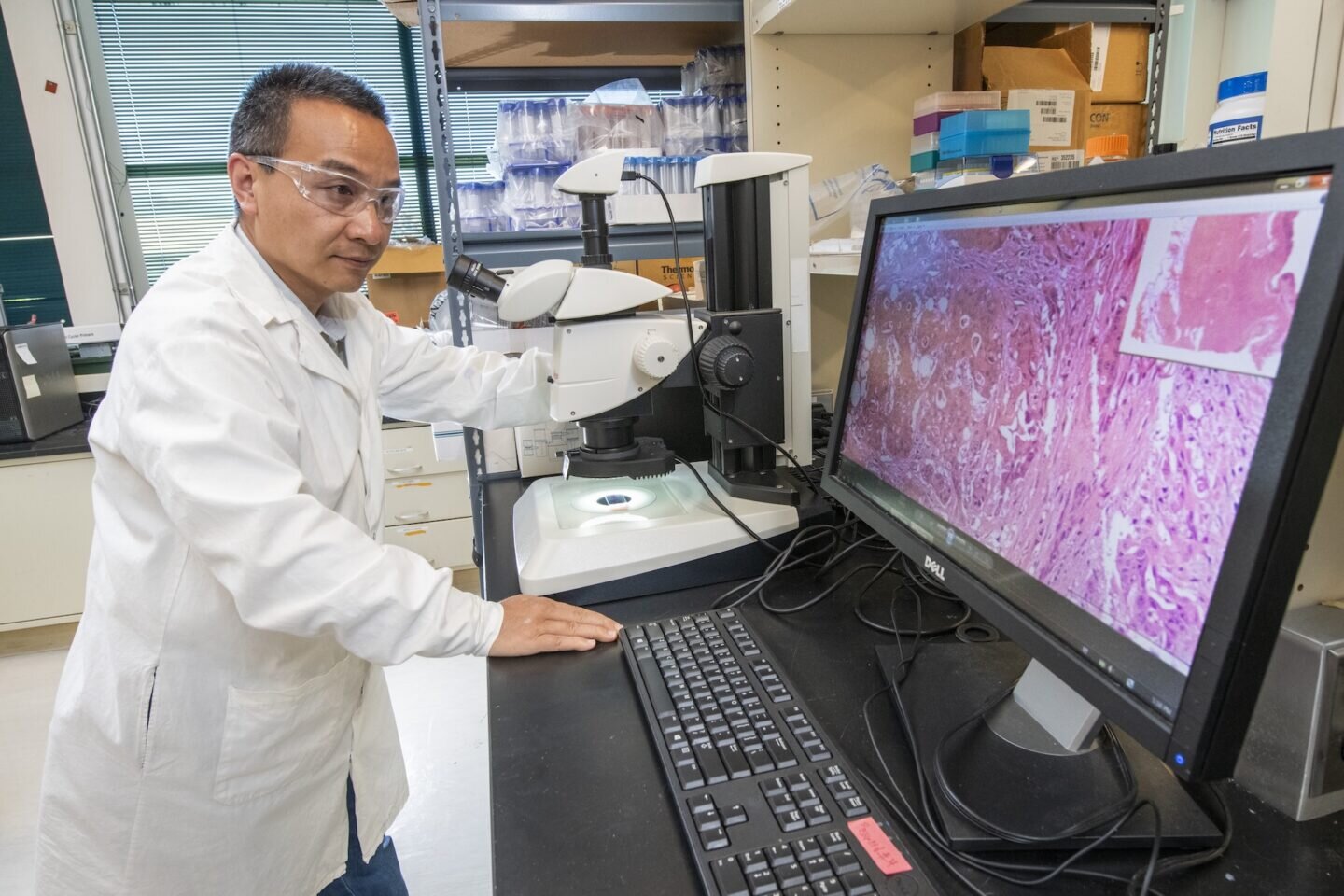
Scientists at Lawrence Berkeley National Laboratory (Berkeley Lab) have developed a machine learning tool that can detect and estimate past radiation exposure using the information in a standard complete blood count, or CBC, one of the most routinely performed clinical blood tests.
Rapidly identifying and quantifying exposure is essential for determining what treatments or monitoring are necessary for people who might come into contact with radiation. This process, called biodosimetry, uses measurable biological changes to determine whether exposure occurred and, when possible, estimate the absorbed dose. However, existing methods involve time-intensive processes that can only be performed by specialized laboratories, and the results can be inconclusive or hard to interpret—especially for cases of low-dose exposure, which are more common and more likely to be overlooked. A CBC-based model could therefore serve as an accessible initial screening tool.
"We were motivated by a simple question: Do routine blood tests retain information about a person's prior radiation exposure?" said Jamie Inman, a research scientist in Berkeley Lab's Biological Systems and Engineering (BSE) Division who co-led the study with Jian-Hua Mao and Hang Chang. "What surprised us was how much information the CBC patterns retained across a wide range of doses and times after exposure. These findings suggest that CBC data could contribute to rapid exposure screening, although confirmatory testing would still be needed."
Chang, a computational staff scientist in BSE, used a type of machine learning called unsupervised sparse representation learning to find signals within CBC data that aren't apparent from examining individual measurements alone.
Source link